

When considering a hydraulic breaker, understanding its key parameters is crucial for optimal performance and compatibility. These powerful attachments, also known as hydraulic hammers, are essential for breaking hard materials like rock and concrete. We aim to provide a detailed overview of the typical parameter ranges for hydraulic breakers, helping you make informed decisions. Our focus is on delivering precise, data-backed insights to ensure you select the right equipment for your specific applications.
Overview of Hydraulic Breaker Parameters
Hydraulic breakers are complex machines, and their performance is dictated by a range of interconnected parameters. These specifications determine the breaker’s power, efficiency, and suitability for various tasks and carrier machines. We analyze these parameters to highlight their significance in real-world applications. Understanding these values helps in matching the breaker to the job, ensuring both safety and productivity.
Key Technical Specifications and Their Ranges
Selecting the correct hydraulic breaker involves a thorough review of several technical specifications. Each parameter plays a vital role in the breaker’s operational efficiency and compatibility with its carrier. We delve into the typical ranges for these critical metrics, offering a clear picture of what to expect across different breaker classes.
Breaker Operating Weight and Carrier Compatibility
The Breaker Operating Weight is a primary indicator of its power class and the size of the carrier it requires. This weight typically includes the breaker itself, the working tool, and the mounting bracket. For smaller excavators (0.5-1.5 tons), breakers can weigh between 80 kg and 150 kg. For example, our BLT-40 model has a total weight of 86 kg, suitable for 0.5-1.2t excavators, while the BLT-45 weighs 137 kg, fitting 0.8-1.5t excavators. Medium-sized breakers for 5-10 ton excavators might range from 300 kg to 800 kg, and heavy-duty breakers for 20-40 ton excavators can exceed 2,000 kg. The Carrier Operating Weight is equally important, as an undersized carrier will struggle to handle the breaker, leading to instability and reduced efficiency. Conversely, an oversized carrier can lead to unnecessary wear on the breaker.
Hydraulic Oil Flow and Operating Pressure
The Oil Flow (l/min) specifies the volume of hydraulic fluid the breaker requires from the carrier’s hydraulic system to operate effectively. This parameter is directly linked to the breaker’s impact rate and energy. Small breakers, like our BLT-40, typically require 15-30 l/min, and the BLT-45 needs 20-40 l/min. Larger breakers can demand upwards of 200 l/min. The Operating Pressure (in bar or MPa) indicates the hydraulic pressure needed at the breaker’s inlet port. Our BLT-40 and BLT-45 models operate within a range of 90-120 bar. The Relief Pressure of the carrier’s hydraulic system should always be higher than the breaker’s operating pressure to prevent damage. For instance, the BLT-40 has a relief pressure of 130 bar, and the BLT-45 has 140 bar. Proper matching of these hydraulic parameters is essential to prevent overheating, cavitation, and premature wear of both the breaker and the carrier.
Impact Rate and Working Tool Diameter
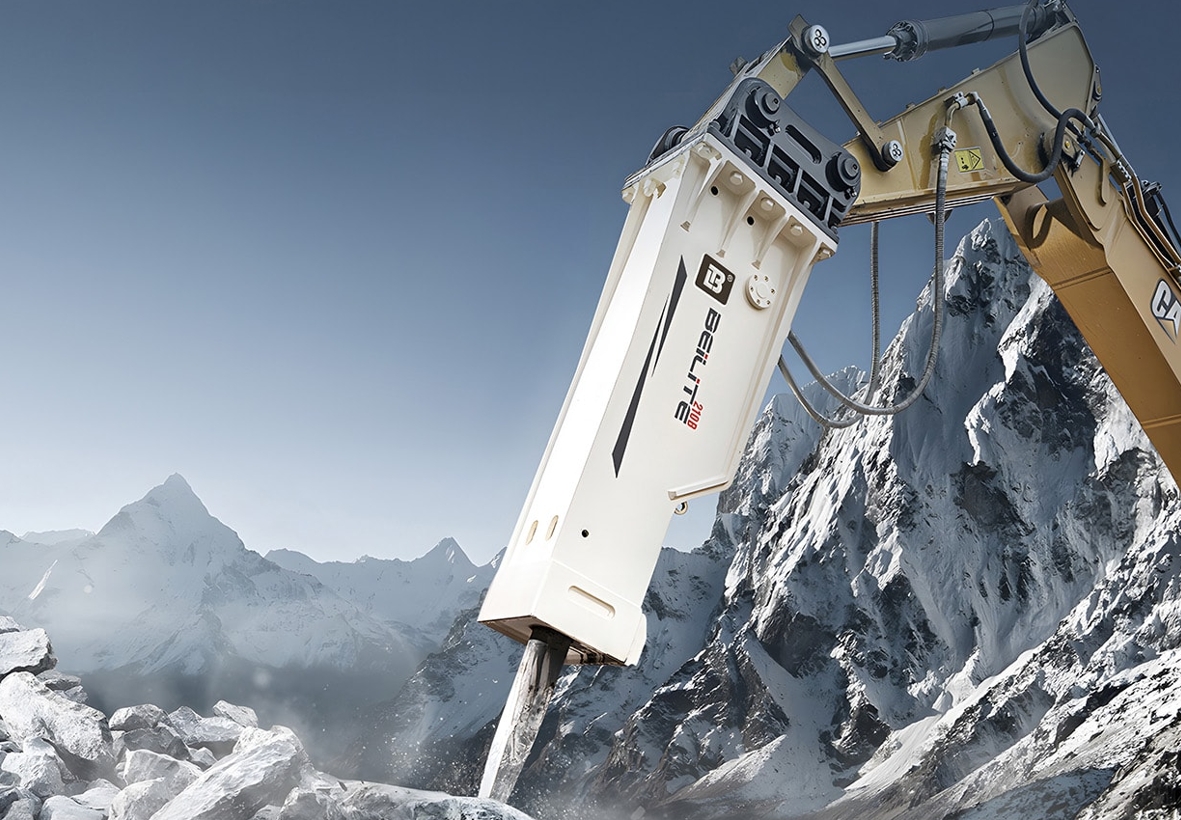
The Impact Rate (BPM – Beats Per Minute) measures how many times the piston strikes the working tool per minute. This parameter influences the speed and effectiveness of material breaking. Our BLT-40 offers an impact rate of 800-1400 bpm, while the BLT-45 operates at 700-1200 bpm. Higher impact rates are generally suitable for softer materials or when rapid demolition is needed, while lower impact rates with higher impact energy are better for harder, denser materials. The Working Tool Diameter corresponds to the breaker’s power class and the type of material being broken. Smaller breakers, like the BLT-40 and BLT-45, feature chisel diameters of 40mm and 45mm, respectively. Larger breakers can have tools exceeding 200mm in diameter. The choice of working tool (e.g., MOIL POINT, NARROW CHISEL, BLUNT TOOL) also depends on the specific application.
Accumulator Gas Pressure
The Accumulator Gas Pressure refers to the pre-charge pressure of nitrogen gas within the accumulator. This component stores hydraulic energy, absorbs pressure spikes, and enhances the impact force. Maintaining the correct gas pressure is critical for optimal performance and protecting the hydraulic system. For our BLT-40 and BLT-45 models, the back head nitrogen pressure is typically 14-17 bar. Regular checks and recharging of the accumulator are part of routine maintenance.
Comparative Analysis of Hydraulic Breaker Models
To illustrate the variability in hydraulic breaker parameters, we can compare two of our popular models, the BLT-40 and BLT-45. This comparison highlights how slight differences in specifications can impact application suitability.
| Metric | BLT-40 | BLT-45 | Key Difference |
|---|---|---|---|
| Total Weight | 86 kg | 137 kg | BLT-45 is 51 kg heavier, indicating more power. |
| Chisel Diameter | 40 mm | 45 mm | BLT-45 has a larger chisel, suitable for tougher materials. |
| Working Oil Flow | 15~30 l/min | 20~40 l/min | BLT-45 requires more oil flow for increased power. |
| Operating Pressure | 90~120 bar | 90~120 bar | Both operate within a similar pressure range. |
| Impact Rate | 800~1400 bpm | 700~1200 bpm | BLT-40 has a higher max impact rate, BLT-45 offers more force per blow. |
| Applicable Excavator | 0.5–1.2t | 0.8–1.5t | BLT-45 is designed for slightly larger carriers. |
This table clearly demonstrates how specific parameters scale with the breaker’s intended use and power. The BLT-45, with its higher weight and larger chisel, is designed for slightly heavier duty tasks and larger mini-excavators compared to the BLT-40.
The Importance of Matching Breaker Parameters to Application
Properly matching a hydraulic breaker to its application and carrier is paramount for efficiency, safety, and longevity. An improperly matched breaker can lead to reduced productivity, increased fuel consumption, premature wear on both the breaker and the excavator, and even structural damage. We emphasize the importance of consulting detailed specifications and expert advice before making a purchase. If you’re interested in this topic, check out our article 《How to choose a hydraulic breaker》.
Choosing the Right Working Tool
Beyond the core breaker parameters, the choice of Working Tool significantly impacts performance. Different tools are designed for specific tasks:
- MOIL POINT (镐形钎): Ideal for general breaking of concrete and rock due to its excellent penetration capabilities.
- NARROW CHISEL (楔形钎): Best for cutting asphalt, trenching, or demolition work where precise lines are needed.
- BLUNT TOOL (钝头钎): Used for secondary breaking of large boulders, compaction, or when a wide impact area is required.
The material and forging process of the working tool also contribute to its durability and effectiveness. A Forging Tool generally offers higher strength and wear resistance, extending its lifespan in demanding conditions.
Maintenance and Parameter Stability
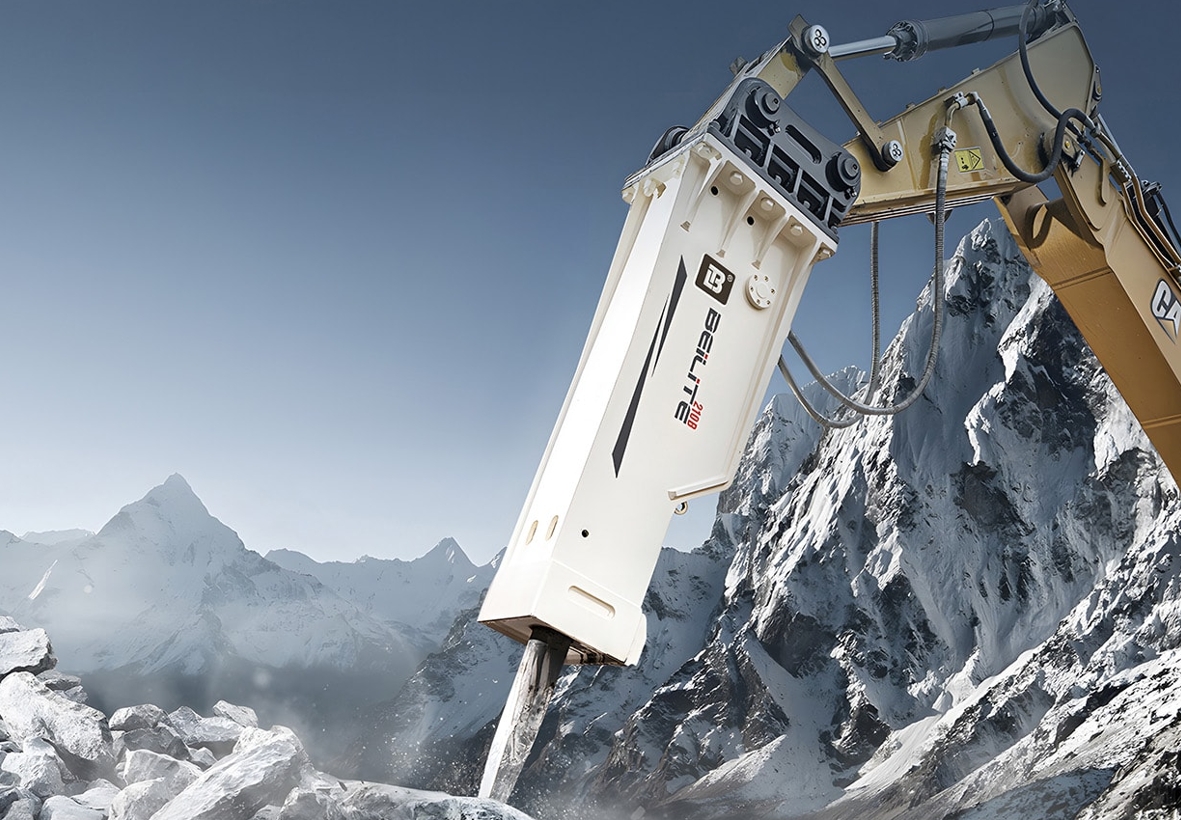
Maintaining a hydraulic breaker according to manufacturer guidelines ensures its parameters remain stable over time. Regular checks of Accumulator Gas Pressure using a Charging Regulator are vital. The use of appropriate Chisel Paste / Grease via the Grease Nipple lubricates the working tool and bushings, preventing excessive wear and maintaining optimal impact energy. A Seal Kit is essential for periodic overhauls to replace worn O-rings, U-cup Seals, and Dust Seals, which are critical for preventing hydraulic fluid leaks and contamination. These practices contribute to consistent performance and extend the lifespan of the equipment.
Expert Insight
From our extensive experience in the hydraulic breaker industry, we consistently observe that the most common cause of underperformance or premature failure is a mismatch between the breaker’s parameters and the carrier’s hydraulic system, or the application’s demands. For instance, using a breaker with an insufficient oil flow from the excavator will result in a significantly reduced impact rate and energy, leading to inefficient breaking and potential damage to the breaker’s internal components due to incomplete piston strokes. Conversely, an excessive oil flow can lead to overheating and cavitation. We strongly recommend a detailed review of both the breaker’s and the carrier’s specifications, paying close attention to the recommended oil flow and operating pressure ranges. This proactive approach ensures maximum productivity and extends the operational life of your equipment. More people are focusing on Hydraulic break to improve efficiency to improve efficiency.
CTA
To explore our comprehensive range of hydraulic breakers and receive personalized advice on matching the perfect model to your specific needs, contact our specialists today. We provide expert guidance and high-quality equipment designed for superior performance and durability.
FAQs
Q1: What are the most critical parameters to consider when choosing a hydraulic breaker?
A1: The most critical parameters include the breaker’s Operating Weight, Working Oil Flow, Operating Pressure, Impact Rate, and Working Tool Diameter. These factors determine the breaker’s power, compatibility with the carrier, and suitability for various breaking tasks. Matching these to your excavator and specific application ensures optimal efficiency and longevity.
Q2: How does the “Applicable Excavator” parameter relate to breaker selection?
A2: The “Applicable Excavator” parameter, typically expressed in tons, indicates the recommended weight class of the host machine. This ensures the excavator can safely and efficiently handle the breaker’s weight and power output without compromising stability or causing undue stress on the carrier’s boom and hydraulic system.
Q3: Why is accumulator gas pressure important for hydraulic breakers?
A3: The Accumulator Gas Pressure is crucial because the accumulator stores hydraulic energy, absorbs pressure fluctuations, and provides additional force to the piston during the impact cycle. Correct gas pressure ensures consistent impact energy, protects the hydraulic system from shock loads, and maintains the breaker’s overall performance.
Q4: Can I use any working tool with my hydraulic breaker?
A4: No, you cannot use just any working tool. The Working Tool Diameter must match the breaker’s specifications. Furthermore, the type of working tool (e.g., MOIL POINT, NARROW CHISEL, BLUNT TOOL) should be selected based on the specific material you intend to break and the nature of the demolition task.
Q5: What is the typical lifespan of a hydraulic breaker, and how can it be extended?
A5: The lifespan of a hydraulic breaker varies significantly based on usage intensity, maintenance quality, and operating conditions. With proper maintenance, including regular lubrication, correct accumulator pressure, and timely replacement of wear parts like Seal Kits and bushings, a hydraulic breaker can last for many years. Regular inspections and adherence to manufacturer guidelines are key.
Keywords
Primary Keyword: hydraulic breaker parameters
Long-tail Keywords: hydraulic hammer specifications, excavator breaker compatibility, choosing hydraulic breaker
Semantic Keywords: operating weight, oil flow, impact rate, working pressure, chisel diameter, accumulator, carrier, working tool, maintenance, demolition, rock breaking, concrete breaking, hydraulic system, wear parts


