

When it comes to demolition, quarrying, or construction, the hydraulic breaker working conditions directly dictate the efficiency and lifespan of your equipment. Choosing the right hydraulic breaker for specific conditions is not just about power; it is about precision matching of the tool to the task. We understand that every job site presents a unique set of challenges, from the hardness of the material to the ambient environment. Our goal is to ensure you have the knowledge to select and operate your hydraulic breaker effectively, maximizing productivity and minimizing downtime.
Understanding Hydraulic Breaker Working Conditions
Defining working conditions involves analyzing several factors that influence how a hydraulic breaker performs. These factors include the type and hardness of the material, the operating environment, and the specific application. A well-matched breaker ensures optimal energy transfer and reduces wear on both the breaker and the carrier.
Impact of Material Hardness and Type
Different materials require different approaches. Breaking soft rock or concrete demands a different impact force and frequency compared to fracturing granite or reinforced concrete. For softer materials, a higher impact rate might be more effective, while harder, more brittle materials often benefit from a lower impact rate but higher impact energy. The type of material also influences the choice of working tool, such as a moil point for penetration or a chisel for cutting.
Key Hydraulic Breaker Parameters for Different Applications
Selecting the correct hydraulic breaker involves understanding how its technical parameters align with your specific application. We focus on ensuring our equipment delivers consistent performance across a wide array of tasks.
Oil Flow and Operating Pressure
The oil flow (l/min) and operating pressure (bar) are critical hydraulic parameters. The carrier (excavator) must supply the correct oil flow and pressure within the breaker’s specified range. Too little flow reduces impact energy, while excessive pressure can damage the breaker’s internal components. For instance, a BLT-70 requires an oil flow of 40-70 l/min and an operating pressure of 110-140 bar, making it suitable for mid-range demolition tasks.
Impact Rate (BPM)
The impact rate (BPM) refers to the number of times the piston strikes the working tool per minute. High impact rates are often preferred for breaking softer, more layered materials, as they provide rapid, continuous fracturing. Lower impact rates, coupled with higher impact energy, are more effective for dense, hard rock, delivering powerful blows that shatter the material. For example, our BLT-40 model offers an impact rate of 800-1400bpm, ideal for lighter demolition and trenching.
Working Tool Selection
The choice of working tool is crucial for efficiency. A moil point is the most common for general breaking and penetration. A narrow chisel excels at cutting asphalt or trenching. For secondary breaking of large boulders or compaction, a blunt tool distributes force over a wider area. Using the wrong tool can reduce efficiency and increase wear on both the tool and the breaker.
Matching Breaker to Carrier Weight
Properly matching the breaker operating weight to the carrier operating weight is essential for stability and safety. An undersized breaker will be inefficient, while an oversized breaker can put undue stress on the excavator’s boom and hydraulic system. Our product range, such as the BLT-135, which is designed for 18-22t excavators, ensures a balanced setup for optimal performance. How to choose a hydraulic breaker
Selecting the Right Beilite Hydraulic Breaker for Your Job
We offer a comprehensive range of hydraulic breakers designed to meet diverse hydraulic breaker working conditions. Our expertise ensures you get a tool that performs reliably and efficiently.
Beilite Product Range Overview
Our BLT series covers a wide spectrum of applications, from compact models for small excavators to heavy-duty units for large-scale mining. Each model is engineered with specific parameters to match various carrier weights and material types. This precise matching is a core part of our unique value proposition.
| Model | Breaker Operating Weight | Chisel Diameter | Applicable Excavator | Working Oil Flow | Operating Pressure |
|---|---|---|---|---|---|
| BLT-40 | 86kg | 40mm | 0.5–1.2t | 15~30 l/min | 90~120bar |
| BLT-70 | 362kg | 70mm | 4.5–6t | 40~70 l/min | 110~140bar |
| BLT-100 | 986kg | 100mm | 10–14t | 80~110 l/min | 150~170bar |
| BLT-155 | 2610kg | 155mm | 27~33t | 180~240 l/min | 200~220bar |
This table highlights how our models scale in power and size, allowing for precise selection based on your excavator and job requirements. For instance, the BLT-155, with its 155mm chisel diameter and capability for 27-33t excavators, is built for demanding tasks.
Case Study: Quarry Operation with BLT-155
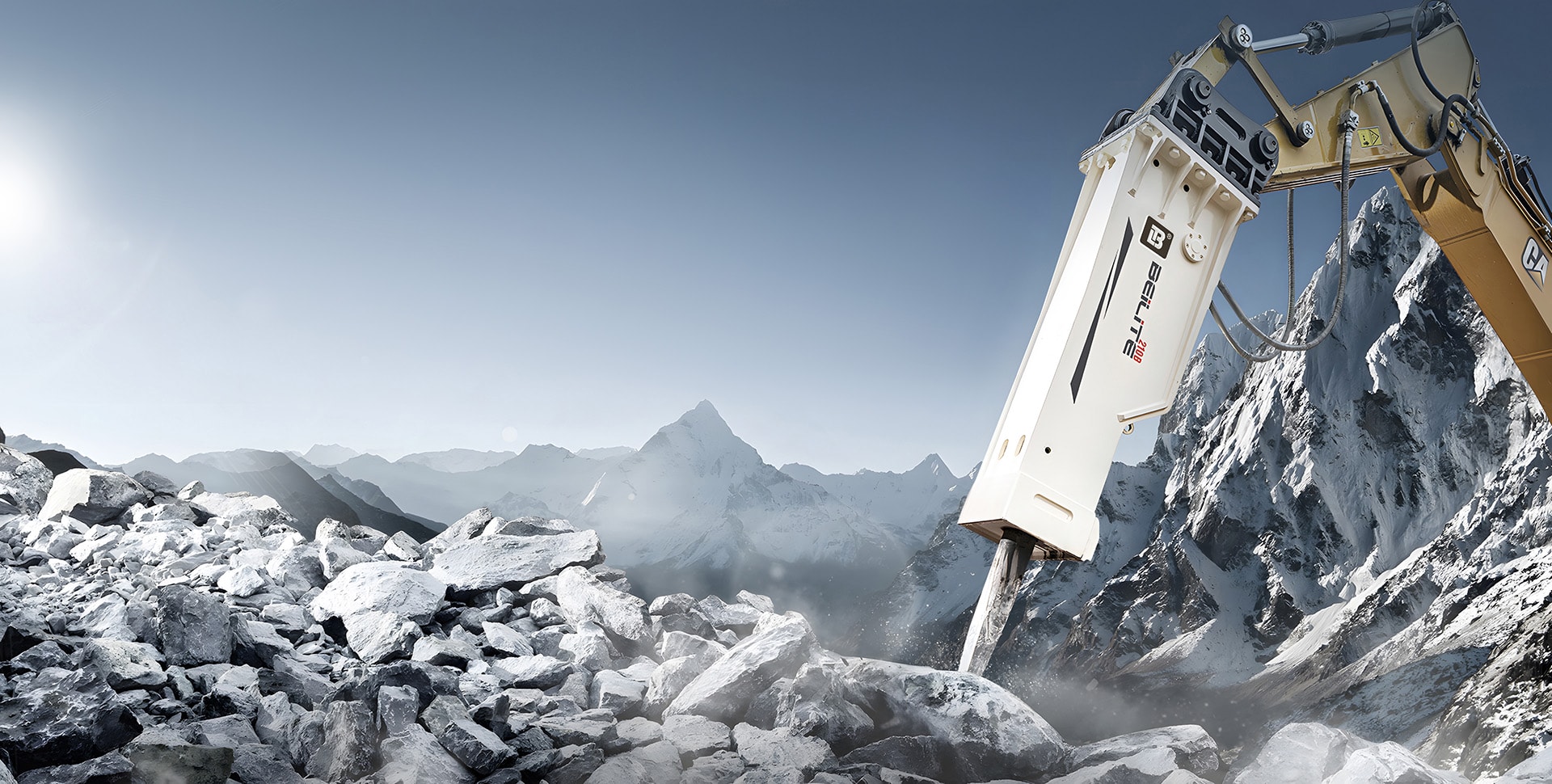
Consider a large-scale quarry operation where hard granite needs breaking. The BLT-155 is an ideal choice. Its high operating pressure of 200-220 bar and substantial breaker operating weight allow it to deliver powerful blows necessary for fracturing tough rock. We deployed a BLT-155 on a 30-ton excavator in a quarry in Australia, where it consistently broke granite at a rate that significantly reduced project timelines. The durability of its outer casing and the robust design of its internal components ensured continuous operation with minimal interruptions.
Optimizing Operation and Maintenance for Longevity
Even the best hydraulic breaker requires proper operation and regular maintenance to achieve its full potential and extend its service life. We guide our customers through best practices to ensure their investment delivers long-term value.
Proper Operating Techniques
Avoid blank firing, where the piston strikes nothing, as this can cause internal damage. Always apply constant downward pressure on the working tool to maintain contact with the material. Break material in layers, starting from the edges or existing cracks, rather than attempting to shatter large, solid blocks directly. This technique conserves energy and reduces stress on the breaker. Keep the hydraulic breaker: Hydraulic break perpendicular to the material surface for maximum energy transfer.
Regular Maintenance Practices
Daily checks include inspecting the working tool for wear and proper lubrication with chisel paste. Check the tool pins and bushings for looseness or damage. Regularly inspect hydraulic hoses for leaks and ensure connections are secure. We recommend adhering to the manufacturer’s specified service intervals for hydraulic oil changes and filter replacements. Neglecting these simple steps can lead to premature wear and costly repairs.
From Our Field Engineers: Accumulator Pressure Checks
Our field engineers consistently emphasize the importance of checking the accumulator gas pressure. The accumulator stores hydraulic energy and cushions the system. Incorrect pressure can lead to reduced impact power or damage to the breaker’s hydraulic system. For models like the BLT-70, the accumulator nitrogen pressure should be maintained between 55-60 bar. We recommend checking this pressure with a charging regulator every 100-150 operating hours, or immediately if you notice a drop in impact performance. This proactive approach saves significant repair costs.
Expert Insight: The Future of Adaptive Hydraulic Breakers
The future of hydraulic breakers lies in enhanced adaptability and intelligence. Currently, operators manually adjust techniques based on hydraulic breaker working conditions. However, we envision a future where breakers automatically sense material hardness and adjust their impact rate and operating pressure in real-time. For example, our BLT-155 model, with its robust working pressure of 200-220bar and impact rate of 200-300bpm, already demonstrates the power needed for demanding tasks. By integrating advanced sensors and AI, future models could dynamically optimize these parameters. This would not only improve efficiency but also significantly reduce wear and tear, leading to longer equipment life and lower operating costs across all hydraulic breaker working conditions.
About the Author
An old man with 18 years of experience
Need Help Choosing?
Need help choosing the right hydraulic breaker? Contact our experts for a personalized recommendation.
Frequently Asked Questions
Q1: How do I know if my hydraulic breaker is properly matched to my excavator?
A1: Check the manufacturer’s specifications for both your excavator and the hydraulic breaker. The breaker operating weight and working oil flow should fall within the recommended range for your excavator’s carrier operating weight and hydraulic output. An improperly matched setup can lead to reduced efficiency or damage.
Q2: What are the signs that my hydraulic breaker’s accumulator needs recharging?
A2: A noticeable decrease in impact power, inconsistent blows, or excessive vibration can indicate low accumulator gas pressure. Refer to your breaker’s manual for the correct accumulator nitrogen pressure and use a charging regulator for accurate measurement and recharging.
Q3: Can I use the same working tool for all breaking tasks?
A3: While a moil point is a common general-purpose tool, specialized tasks benefit from specific tools. For instance, a narrow chisel is better for trenching, and a blunt tool is more effective for secondary breaking of large, softer materials. Using the correct working tool improves efficiency and reduces wear.
Q4: How often should I lubricate my hydraulic breaker’s working tool?
A4: Lubrication with chisel paste should be done daily, or even more frequently during continuous operation, especially in abrasive environments. Proper lubrication prevents excessive wear on the working tool and bushings.
Q5: What is the most common cause of premature wear in hydraulic breakers?
A5: The most common causes are improper operation (like blank firing or not applying constant pressure), insufficient lubrication, and neglecting regular maintenance checks. Adhering to recommended operating procedures and maintenance schedules significantly extends the life of your hydraulic breaker.
Keywords:
Hydraulic Breaker Working Conditions, Choosing hydraulic breaker for specific conditions, Optimizing hydraulic breaker performance, Hydraulic breaker maintenance for different applications, Impact of material hardness on breaker selection, Matching hydraulic breaker to excavator, Hydraulic hammer applications, Rock breaking techniques, Concrete demolition equipment, Quarry operations, Construction site challenges, Breaker operating pressure, Oil flow requirements, Impact rate (BPM), Working tool types, Accumulator gas pressure, Wear parts, Excavator weight class, Beilite hydraulic breakers, Equipment reliability, Cost-effectiveness


