

As the Chief Child Development & Creativity Officer at Joycat, we frequently observe how crucial early experiences are for a child’s development. We understand that parents seek effective ways to support their children’s growth, especially in foundational areas like fine motor skills and hand-eye coordination. We believe that play offers the most natural and engaging pathway for children aged 0-3 years to acquire these essential abilities.
Understanding Fine Motor Skills and Hand-Eye Coordination in Early Childhood
Fine motor skills involve the coordination of small muscles, typically in the hands and fingers, with the eyes. These skills are fundamental for a child’s independence and learning. They enable tasks like grasping objects, drawing, writing, and self-feeding. Without well-developed fine motor skills, children may struggle with everyday activities and academic tasks later on.
Hand-eye coordination is the ability of the eyes to guide the hands in performing a task. This skill is critical for precision and accuracy in movements. For young children, hand-eye coordination is evident in actions such as reaching for a toy, stacking blocks, or putting food into their mouths. It forms the basis for more complex motor tasks as they grow.
Children aged 0-3 years achieve various developmental milestones related to fine motor skills.
* 0-3 Months: Infants begin to grasp objects reflexively and bring their hands to their mouths.
* 3-6 Months: Babies start to reach for objects intentionally and transfer them from one hand to the other.
* 6-9 Months: They develop a pincer grasp, picking up small items with their thumb and forefinger.
* 9-12 Months: Toddlers can stack two blocks and wave goodbye.
* 12-18 Months: They can scribble with a crayon and turn pages in a book.
* 18-24 Months: Children build towers with more blocks and begin to use a spoon.
* 2-3 Years: They can draw simple shapes, use child-safe scissors, and dress themselves with assistance.
The Transformative Power of Play in Developing Essential Skills
Play is not merely entertainment; it is the primary mechanism through which young children learn and develop. Through play, children naturally engage in activities that strengthen their fine motor skills. They manipulate toys, explore textures, and practice precise movements without explicit instruction. This intrinsic motivation makes play an incredibly effective developmental tool.
Play provides rich opportunities for sensory exploration, which directly supports cognitive growth. When children interact with toys that have different textures, sounds, and shapes, they process sensory information. This sensory input helps build neural pathways in the brain, enhancing their understanding of the world. For instance, squeezing a soft toy or feeling the bumps on a block contributes to their sensory vocabulary.
Moreover, play encourages creativity and problem-solving. As children experiment with toys, they discover cause-and-effect relationships. They might try different ways to fit shapes into a sorter or figure out how to make a toy move. These experiences foster imaginative thinking and teach them to overcome challenges. Play allows for open-ended exploration, which is crucial for developing flexible thinking.
Selecting the Best Toys for Fine Motor Skill Development (0-3 Years)
Choosing appropriate toys is essential for supporting fine motor skill development. Toys that encourage grasping, reaching, and manipulating objects are highly beneficial. These include rattles, soft blocks, and stacking rings. Such toys invite children to use their hands and fingers in various ways, strengthening small muscles.
Engaging toys for hand-eye coordination and spatial awareness help children connect what they see with what their hands do. Shape sorters, puzzles, and bead mazes require children to visually assess an object’s position and then guide their hands to place it correctly. These activities enhance their ability to judge distances and relationships between objects.
Age-appropriate toy recommendations ensure that the challenges presented are suitable for a child’s current developmental stage.
* 0-6 Months: Soft rattles, textured balls, and play mats with hanging toys encourage reaching and grasping.
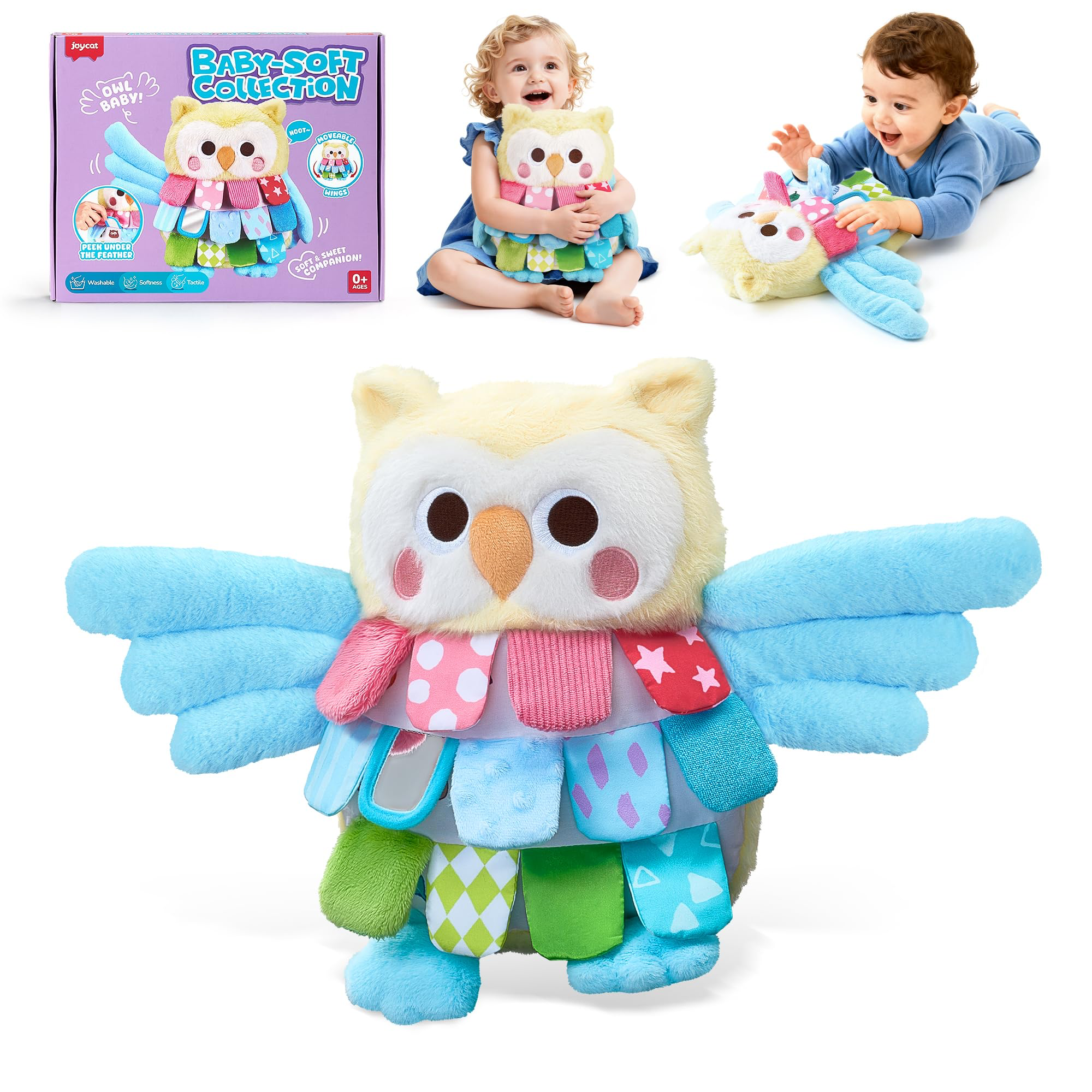
* 6-12 Months: Stacking cups, large blocks, and simple musical instruments promote manipulation and cause-and-effect understanding. Baby Owl Tummy Time Sensory Toy is an excellent option for this age group, offering multi-sensory engagement and boosting grasping skills.
* 1-2 Years: Shape sorters, chunky puzzles, and pull-along toys help refine hand-eye coordination and problem-solving.
* 2-3 Years: Playdough, lacing beads, and art supplies like crayons and large paintbrushes further develop dexterity and creativity.
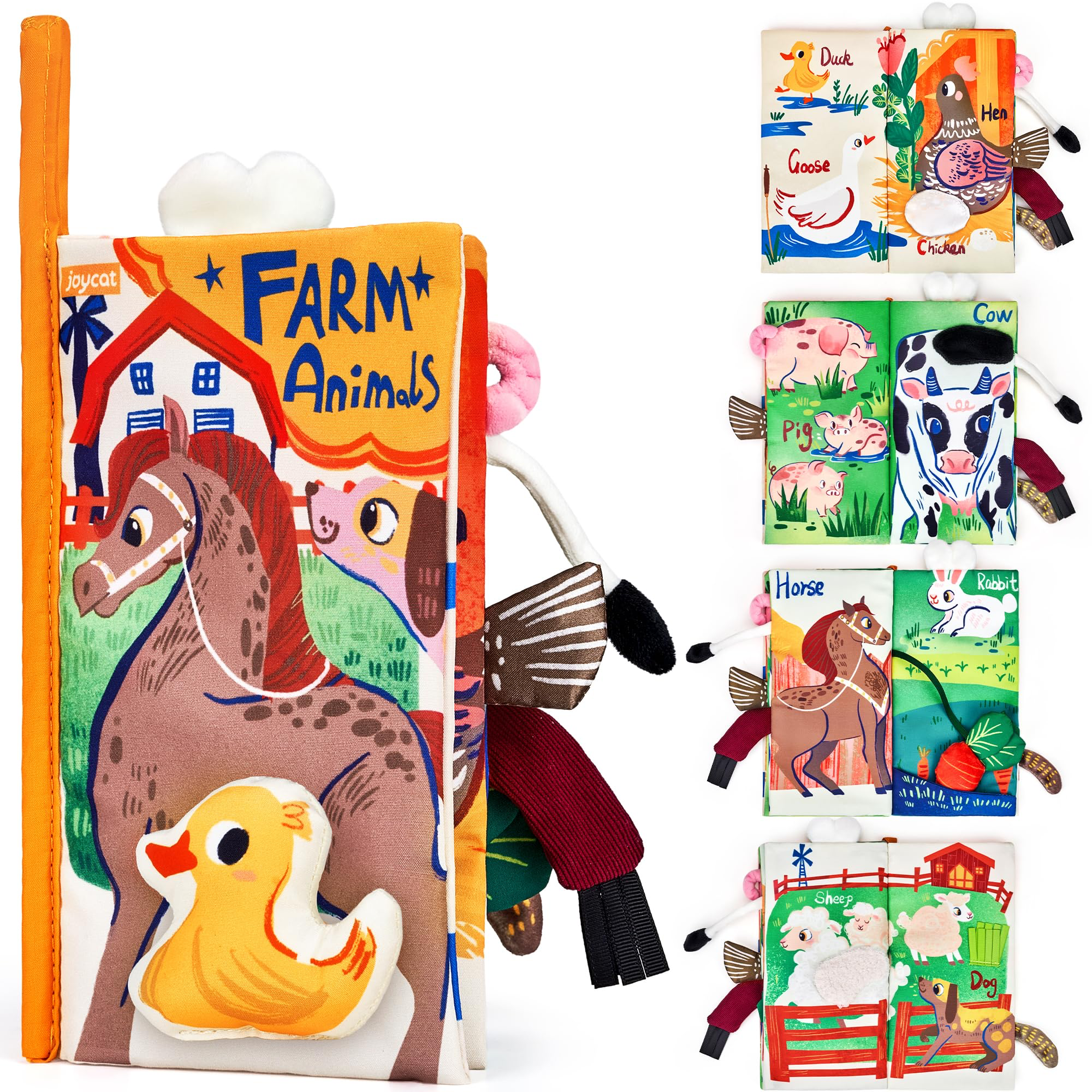
If you’re interested, check 《Baby Crinkle Cloth Book》.
| Age Range (Months) | Recommended Toy Types | Fine Motor Skills Developed |
|---|---|---|
| 0-6 | Rattles, Soft Blocks, Play Mats | Grasping, Reaching, Reflexes |
| 6-12 | Stacking Cups, Large Blocks, Sensory Books | Transferring, Pincer Grasp, Manipulation |
| 12-24 | Shape Sorters, Simple Puzzles, Push/Pull Toys | Hand-Eye Coordination, Object Placement, Release |
| 24-36 | Playdough, Lacing Beads, Crayons | Dexterity, Precision, Bilateral Coordination |
Joycat’s Top Picks: Toys That Spark Development and Joy
At Joycat, we design toys specifically to foster intellectual growth and natural development. Our sensory toys are crafted to enhance tactile exploration and dexterity. The Baby Crinkle Cloth Book is a prime example, offering various textures, sounds, and interactive elements like a pull-out carrot. This book engages multiple senses, encouraging babies to grasp, crinkle, and explore, which strengthens their finger muscles and sensory processing.
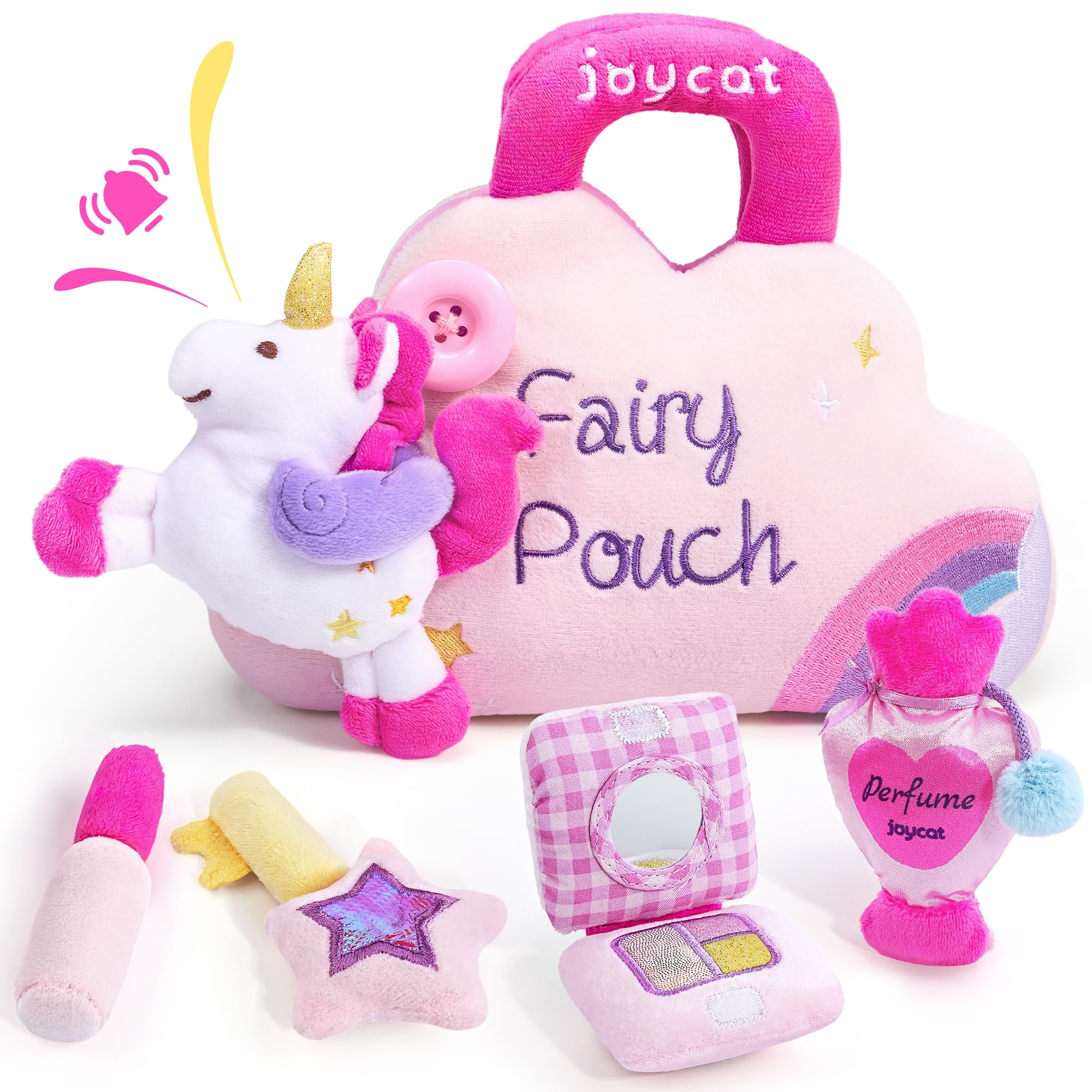
We also offer interactive playsets designed for imaginative and fine motor play. The Baby Unicorn Makeup Bag Playset includes five cute sensory toys within a cloud purse. Children can pretend to apply makeup, pack treasures, and manipulate the various items. This encourages early role-play, fine motor development, and imaginative scenarios, all while practicing precise hand movements.
Our educational toys are designed to grow with your child’s abilities, providing sustained developmental benefits. The Baby Owl Tummy Time Sensory Toy, for instance, features crinkled, multi-textured feathers and hidden patterns. This toy supports grasping skills and fine motor development for infants aged 6-12 months, and its flexible wings offer different play modes, adapting to a child’s evolving interests and skills.
Integrating Play into Daily Routines for Optimal Growth
Parents can easily incorporate simple activities into daily routines to encourage fine motor skills at home. For instance, during mealtime, encourage your child to pick up small pieces of food. During bath time, provide squeeze toys for them to manipulate. Even simple tasks like helping to put away toys can become opportunities for fine motor practice. Consistency in these small interactions yields significant developmental benefits.
Creating a stimulating play environment is crucial for young children. Ensure that toys are accessible and varied, offering different textures, shapes, and functions. Rotate toys regularly to maintain interest and introduce new challenges. A dedicated play space, even a small one, signals that this area is for exploration and learning. This encourages independent play and sustained engagement.
Parents play a vital role in engaging effectively during playtime. Get down to your child’s level and participate in their play. Model how to use toys and offer gentle guidance without taking over. Describe what your child is doing, such as “You’re stacking the red block on top of the blue one!” This verbal reinforcement enhances their understanding and encourages further exploration. Your presence and interaction make playtime more meaningful and impactful.
Unlock Your Child’s Potential with Joycat
At Joycat, we believe every child deserves the best start in life. Our award-winning educational toys are thoughtfully designed to nurture intellectual growth and natural development from 0-12 years. We invite you to explore our diverse product lines, including Sensory Play, Art & Craft Play, Active Play, and Learning Play, each crafted to spark curiosity and ignite imagination. Let us be your caring companion and guiding partner in your child’s joyful adventure of learning. For more information or to find the perfect developmental toy, please contact us at service@joycat.com.
FAQs
What are fine motor skills and why are they important for my baby?
Fine motor skills involve the coordination of small muscles, primarily in the hands and fingers, with the eyes. These skills are crucial for a child’s independence. They enable essential tasks such as grasping, feeding themselves, dressing, and eventually writing. Developing these skills early supports overall cognitive development and prepares children for future learning and daily activities.
How can I tell if my child is developing fine motor skills appropriately for their age?
Observe your child’s ability to perform age-appropriate tasks. For example, a 6-month-old should reach for objects, while a 12-month-old might stack two blocks. Developmental milestones provide general guidelines. If you notice significant delays or have concerns about your child’s fine motor development, consult with a pediatrician or an occupational therapist for personalized advice and support.
Are there specific types of play that are more effective for hand-eye coordination?
Yes, certain types of play are particularly effective. Activities like stacking blocks, putting pieces into a shape sorter, or playing with puzzles directly engage hand-eye coordination. Games involving throwing and catching soft balls, or even simple drawing and scribbling, also help children practice guiding their hand movements with their vision. These activities build precision and control.
How do I choose safe and effective toys for my 0-3 year old?
Prioritize safety by selecting toys free from small parts that could be choking hazards, especially for children under three. Look for non-toxic materials and durable construction. For effectiveness, choose toys that encourage active engagement, manipulation, and problem-solving. Age-appropriate toys that offer varied textures, sounds, and shapes will stimulate multiple senses and support diverse developmental areas.
Can screen time affect fine motor skill development in young children?
Excessive screen time can potentially hinder fine motor skill development. It often involves passive observation rather than active manipulation and exploration. Hands-on play provides the necessary practice for developing muscle strength, dexterity, and hand-eye coordination. Limiting screen time and prioritizing interactive, play-based activities is crucial for fostering these essential skills in young children.


