

We often observe babies mimicking our actions, a seemingly simple behavior that holds profound significance for their development. This imitation marks the initial stage of a complex journey toward genuine self-expression and creativity. Understanding this progression allows us to provide targeted support, fostering an environment where a baby’s unique potential can flourish. We will explore how early interactions and play experiences lay the groundwork for innovative thinking and confident individuality.
Understanding the Foundations of Baby’s Creative Development
1. The Crucial Role of Early Imitation in Learning
Imitation serves as a fundamental learning mechanism for infants. Babies observe and then replicate the actions, sounds, and facial expressions of caregivers, which helps them understand their environment. This process is not merely rote copying; it involves active engagement and cognitive processing. Through imitation, babies begin to grasp cause and effect, social cues, and the functions of objects. For instance, when a baby sees a parent clap and then claps themselves, they are internalizing a social interaction and developing motor skills. This early mimicry builds neural pathways essential for more complex cognitive functions later on.
2. How Sensory Exploration Fuels Cognitive Growth in Infants
Sensory exploration is paramount for an infant’s cognitive development. Babies learn about the world by touching, tasting, smelling, seeing, and hearing everything around them. Each new sensory input creates connections in the brain, forming the basis for understanding concepts and developing problem-solving skills. Providing a rich sensory environment, filled with varied textures, sounds, and colors, stimulates these connections. This exploration directly contributes to creativity by expanding a baby’s mental library of experiences, which they can later draw upon for imaginative play. For example, a baby exploring a crinkly toy learns about sound and texture simultaneously.
3. Recognizing Key Milestones in a Baby’s Journey to Self-Expression
Babies progress through several developmental milestones on their path to self-expression. Initially, they engage in reflexive actions, which gradually become more intentional. Around 6-9 months, babies often begin to show preferences for certain toys or activities, indicating emerging individuality. By 12-18 months, they might start combining actions in novel ways or using objects symbolically, like pretending a block is a phone. These milestones signify a shift from purely imitative behavior to original thought and creative application. Recognizing these stages helps parents tailor their interactions to support evolving creative capacities.
Practical Strategies to Encourage Your Baby’s Unique Creativity
1. Designing an Environment That Sparks Curiosity and Imagination
A thoughtfully designed environment can significantly enhance a baby’s curiosity and imagination. This involves creating safe spaces where exploration is encouraged, not restricted. Offer a variety of age-appropriate, open-ended toys that can be used in multiple ways. Rotate toys regularly to maintain novelty and prevent overstimulation. Ensure the space is free from hazards, allowing the baby freedom to move and interact with their surroundings independently. A stimulating environment provides the raw material for imaginative play and creative thought.
2. Engaging in Interactive Play That Fosters Pretend Play Skills
Interactive play is crucial for developing pretend play skills, a cornerstone of creativity. Engage in back-and-forth interactions, responding to your baby’s cues and expanding on their ideas. Introduce simple scenarios, such as feeding a doll or driving a toy car, and encourage your baby to participate. Pretend play allows children to experiment with different roles, narratives, and emotions, which builds empathy and social understanding. These experiences help babies move beyond simple imitation to constructing their own imaginative worlds. The Baby Unicorn Makeup Bag Playset is an excellent example of a toy that encourages such role-play, fostering early imagination.
3. Supporting Fine Motor Development Through Hands-On Activities
Fine motor skills are essential for creative expression, as they enable children to manipulate objects and create. Provide opportunities for hands-on activities that strengthen small muscles in the hands and fingers. This includes stacking blocks, manipulating playdough, turning pages of a book, or engaging with sensory bins. These activities not only refine dexterity but also enhance hand-eye coordination and problem-solving abilities. Improved fine motor control empowers babies to translate their creative ideas into tangible actions and creations.
The Transition from Mimicry to Authentic Self-Expression
1. Observing How Babies Adapt and Innovate Through Play
As babies mature, their play evolves from simple mimicry to adaptation and innovation. They begin to modify familiar actions or combine elements in new ways. For instance, a baby might initially bang a spoon on a pot (imitation), then start stirring the pot with the spoon, making “soup” (adaptation), and eventually use the spoon as a drumstick to create a rhythm (innovation). These small acts of originality demonstrate the emergence of creative thinking. We can observe these shifts by paying close attention to how they interact with toys and their environment.
2. The Link Between Emotional Development and Creative Confidence
Emotional development is deeply intertwined with creative confidence. When babies feel secure and loved, they are more likely to explore, take risks, and express themselves freely. A supportive emotional environment validates their efforts, even when outcomes are imperfect. Conversely, criticism or excessive correction can stifle a child’s willingness to experiment creatively. Fostering a sense of emotional security encourages babies to trust their own ideas and express them without fear of judgment. This emotional foundation is vital for developing authentic self-expression.
3. Celebrating Individuality in Your Child’s Play and Discoveries
Celebrating a child’s individuality reinforces their unique creative voice. Acknowledge and praise their unique approaches to play, even if they differ from expectations. Focus on the effort and imagination behind their actions, rather than just the end result. For example, if a child builds an unconventional tower, praise their unique design rather than suggesting how to make it “better.” This positive reinforcement encourages them to embrace their own ideas and develop a strong sense of self. Recognizing their unique contributions helps them understand that their individual perspective is valuable.
Joycat’s Role in Nurturing Early Childhood Creativity
Joycat is dedicated to fostering intellectual growth and natural development in children from 0-12 years. Our product lines are specifically designed to spark curiosity and ignite imagination, making learning through play a joyful adventure. We believe that the right tools can significantly enhance a child’s creative journey.
1. How Sensory Toys Enhance Exploratory Play
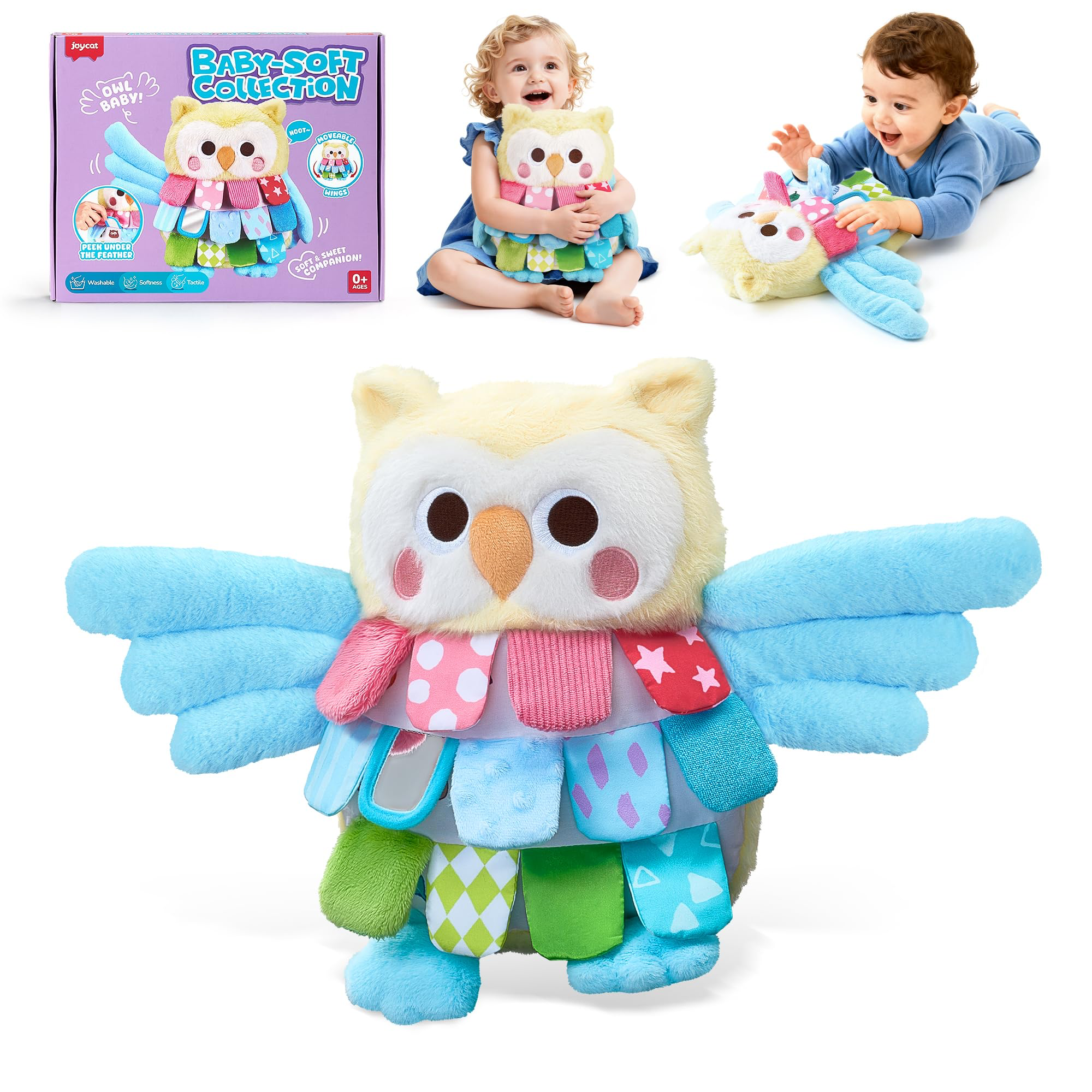
Joycat’s sensory toys are crafted to engage multiple senses, providing rich exploratory experiences for infants. These toys feature varied textures, sounds, and colors that stimulate a baby’s developing senses. For instance, the Baby Owl Tummy Time Sensory Toy offers crinkly, multi-textured feathers and a baby-safe mirror, perfect for encouraging tactile exploration and visual tracking during tummy time. Such toys provide the foundational sensory input necessary for cognitive development and creative thinking. They invite babies to investigate, discover, and learn about their world through direct interaction.
2. Pretend Play Sets That Inspire Imaginative Scenarios
Our pretend play sets are designed to inspire imaginative scenarios and early role-play. These sets provide children with tools and contexts to create their own stories and narratives. The Baby Unicorn Makeup Bag Playset includes sensory toys like a squeaky unicorn and a crinkle eyeshadow palette, encouraging children to mimic adult activities and invent their own play sequences. This type of play is crucial for developing narrative skills, problem-solving abilities, and social understanding. It allows children to explore different roles and situations in a safe and engaging way.
3. Learning Play Products Supporting Developmental Milestones
Joycat’s learning play products support key developmental milestones, laying the groundwork for future creativity. These products are often multi-functional, growing with the child and adapting to their evolving skills. The Baby Crinkle Cloth Book introduces farmyard friends with crinkly sounds, a squeaker, and a pull-out carrot, supporting early literacy, fine motor skills, and sensory exploration. By meeting children at their developmental stage, these toys provide appropriate challenges that build confidence and encourage continued learning and creative engagement.
| Developmental Stage | Key Creative Behaviors | Joycat Product Example |
|---|---|---|
| 0-6 Months | Sensory exploration, basic imitation | Baby Owl Tummy Time Sensory Toy |
| 6-12 Months | Object manipulation, cause-and-effect play | Baby Crinkle Cloth Book |
| 12-24 Months | Symbolic play, early pretend play | Baby Unicorn Makeup Bag Playset |
| 24-36 Months | Elaborate pretend play, problem-solving | Baby Unicorn Makeup Bag Playset |
Long-Term Benefits of Fostering Early Creativity in Children
1. Building Problem-Solving Skills and Adaptability for the Future
Fostering creativity from an early age significantly enhances a child’s problem-solving skills and adaptability. Creative children learn to approach challenges with flexibility and an open mind, generating multiple solutions rather than relying on a single, rigid approach. This ability to think divergently is invaluable in an ever-changing world, preparing them to navigate complex situations effectively. Early creative experiences build a foundation for resilient and innovative thinking throughout life.
2. Cultivating Emotional Intelligence and Social Connections
Creative play often involves collaboration and understanding different perspectives, which cultivates emotional intelligence and strong social connections. When children engage in imaginative scenarios, they learn to empathize with others, negotiate roles, and communicate their ideas effectively. This process helps them understand emotions, both their own and those of their peers. These social-emotional skills are critical for building healthy relationships and thriving in group settings.
3. Preparing Children for a Lifetime of Learning and Innovation
Nurturing early creativity prepares children for a lifetime of continuous learning and innovation. Creative individuals maintain a natural curiosity and a desire to explore new ideas and concepts. They are more likely to pursue knowledge independently and to engage in lifelong learning. This foundational creativity equips them with the mindset and skills needed to contribute meaningfully to society and to drive future advancements.
Discover More with Joycat
At Joycat, we believe every child holds immense creative potential. We invite you to explore our range of award-winning educational toys, designed to inspire curiosity, imagination, and joyful learning from infancy through childhood. Our products support every stage of your child’s creative journey, from their first imitations to their unique self-expressions.
Visit our website or contact us directly to learn more about how Joycat can be a caring companion and guiding partner in your child’s development. For personalized recommendations or inquiries, please reach out to us at service@joycat.com. We are here to help you nurture a lifetime of creativity and confidence.
FAQs
1. At what age do babies start showing signs of creativity?
Babies begin showing early signs of creativity around 6-9 months, though the foundations are laid much earlier through sensory exploration and imitation. Initially, this might manifest as novel ways of interacting with toys or experimenting with sounds. By 12-18 months, babies often engage in symbolic play, using objects to represent something else, which is a significant step towards imaginative thinking. These early explorations are crucial for developing their unique creative voice.
2. How can I differentiate between imitation and true self-expression in my baby’s play?
Imitation involves directly copying an observed action, while true self-expression demonstrates originality and adaptation. If your baby consistently performs an action exactly as you did, it’s likely imitation. Self-expression emerges when they modify the action, combine it with other behaviors, or use objects in new, unconventional ways. For example, using a block as a phone is an act of self-expression, as it assigns a new, imaginative function to the object.
3. Are there specific types of toys that are best for encouraging creativity in infants?
Open-ended toys that can be used in multiple ways are ideal for encouraging creativity. Examples include blocks, sensory toys with varied textures and sounds, and simple dolls or animal figures. Toys that promote pretend play, like miniature kitchen sets or dress-up clothes, also foster imagination. The best toys allow children to dictate the play, rather than having a single, predetermined function.
4. What if my baby doesn’t seem interested in creative play?
Every child develops at their own pace. If your baby seems less interested in creative play, try introducing different types of sensory experiences or engaging in more interactive play sessions. Model creative behaviors yourself, such as making silly sounds or building towers. Sometimes, a change in environment or the introduction of new materials can spark interest. Patience and consistent encouragement are key.
5. How much screen time is appropriate for fostering creativity in young children?
For children under 18-24 months, screen time should be avoided, except for video-chatting with family. For children aged 2-5, limit screen use to 1 hour per day of high-quality programming, co-viewed with a parent. Excessive screen time can displace opportunities for hands-on exploration and imaginative play, which are crucial for creative development. Prioritize interactive, real-world experiences to foster creativity.


