

We observe that infants between 6 and 12 months rapidly develop crucial fine motor skills. Providing the right tools during this period significantly impacts their growth. Multi-sensory toys offer a rich environment for exploration, directly supporting the intricate coordination required for grasping, reaching, and manipulating objects. We aim to empower parents with the knowledge to select toys that foster this essential development.
Understanding Multi-Sensory Learning Toys for Infant Development
Multi-sensory play is fundamental for an infant’s comprehensive development. During the 6-12 month stage, babies actively engage with their surroundings, using all available senses. We understand that thoughtfully chosen toys can significantly enhance this exploratory phase.
1. Defining Multi-Sensory Play for Babies
Multi-sensory play involves activities and toys that stimulate multiple senses simultaneously. This includes touch, sight, sound, and sometimes even smell and taste, though the latter two are less common in toy design for safety reasons. For babies, this means interacting with objects that have varying textures, bright colors, contrasting patterns, and produce different sounds. The goal is to provide a rich sensory experience that encourages exploration and learning. For example, a toy might crinkle when squeezed, have a bumpy surface, and display vibrant patterns, all at once.
2. The Importance of Sensory Input in Early Childhood
Sensory input is the primary way infants learn about their world. Every touch, sound, and visual stimulus contributes to neural pathway development in their brains. During early childhood, particularly from 6 to 12 months, this input helps babies understand cause and effect, spatial relationships, and object permanence. A diverse range of sensory experiences builds a robust foundation for cognitive, emotional, and physical development. Without adequate sensory stimulation, a child’s developmental progress may slow.
3. How Multi-Sensory Toys Support Holistic Growth
Multi-sensory toys are not just for fun; they are powerful developmental tools. They encourage babies to use their hands, eyes, and ears in coordinated ways. This integrated engagement supports holistic growth by simultaneously developing cognitive skills (problem-solving), emotional skills (self-regulation through exploration), and physical skills (fine and gross motor development). For instance, reaching for a crinkly toy improves hand-eye coordination, while the sound and texture provide immediate feedback, reinforcing the action.
If you are looking for more gift ideas, you might find inspiration in 18 Best Educational Gifts for Kids This Thanksgiving 2025.
Exploring Fine Motor Skill Development in 6-12-Month-Olds
Fine motor skills involve the coordination of small muscles, primarily in the hands and fingers, in conjunction with the eyes. These skills are crucial for tasks like grasping, manipulating objects, and eventually self-feeding and writing. The 6-12 month period marks a significant acceleration in this development.
1. Key Milestones in Infant Fine Motor Skills
Between 6 and 12 months, infants achieve several important fine motor milestones.
1. 6-7 months: Babies begin to transfer objects from one hand to the other. They also start raking small objects with their fingers.
2. 8-9 months: The pincer grasp emerges, allowing them to pick up small items using their thumb and forefinger. They can also bang two objects together.
3. 10-12 months: Infants refine their pincer grasp, stack small blocks, and place objects into containers. They also begin to point with their index finger.
These milestones build upon each other, demonstrating increasing dexterity and control.
2. The Connection Between Sensory Exploration and Hand-Eye Coordination
Sensory exploration is intrinsically linked to the development of hand-eye coordination. When a baby sees a colorful toy, their eyes track it, and their brain plans the movement of their hand to reach for it. The tactile feedback from touching the toy, combined with the visual input, refines their understanding of distance, size, and texture. This continuous loop of sensory input and motor output strengthens the neural pathways responsible for coordinated movements. For example, a toy with varied textures encourages a baby to explore with their fingertips, enhancing their tactile discrimination and fine motor control.
3. Activities That Encourage Grasping, Reaching, and Manipulating
We recommend several activities to foster these skills:
* Reaching for Suspended Toys: Hang toys slightly out of reach during tummy time or in a bouncer to encourage stretching and grasping.
* Object Transfer: Offer two small, safe objects and encourage the baby to pass them between hands.
* Container Play: Provide a container and several small, safe objects for the baby to practice putting in and taking out.
* Crinkle Play: Offer Baby Crinkle Cloth Book or other crinkly toys to encourage squeezing and manipulating.
* Stacking: Introduce soft blocks or stacking rings for early stacking attempts.
Selecting the Best Multi-Sensory Toys for Fine Motor Enhancement
Choosing the right toys is paramount for effective fine motor development. We focus on safety, engagement, and developmental appropriateness.
1. Features to Look for in Developmentally Appropriate Toys
When selecting toys for 6-12-month-olds, consider these features:
* Safety: Ensure toys are non-toxic, free from small parts that could be choking hazards, and have no sharp edges.
* Durability: Toys should withstand chewing, dropping, and repeated play.
* Size and Weight: Toys should be easy for small hands to grasp and manipulate, not too heavy or too light.
* Open-Ended Play: Toys that can be used in multiple ways encourage creativity and sustained engagement.
* Easy to Clean: Babies often put toys in their mouths, so washability is a key consideration.
2. Integrating Different Textures, Sounds, and Visuals for Engagement
A truly multi-sensory toy combines various elements to maximize engagement:
* Textures: Look for toys with smooth, bumpy, soft, crinkly, and ribbed surfaces. These provide diverse tactile experiences.
* Sounds: Rattles, squeakers, crinkles, and gentle chimes capture attention and help babies understand cause and effect.
* Visuals: Bright, contrasting colors and distinct patterns stimulate visual development and focus. Mirrors are also excellent for self-recognition and visual tracking.
3. Joycat’s Top Picks for 6-12-Month-Olds to Boost Fine Motor Skills
We have curated a selection of toys specifically designed to enhance fine motor skills in this age group:
| Toy Name | Key Sensory Features | Fine Motor Skill Focus | Age Range |
|---|---|---|---|
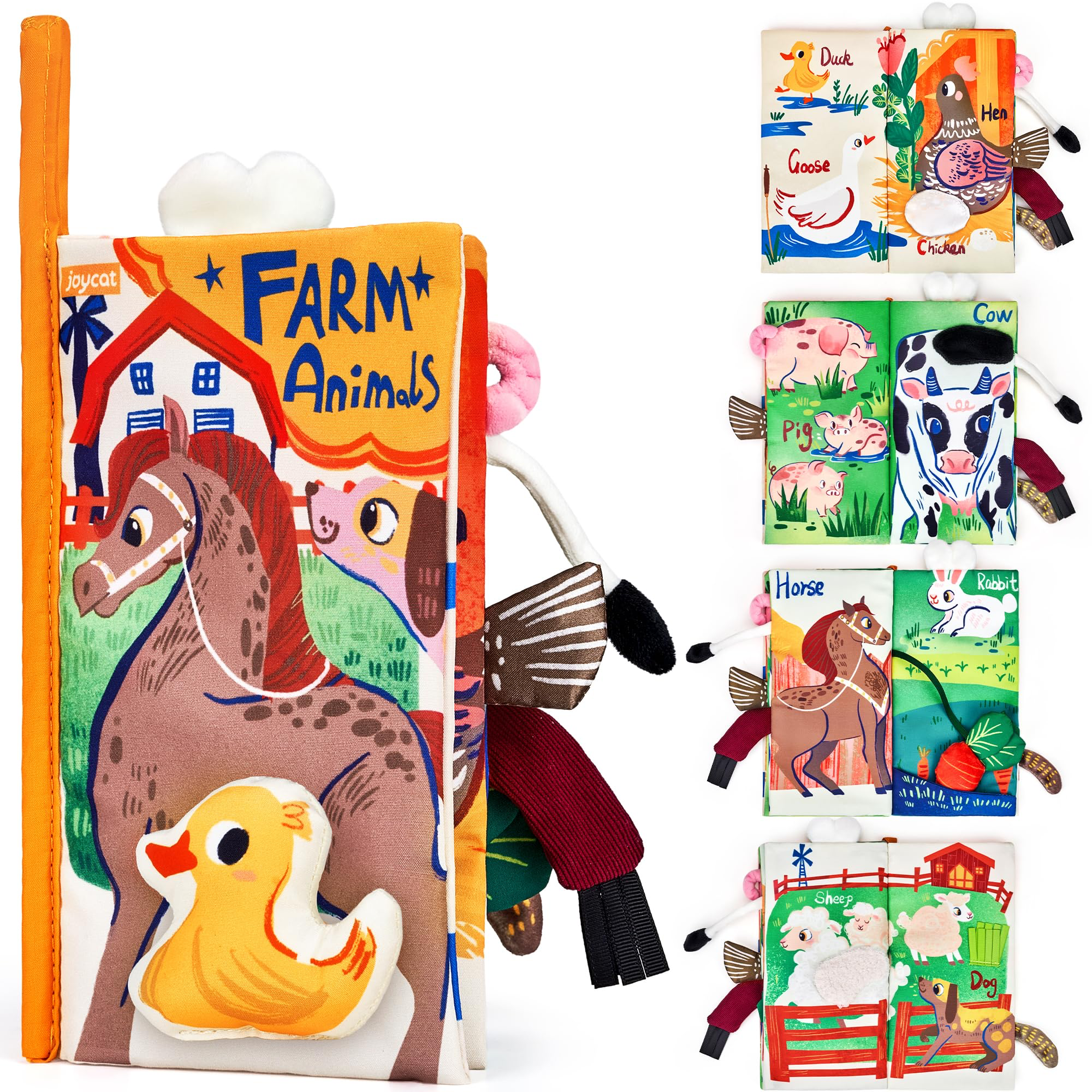
| Baby Crinkle Cloth Book | Crinkles, squeaker, pull-out carrot, detachable duck, varied textures, bright visuals | Grasping, pulling, squeezing, turning pages, object manipulation | 3-6 months & beyond |
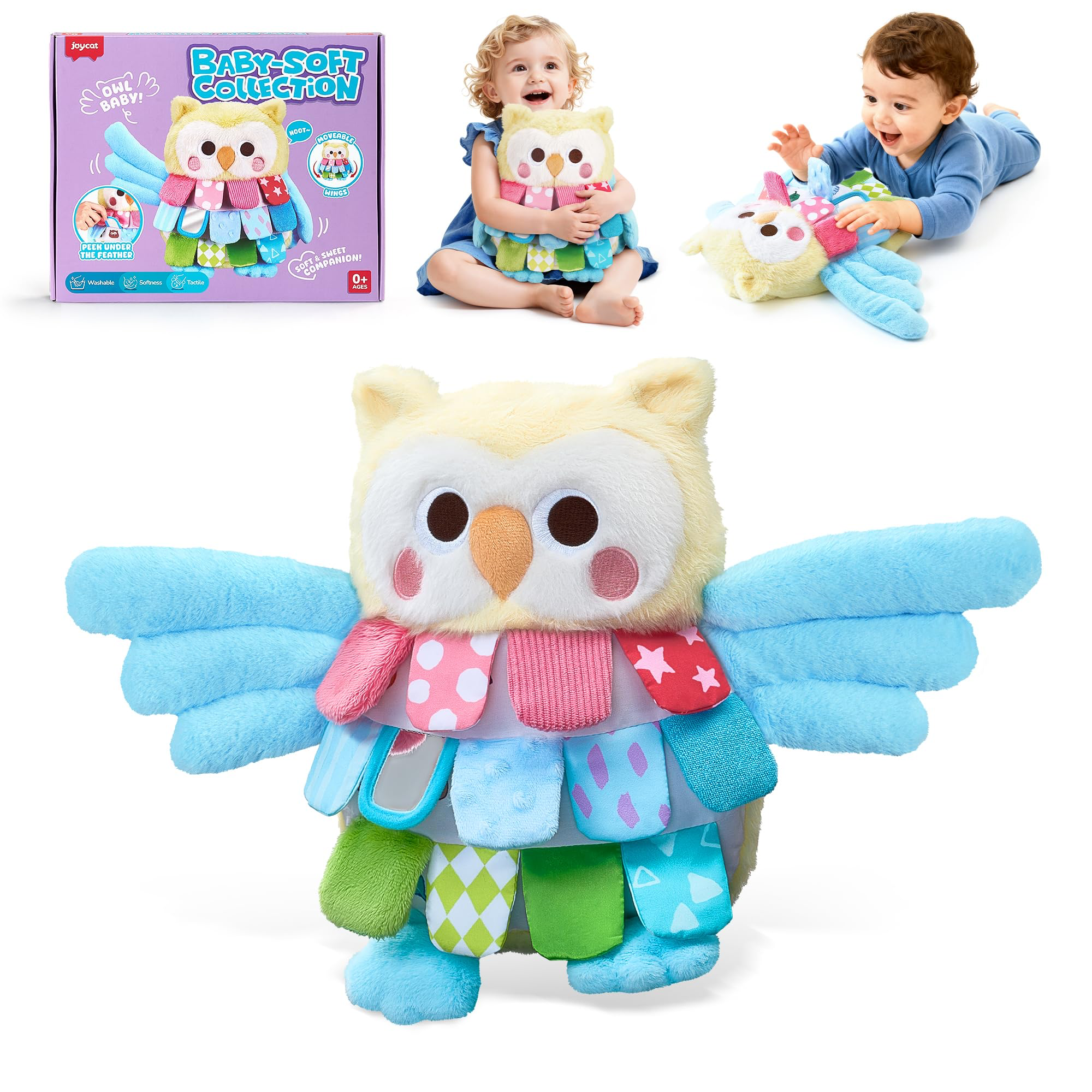
| Baby Owl Tummy Time Sensory Toy | Crinkled feathers, smooth/bumpy textures, bright colors, baby-safe mirror, flexible wings | Grasping, flipping, reaching, patting, tactile exploration | 0-12 months |
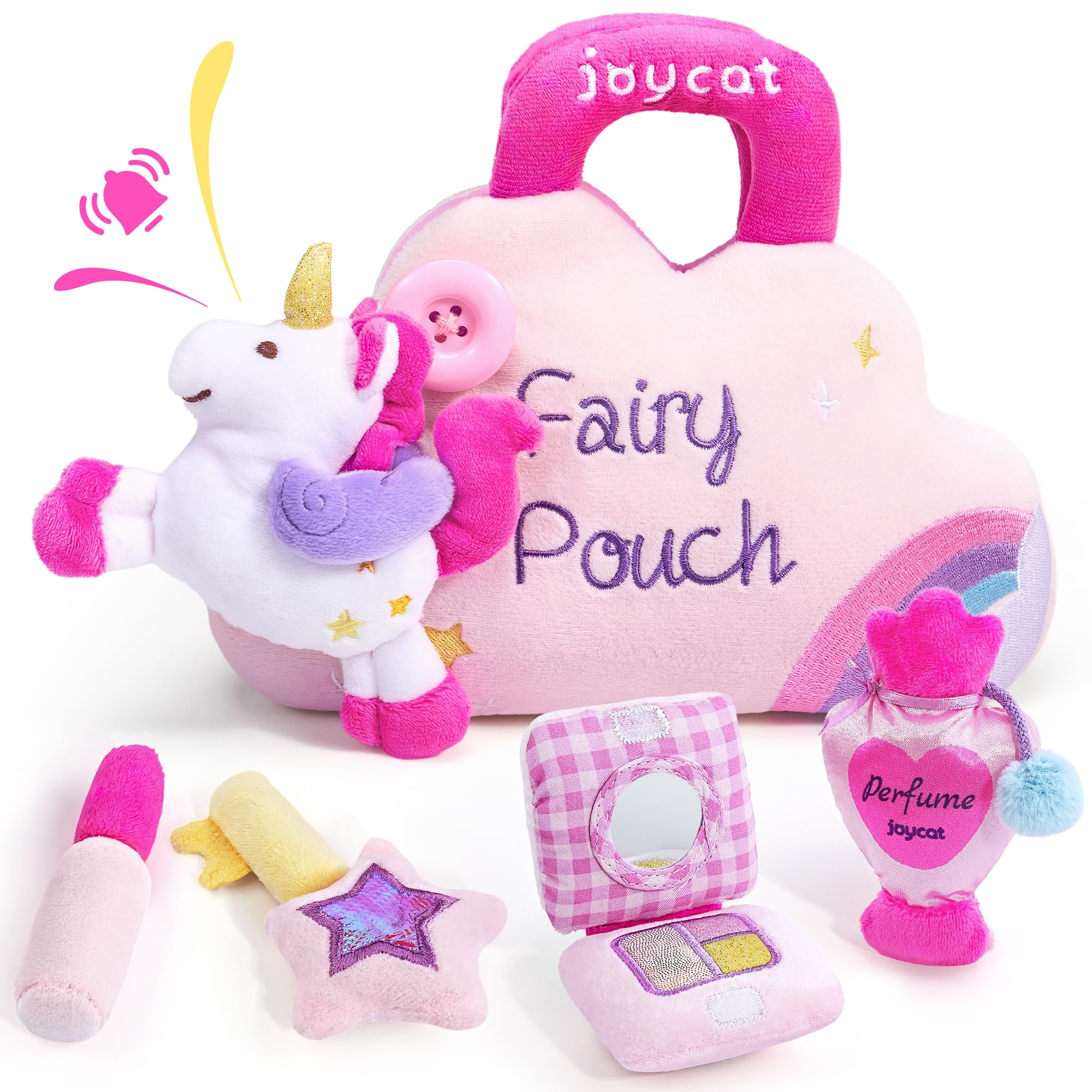
| Baby Unicorn Makeup Bag Playset | Squeaky unicorn, beeping key, crinkle eyeshadow, soft lipstick, rattle perfume, varied textures | Grasping, squeezing, pressing, packing, unpacking, imaginative play | 0-3 years |
These selections offer a range of sensory inputs and fine motor challenges suitable for the developing infant.
Maximizing Playtime: Engaging Your Baby with Multi-Sensory Toys
Effective engagement goes beyond simply providing toys; it involves creating an environment and interaction style that encourages exploration and learning.
1. Creating a Stimulating and Safe Play Environment
A stimulating play environment is crucial for optimal development.
1. Clear the Space: Ensure the play area is free from hazards and clutter.
2. Soft Surfaces: Use play mats or blankets for comfortable exploration on the floor.
3. Accessible Toys: Place multi-sensory toys within easy reach, but also vary their position to encourage reaching and crawling.
4. Supervision: Always supervise playtime to ensure safety and provide interaction.
5. Variety: Rotate toys regularly to maintain interest and introduce new sensory experiences.
2. Interactive Play Techniques to Foster Skill Development
Your involvement significantly enhances your baby’s learning.
1. Demonstrate: Show your baby how to interact with a toy, such as crinkling a book or shaking a rattle.
2. Verbalize: Describe what your baby is doing and what they are seeing, touching, or hearing (“You’re shaking the rattle! Listen to that sound!”).
3. Encourage Imitation: Encourage them to mimic your actions with the toys.
4. Follow Their Lead: Observe what interests them and allow them to explore at their own pace.
5. Positive Reinforcement: Offer praise and encouragement for their efforts and discoveries.
3. Observing and Responding to Your Baby’s Sensory Preferences
Every baby is unique, with individual sensory preferences.
1. Watch for Cues: Pay attention to your baby’s reactions to different textures, sounds, and visuals. Do they light up at bright colors or prefer softer hues?
2. Identify Overstimulation: If your baby becomes fussy or turns away, they might be overstimulated. Reduce the number of toys or the intensity of the sensory input.
3. Introduce Gradually: Introduce new sensory experiences one at a time to see how they respond.
4. Respect Dislikes: If a baby consistently dislikes a certain texture or sound, do not force it. Offer alternatives.
Understanding these preferences helps tailor playtime for maximum enjoyment and developmental benefit.
The Long-Term Benefits of Early Fine Motor Skill Development
The fine motor skills developed during infancy have far-reaching implications for a child’s future independence and academic success.
1. Preparing for Self-Feeding and Dressing Milestones
Early fine motor practice directly supports the development of self-care skills. The pincer grasp, for instance, is essential for picking up small pieces of food for self-feeding. Manipulating toys helps develop the dexterity needed to hold a spoon, button clothes, or zip a zipper. These early experiences build confidence and foster independence as children grow. A baby who can successfully grasp and release a toy will later find it easier to manage utensils.
2. Laying the Foundation for Pre-Writing Skills
The hand and finger strength, dexterity, and hand-eye coordination gained through multi-sensory play are direct precursors to pre-writing skills. Holding a rattle, stacking blocks, or turning the pages of a Baby Crinkle Cloth Book all contribute to the muscle development and control necessary for holding a crayon or pencil. These foundational skills are crucial for later academic success and confident participation in school activities.
3. Enhancing Problem-Solving Abilities Through Play
Multi-sensory toys often present small challenges that encourage problem-solving. A baby might need to figure out how to squeeze a toy to make it squeak, or how to retrieve a hidden object. These experiences foster cognitive flexibility and critical thinking. The trial-and-error process involved in manipulating objects helps babies understand cause and effect, leading to improved problem-solving strategies in various aspects of their development.
For more insights into toy selection, consider reading Best Christmas Gift Ideas for Kids and Parents 2025.
Discover Joycat’s World of Educational Play
At Joycat, we are dedicated to nurturing intellectual growth and natural development in children from 0-12. Our multi-sensory toys are carefully designed to spark curiosity, ignite imagination, and make learning a joyful adventure. Explore our full range of products and find the perfect developmental companions for your little one. For any inquiries, please contact us at service@joycat.com.
FAQs
1. What are multi-sensory learning toys and why are they important for babies?
Multi-sensory learning toys engage multiple senses simultaneously, such as touch, sight, and sound. They are crucial for babies because they provide rich sensory input, which is essential for brain development and learning about the world. These toys stimulate neural pathways, supporting cognitive, emotional, and physical growth during critical developmental stages.
2. How do multi-sensory toys specifically help develop fine motor skills in infants?
Multi-sensory toys enhance fine motor skills by encouraging precise hand and finger movements. Textures prompt grasping, sounds encourage shaking, and visual elements guide reaching and manipulation. The combination of sensory feedback helps infants refine hand-eye coordination, strengthen small muscles, and practice actions like squeezing, pulling, and transferring objects, all vital for fine motor development.
3. What are some examples of fine motor skills that 6-12-month-olds should be developing?
Infants aged 6-12 months typically develop skills such as transferring objects between hands, mastering the pincer grasp (picking up small items with thumb and forefinger), banging two objects together, and placing objects into containers. They also begin to stack soft blocks and point with their index finger, demonstrating increasing dexterity and control.
4. How can I choose safe and effective multi-sensory toys for my baby?
When choosing multi-sensory toys, prioritize safety by ensuring they are non-toxic, free from small parts, and have no sharp edges. Look for durable, washable toys that are appropriately sized for small hands. Effective toys offer varied textures, engaging sounds, and bright, contrasting visuals to stimulate multiple senses and encourage open-ended play.
5. Can multi-sensory play also support other areas of my baby’s development?
Yes, multi-sensory play supports holistic development beyond fine motor skills. It fosters cognitive development by encouraging problem-solving and cause-and-effect understanding. It aids emotional development by providing opportunities for self-regulation and exploration. Additionally, it supports language development as parents describe interactions and social skills through shared play experiences.


