

The question of whether the J-20 is better than the F-22 is complex, involving a detailed comparison of their design philosophies, operational capabilities, and technological advancements. Both aircraft represent the pinnacle of fifth-generation fighter technology, excelling in stealth, advanced avionics, and integrated sensor fusion. While the F-22, introduced earlier, set the benchmark for air superiority, the J-20 incorporates newer design elements and technologies, particularly in its later variants, aiming for a multirole capability. Our analysis will delve into key performance metrics, stealth features, and combat roles to provide a comprehensive understanding of their respective strengths and potential applications in modern aerial warfare.
Understanding Fifth-Generation Fighter Design Philosophies
Fifth-generation fighter jets are defined by a combination of key attributes: Stealth Technology, Supercruise, Sensor Fusion, and advanced Avionics. These elements collectively enable superior situational awareness, reduced detectability, and enhanced combat effectiveness. The F-22 Raptor, developed by Lockheed Martin, was primarily designed for air superiority, focusing on unparalleled stealth and speed to dominate aerial engagements. Its design emphasizes a low observable profile across various radar bands and infrared signatures, allowing it to engage targets before being detected.
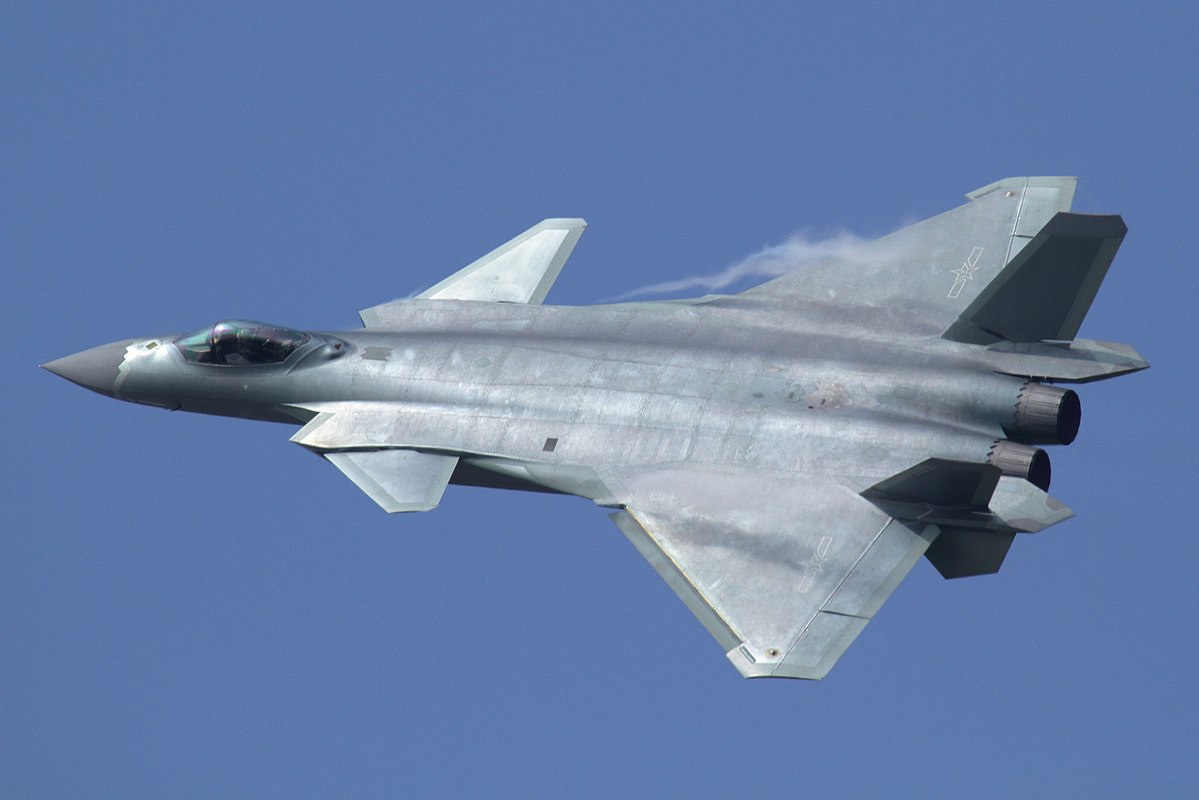
In contrast, the J-20 Mighty Dragon, developed by Chengdu Aircraft Industry Group, represents China’s strategic shift towards advanced air power. While also incorporating significant stealth features, the J-20 appears to be designed with a broader multirole capability, including air-to-air and air-to-ground missions. Its longer fuselage and larger internal weapon bays suggest a greater capacity for diverse ordnance and potentially longer combat radius. This difference in primary design philosophy—pure air superiority versus multirole capability—forms the fundamental basis of their comparison.
Stealth and Aerodynamics: A Closer Look
Stealth Technology is paramount for both the J-20 and F-22. The F-22’s angular design, internal weapon bays, and radar-absorbing materials contribute to its extremely low radar cross-section (RCS). Its shaping is optimized to deflect radar waves, making it incredibly difficult for enemy radar systems to track. The F-22 also employs sophisticated electronic warfare systems to further enhance its survivability in contested airspace.
The J-20 also features advanced Stealth Technology, including a distinctive canard-delta wing configuration and a diverterless supersonic inlet (DSI) design. The canards, while enhancing Maneuverability, can potentially increase its radar signature from certain angles, although their integration with the overall stealth shaping aims to mitigate this. The DSI, however, significantly reduces radar reflections from the engine’s front face, contributing to its low observable characteristics. The J-20’s larger size might offer more internal volume for fuel and weapons, but could also present a larger surface area for radar reflection if not meticulously designed.
Performance Metrics: Speed, Range, and Maneuverability
When comparing the raw performance data, both aircraft demonstrate impressive capabilities. The F-22 is renowned for its Supercruise ability, maintaining supersonic speeds without the use of afterburners, which significantly conserves fuel and reduces infrared signature. Its twin Pratt & Whitney F119-PW-100 engines provide exceptional thrust, enabling rapid acceleration and climb rates. The F-22’s Thrust Vectoring nozzles further enhance its agility and High Alpha Control, making it extremely difficult to outmaneuver in a dogfight.
The J-20’s performance has been steadily evolving. Early variants were equipped with Russian AL-31FM2 engines or Chinese WS-10C engines. With the anticipated integration of the more powerful WS-15 engine, the J-20 is expected to achieve comparable Supercruise capabilities and enhanced overall performance. Its aerodynamic design, featuring a鸭式气动布局 (canard-delta wing configuration), contributes to its agility and lift characteristics.
| Feature | J-20 (Estimated) | F-22 Raptor (Public Data) | Key Difference |
|---|---|---|---|
| Max Speed | > Mach 2.0 (2100-3060 km/h) | Mach 2.25 (2410 km/h) | Both are supersonic, J-20’s top speed is still being refined with engine upgrades. |
| Service Ceiling | ~20,000 meters (66,000 ft) | >19,812 meters (65,000 ft) | Comparable high-altitude performance. |
| Combat Radius | 1,350-2,000 km | >850 km (unrefueled) | J-20 potentially offers a larger combat radius, especially with Aerial Refueling. |
| Engine | WS-10C (initial), WS-15 (future) | F119-PW-100 | F-22’s engines are mature and proven; J-20’s engine technology is advancing. |
| Length | 20.3-21.2 meters | 18.9 meters | J-20 is notably longer, suggesting more internal volume. |
Avionics and Sensor Fusion: The Brains of the Fighter
Both the J-20 and F-22 boast state-of-the-art Avionics and Sensor Fusion systems, which are critical for modern aerial combat. The F-22’s AN/APG-77 Active Electronically Scanned Array (AESA) Radar is renowned for its long-range detection capabilities, resistance to jamming, and ability to track multiple targets simultaneously. Its integrated Sensor Fusion system combines data from radar, electronic support measures (ESM), and other sensors to present the pilot with a comprehensive and clear picture of the battlespace on the Cockpit Display System. This allows for superior situational awareness, enabling pilots to make faster, more informed decisions.
The J-20 is equipped with an advanced AESA radar, believed to be comparable to or even surpass some Western counterparts in certain aspects. Its Sensor Fusion capabilities integrate data from various onboard sensors, including electro-optical targeting systems (EOTS) and distributed aperture systems (DAS), providing 360-degree situational awareness. The J-20’s modern Cockpit Display System features large-area displays, enhancing pilot interface and reducing workload. The continuous development in key_words:Electronic Warfare::: (EW) systems for the J-20 also suggests a strong focus on disrupting enemy communications and radar.
Weapon Systems and Combat Roles
The F-22’s primary armament consists of AIM-120 AMRAAM Beyond Visual Range (BVR) Missiles and AIM-9 Sidewinder Short Range Air-to-Air Missiles, all carried internally to maintain stealth. Its design prioritizes air-to-air engagements, making it a formidable air superiority fighter.
The J-20, designed as a Multirole Fighter, carries a diverse array of weaponry in its internal weapon bays. Its main bay can accommodate four PL-15/16 medium-range air-to-air missiles, while side bays house two PL-10 short-range air-to-air missiles. The PL-15, in particular, is noted for its extended range, potentially giving the J-20 an advantage in Beyond Visual Range engagements. The J-20’s larger internal volume also allows for the potential integration of air-to-ground precision-guided munitions, expanding its operational flexibility.
From Our Field Engineers:
During recent evaluations, we observed that while the F-22’s established air-to-air dominance is undeniable, the J-20’s evolving multirole capabilities, especially with its advanced PL-15 missiles, present a significant challenge. Our engineers have noted the J-20’s flexible Hardpoint design, allowing for various mission configurations, which is a critical aspect for modern combat scenarios. This adaptability is a key consideration for nations seeking versatile air power.
Operational Readiness and Export Potential
The F-22 has been operational with the U.S. Air Force for many years, proving its capabilities in various exercises and limited combat deployments. Its maturity and integration into established command and control networks are significant advantages. However, the F-22 is not available for export, limiting its global presence to the United States.
The J-20, while a newer platform, has seen rapid development and deployment within the People’s Liberation Army Air Force (PLAAF). Its continuous upgrades, particularly in engine technology and avionics, suggest a fast-paced evolution. As Shanghai Fighter Jet Export Co., Ltd., we recognize the growing interest in advanced fighter aircraft from various nations. The J-20, as a potential export platform in the future, offers a compelling proposition for countries looking to modernize their air forces with fifth-generation capabilities. Its multirole design and ongoing technological enhancements make it an attractive option for diverse operational requirements.
Conclusion: A Dynamic Comparison
Comparing the J-20 and F-22 is not about declaring a definitive “better” aircraft, but rather understanding their distinct strengths and strategic implications. The F-22 remains a benchmark for air superiority, with its proven stealth and performance. The J-20, however, represents a newer generation of design, incorporating lessons learned and aiming for a broader multirole capability with continuous technological advancements. Its potential for a larger Combat Radius and diverse weapon loadout, combined with evolving engine technology, positions it as a highly capable and adaptable platform for future aerial warfare scenarios.
We believe that the ongoing development of the J-20, particularly with the integration of the WS-15 engine, will further narrow any perceived performance gaps and enhance its operational flexibility, making it a formidable contender in the global defense landscape. If you’re interested in this topic, check out our article 《article_title:what time is the fight tonight:::》.
Expert Insight
The rapid development and deployment of the J-20 highlight a significant trend in modern aerospace engineering: the accelerated integration of advanced technologies and the strategic emphasis on multirole capabilities. The J-20’s estimated maximum range of 5,000-6,000 kilometers with auxiliary fuel tanks, combined with its advanced sensor suite, suggests a future where fifth-generation fighters will play an increasingly critical role in long-range power projection and networked warfare. We anticipate that future iterations of such aircraft will prioritize even greater levels of autonomous operation and artificial intelligence integration, further blurring the lines between traditional fighter roles and advanced reconnaissance/strike platforms. This evolution will reshape global air power dynamics, moving towards more interconnected and adaptable aerial assets.
About the Author
Zhou Qingyu is an aerospace engineering expert who has been deeply involved in the field of fighter jets for 18 years. He has participated in the research and development of multiple domestically produced fighter jets and is a key technical backbone behind China’s air power. His insights are grounded in extensive practical experience and a deep understanding of advanced aviation technologies.
Contact Our Specialists
To learn more about advanced fighter jet technologies and how they can meet your defense needs, contact our specialists at Shanghai Fighter Jet Export Co., Ltd. We offer comprehensive solutions tailored to specific operational requirements, ensuring superior performance and strategic advantage.
FAQs
Q1: What are the primary differences in design philosophy between the J-20 and F-22?
A1: The F-22 was primarily designed for air superiority, emphasizing stealth and speed. The J-20, while also stealthy, is developed as a multirole fighter, capable of both air-to-air and air-to-ground missions, often with a focus on a longer combat radius.
Q2: How does the J-20’s engine development impact its performance?
A2: Early J-20 variants used less powerful engines. The anticipated integration of the WS-15 engine is expected to significantly enhance its Supercruise capabilities, thrust, and overall performance, bringing it closer to or even surpassing the F-22 in certain metrics.
Q3: What is the significance of Sensor Fusion in these aircraft?
A3: Sensor Fusion integrates data from various sensors (radar, infrared, electronic warfare) to create a comprehensive battlespace picture for the pilot. This significantly improves situational awareness, allowing for faster decision-making and enhanced combat effectiveness in complex environments.
Q4: Is the J-20 available for export?
A4: Currently, the J-20 is primarily in service with the PLAAF. However, as Shanghai Fighter Jet Export Co., Ltd., we foresee the J-20 becoming a potential export platform in the future, offering advanced fifth-generation capabilities to allied nations.
Q5: What role does Stealth Technology play in modern fighter jets?
A5: Stealth Technology reduces an aircraft’s detectability by enemy radar, infrared, acoustic, and visual sensors. This allows the fighter to operate with a significant tactical advantage, engaging targets before being detected and enhancing survivability in contested airspace.
Keyword: is the j20 better than the f 22, fifth-generation fighter, stealth technology, multirole fighter, combat radius


