

Choosing the right hydraulic breaker model is crucial for project success. This guide from 测试ABC experts explains how specific model characteristics directly impact a breaker’s application range and operational efficiency. We cover key factors like breaker weight, impact rate, and operating pressure, providing insights to help you select the optimal hydraulic hammer for your needs.
Understanding Hydraulic Breaker Models and Their Core Specifications
Every hydraulic breaker model is designed with a specific set of technical specifications that dictate its capabilities. These specifications are not arbitrary numbers; they are engineered to deliver particular performance characteristics for various applications. Understanding these core parameters is the first step in making an informed selection.
The Foundation of Performance: Breaker Weight and Chisel Diameter
The breaker operating weight and working tool diameter are fundamental indicators of a hydraulic breaker’s power class. A heavier breaker with a larger chisel diameter generally delivers more impact energy, making it suitable for breaking harder and larger materials. For instance, a small BLT-40 model, designed for 0.5-1.2t excavators, has a 40mm chisel diameter. In contrast, a BLT-155, built for 27-33t excavators, features a 155mm chisel diameter. This difference directly translates to the scale and type of material each can handle.
Powering the Punch: Impact Rate and Operating Pressure
The impact rate (BPM) and operating pressure are critical for determining a breaker’s effectiveness and efficiency. Impact rate refers to how many times the piston strikes the working tool per minute. A higher impact rate can be beneficial for softer materials or when speed is a priority. Operating pressure, measured in bar or MPa, is the hydraulic pressure required to drive the piston. Higher operating pressure typically means greater impact force. Our BLT-155 model operates at a working pressure of 200-220bar, significantly contributing to its superior breaking power compared to models with lower pressure ratings.
Matching the Hydraulic Breaker Model to Your Application Range
The application range of a hydraulic breaker model is directly tied to its size, power, and design. Selecting a model that is either too small or too large for the job will result in inefficiency, increased wear, and potential damage to both the breaker and the carrier.
Small-Scale Projects: Precision and Maneuverability
For tasks requiring precision and maneuverability in confined spaces, such as interior demolition or light concrete breaking, smaller hydraulic breaker models are ideal. Models like the BLT-40 or BLT-45, with their lighter weight and smaller chisel diameters, are perfect for mini excavators. They offer the control needed to work around existing structures without causing excessive damage. These models typically have higher impact rates to compensate for lower individual impact energy.
Medium-Duty Tasks: Versatility for Construction and Demolition
Medium-sized hydraulic breaker models, such as the BLT-75 or BLT-85, are the workhorses of general construction and demolition. They strike a balance between power and versatility, suitable for breaking concrete slabs, asphalt, and medium-hard rock. These breakers are compatible with excavators in the 6-11t range, making them a common choice for urban development projects and road construction. Their balanced specifications allow for a wide variety of tasks.
Heavy-Duty Operations: Power for Quarrying and Mining
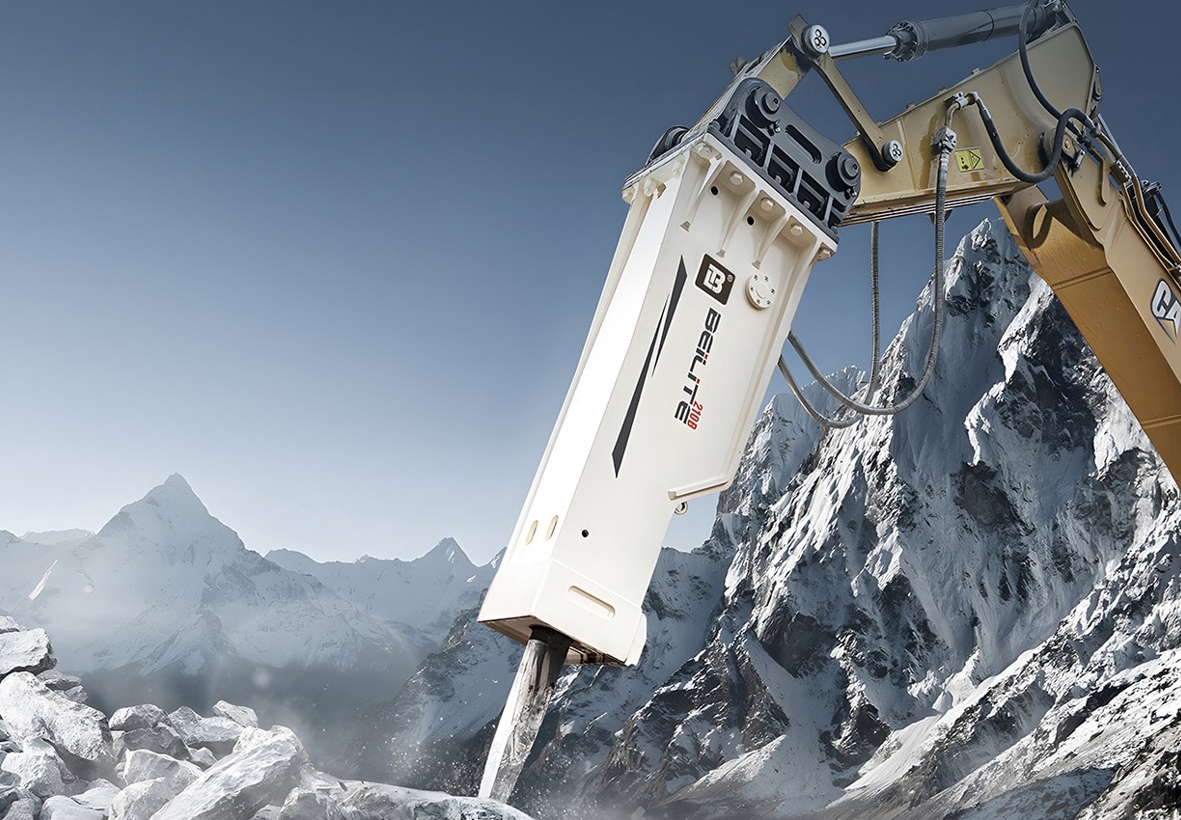
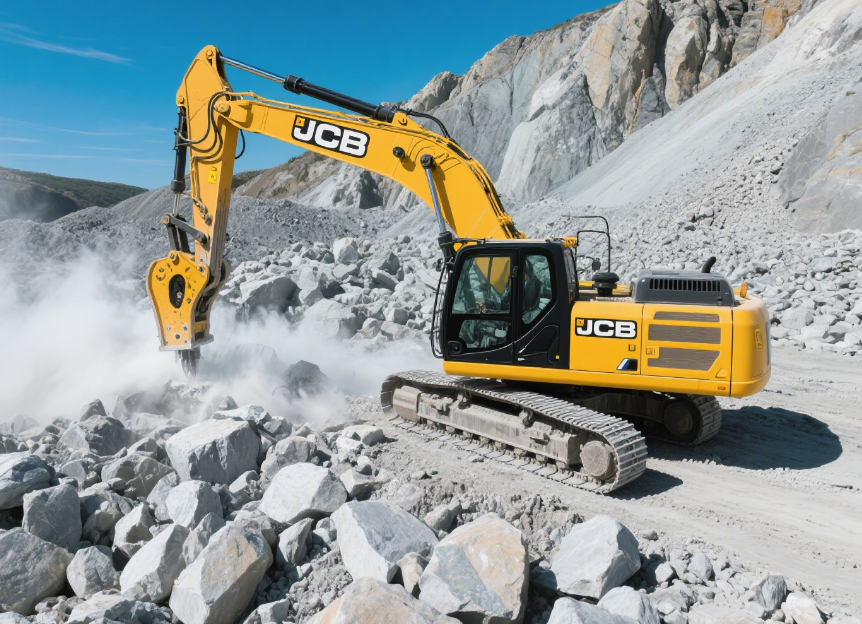
When facing tough materials like granite, basalt, or reinforced concrete in quarrying, mining, or large-scale civil engineering, heavy-duty hydraulic breaker models are indispensable. The BLT-150 and BLT-155, for instance, are engineered for maximum impact force and durability. The BLT-155, with its 155mm chisel diameter and 200-220bar working pressure, excels in breaking extremely hard rock formations. These models are designed to be mounted on larger excavators, from 24t up to 33t and beyond, providing the sustained power needed for demanding applications.
The Impact of Model Selection on Operational Efficiency
Choosing the correct hydraulic breaker model directly influences your project’s operational efficiency. An undersized breaker will take longer to complete tasks, consuming more fuel and incurring higher labor costs. An oversized breaker, while powerful, can lead to excessive wear on the carrier and the breaker itself, alongside higher initial investment and running costs.
Optimizing Productivity with the Right Impact Rate
Productivity is significantly affected by the breaker’s impact rate and the material being broken. For softer materials, a higher impact rate can clear debris faster. For harder materials, a lower impact rate with greater individual impact energy is often more effective. Our BLT-140 model, with an impact rate of 350-500bpm, is optimized for 20-24t excavators, providing a balance for various rock types. This ensures that each strike delivers maximum breaking power without unnecessary cycling.
Fuel Consumption and Wear: Long-Term Efficiency Considerations
An improperly matched hydraulic breaker model can lead to inefficient fuel consumption. When a breaker is too small, the operator might overwork the excavator, leading to increased fuel burn. Conversely, an oversized breaker can strain the excavator’s hydraulic system, causing premature wear. Our BLT series is designed for optimal hydraulic flow and pressure matching, which minimizes energy waste and extends the lifespan of both the breaker and the carrier. Proper matching reduces stress on the excavator’s engine and hydraulic pump.
From Our Field Engineers: A Case Study in Model Matching
One of our field engineers recently worked with a client in a quarry who was using a BLT-100 on a 10-ton excavator to break granite. While the BLT-100 is a capable breaker, the excavator was undersized for the consistent, heavy-duty work required. The client experienced frequent hydraulic overheating and slow progress. We recommended upgrading to a BLT-125 on a 15-ton excavator. The increased working tool diameter and appropriate carrier operating weight immediately improved breaking speed by 30% and eliminated overheating issues, leading to significant fuel savings and reduced downtime. This demonstrates the critical importance of matching the hydraulic breaker model to both the material and the carrier.
Key Factors for Choosing the Optimal Hydraulic Breaker Model
Selecting the best hydraulic breaker model involves evaluating several key factors. We guide our clients through this process to ensure they make the most cost-effective and productive choice for their operations.
Carrier Compatibility: The First Step
The most critical factor is ensuring the hydraulic breaker model is compatible with your carrier, typically an excavator. This involves matching the breaker’s service weight and oil flow requirements with the excavator’s operating weight and hydraulic output. An incompatible pairing can lead to poor performance, damage to the excavator, or even safety hazards. We provide detailed compatibility charts for all our BLT series models, making this selection straightforward.
Material Hardness and Project Scale
Consider the type and hardness of the material you will be breaking, as well as the overall scale of the project. For very hard rock, a breaker with high operating pressure and a robust working tool diameter is essential. For large-scale projects, a model with a higher impact energy will ensure faster completion times. For example, the BLT-155 is ideal for hard rock quarrying due to its high working pressure (200-220bar) and large chisel diameter (155mm), which allow it to penetrate and fracture dense materials effectively.
Durability and Maintenance: Investing in Longevity
Beyond initial performance, consider the long-term durability and maintenance requirements of the hydraulic breaker model. Our BLT series breakers are constructed with high-quality materials and designed for easy maintenance, reducing downtime and extending service life. Features like accessible grease points and robust accumulator designs contribute to overall reliability. Investing in a durable breaker minimizes repair costs and ensures consistent operation.
Testing ABC’s BLT Series: Engineered for Specific Demands
We offer a comprehensive range of hydraulic breaker models in our BLT series, each engineered to meet specific application demands. Our commitment to quality and performance means you get a breaker that delivers consistent results.
| Model | Breaker Operating Weight (kg) | Chisel Diameter (mm) | Working Oil Flow (l/min) | Operating Pressure (bar) | Applicable Excavator (t) |
|---|---|---|---|---|---|
| BLT-40 | 86 | 40 | 15~30 | 90~120 | 0.5–1.2 |
| BLT-70 | 362 | 70 | 40~70 | 110~140 | 4.5–6 |
| BLT-100 | 986 | 100 | 80~110 | 150~170 | 10–14 |
| BLT-155 | 2610 | 155 | 180~240 | 200~220 | 27~33 |
| BLT-165 | 3149 | 165 | 200~260 | 210~230 | 33~38 |
This table highlights the diversity within our BLT series, showcasing how each hydraulic breaker model is scaled for different excavator sizes and power requirements. For instance, the BLT-165, our largest model listed, is designed for excavators up to 38 tons, providing maximum breaking power for the most demanding applications.
Expert Insight: The Future of High-Pressure Hydraulic Breakers
The trend in the hydraulic breaker industry is towards higher efficiency and greater power density. We see a clear future where hydraulic breaker models will operate at even higher pressures to achieve superior breaking performance with less energy consumption. Our BLT-155 model, with its working pressure of 200-220bar, is a testament to this direction. This higher pressure allows for more concentrated impact energy, enabling faster material breakdown in challenging conditions. We predict that advancements in hydraulic system design and material science will push these limits further, leading to more compact yet powerful breakers. This will allow smaller carriers to achieve breaking capabilities previously reserved for much larger machines, enhancing overall project flexibility and reducing operational costs across the board.
About the Author
The 测试ABC technical team consists of engineers and field service experts with over 15 years of hands-on experience in hydraulic breaker design, application, and maintenance. We are committed to sharing our deep expertise to help you maximize your equipment’s performance and lifespan.
Need help choosing the right hydraulic breaker? Contact our experts for a personalized recommendation.
FAQs
Q1: What is the most important factor in choosing a hydraulic breaker model?
A1: The most important factor is ensuring compatibility with your carrier (excavator) and matching the breaker’s power to the material you intend to break. This includes considering the excavator’s operating weight, hydraulic oil flow, and the breaker’s impact energy and working tool diameter.
Q2: How does the working pressure of a hydraulic breaker affect its performance?
A2: Higher working pressure generally translates to greater impact force. This means the breaker can more effectively break harder materials and achieve higher productivity. For example, our BLT-155 model’s 200-220bar working pressure provides superior breaking power for tough applications.
Q3: Can I use a small hydraulic breaker for a large demolition project?
A3: While a small breaker might eventually break large materials, it will be highly inefficient. It will take significantly longer, consume more fuel, and put unnecessary strain on the equipment. Matching the hydraulic breaker model to the project scale is crucial for efficiency and cost-effectiveness.
Q4: What are the risks of using an improperly sized hydraulic breaker?
A4: Using an improperly sized breaker can lead to reduced efficiency, increased fuel consumption, premature wear on both the breaker and the excavator, hydraulic system overheating, and potential safety hazards. It can also invalidate equipment warranties.
Q5: How often should I perform maintenance on my hydraulic breaker?
A5: Regular maintenance is essential for extending the lifespan and maintaining the efficiency of your hydraulic breaker. This includes daily greasing of the working tool, checking hydraulic hoses for leaks, and periodically inspecting the accumulator gas pressure. Specific intervals depend on usage and manufacturer recommendations.
Keywords
- Hydraulic Breaker Model
- Choosing Hydraulic Breaker for Excavator
- Hydraulic Breaker Application Range
- Hydraulic Breaker Efficiency by Model
- Matching Breaker to Job Site


