

Selecting the correct hydraulic breaker is crucial for maximizing productivity, ensuring safety, and protecting your investment. A mismatch between your carrier and the breaker can lead to reduced efficiency, increased wear on both machines, and potential safety hazards. We guide you through the essential factors to consider, drawing on our extensive experience in the field.
Selecting the Right Hydraulic Breaker
Choosing the right hydraulic breaker involves more than just picking a size. It requires a detailed understanding of your carrier’s capabilities, the specific application, and the breaker’s technical specifications. Our goal is to help you make an informed decision that leads to optimal performance and longevity for your equipment. We ensure our guidance is practical and directly applicable to your operational needs.
Matching Your Breaker to Your Excavator
Understanding Carrier Weight Class
The first step in choosing a hydraulic breaker is to ensure it is compatible with your excavator. The ‘Suit Excavator (t)’ or ‘Carrier Weight Class (t)’ specification indicates the recommended weight range of the host machine. An undersized breaker will lack breaking power, while an oversized one can damage the excavator’s boom and hydraulic system. For example, our BLT-40 model is designed for 0.5–1.2t excavators, while the BLT-155 is for 27–33t machines. This precise matching prevents undue stress on your equipment.
Hydraulic Flow and Pressure Requirements
Your excavator’s hydraulic system must meet the breaker’s requirements for ‘Oil Flow (l/min)’ and ‘Operating Pressure’. If the oil flow is too low, the breaker will operate slowly and with reduced impact force. If the pressure is too high, it can damage the breaker’s internal components. Our breakers are designed to operate within specific ranges to ensure peak performance and prevent damage. For instance, the BLT-100 requires an oil flow of 80~110 l/min and an operating pressure of 150~170bar. Always verify these parameters against your excavator’s specifications.
Key Specifications of Hydraulic Breakers
Breaker Operating Weight
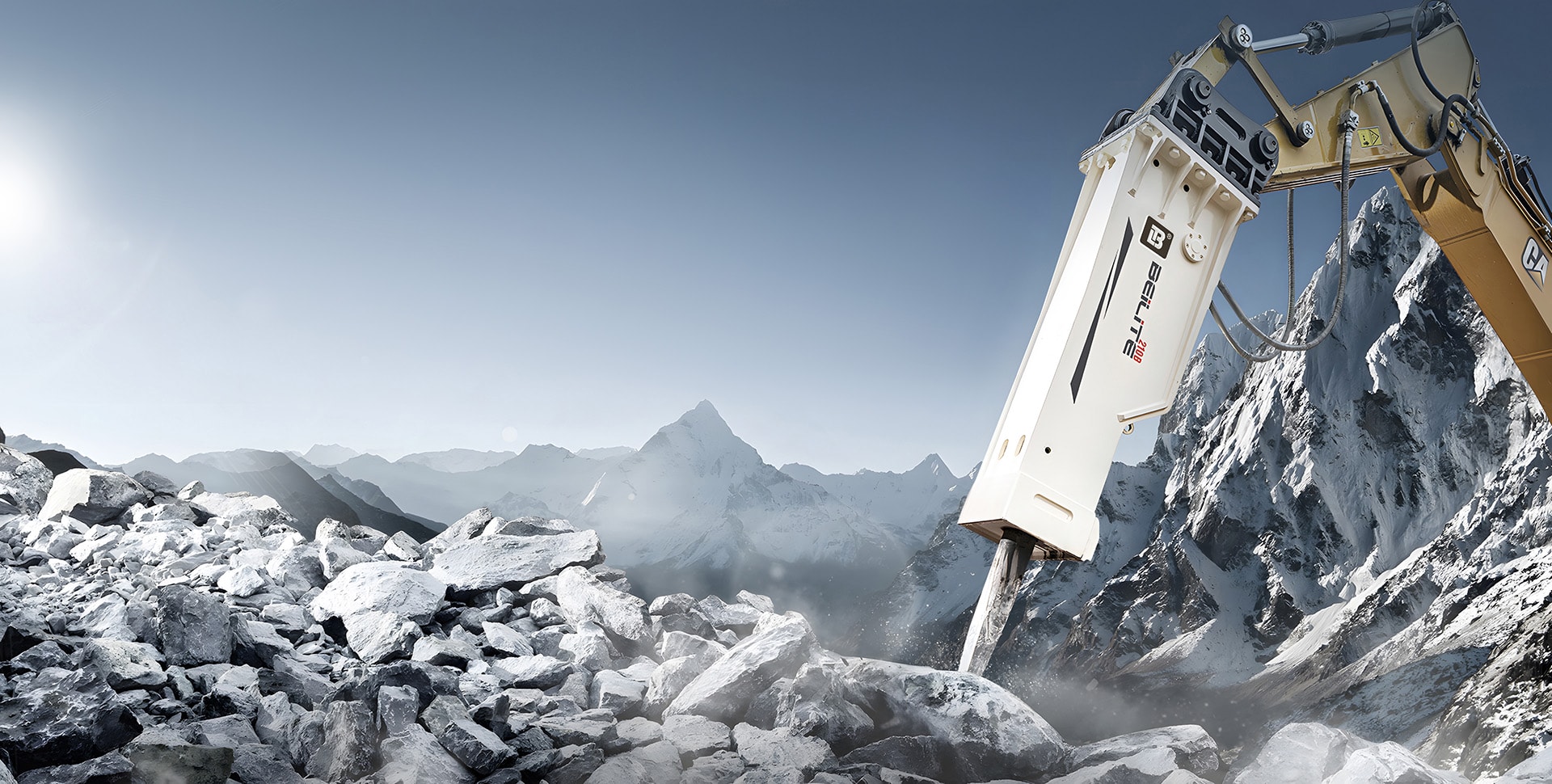
The ‘Breaker Operating Weight’ is the total weight of the hydraulic breaker, including the working tool and mounting bracket. This weight influences the stability of the excavator and the effective transfer of impact energy. A heavier breaker generally indicates more robust construction and greater breaking power, but it must remain within the excavator’s lifting capacity and stability limits. Our BLT-135, for example, weighs 1736kg, making it suitable for larger excavators in demanding applications.
Working Tool Diameter and Type
The ‘Working Tool Diameter’ and type are critical for effective breaking. A larger diameter tool typically means a more powerful breaker, suitable for harder materials. The type of working tool—such as a MOIL POINT for general breaking, a NARROW CHISEL for trenching, or a BLUNT TOOL for secondary breaking—should be selected based on the specific task. Using the correct tool minimizes wear and maximizes breaking efficiency. We offer a range of working tools to suit various applications, ensuring you always have the right tool for the job. For specific applications, consider our Forging Tool options for enhanced durability.
Impact Rate and Energy
The ‘Impact Rate (BPM)’ refers to how many times the piston strikes the working tool per minute. A higher impact rate can be beneficial for softer materials or for quickly breaking down already fractured rock. However, for harder materials, a lower impact rate with higher impact energy per blow is often more effective. We design our breakers to offer an optimal balance, such as the BLT-70 with an impact rate of 500~900bpm, allowing for versatility across different material types. The Piston inside the Cylinder Body Assembly is responsible for generating this impact.
Accumulator Gas Pressure
The ‘Accumulator’ plays a vital role in a hydraulic breaker’s performance and longevity. It stores hydraulic energy and absorbs pressure spikes, protecting both the breaker and the excavator’s hydraulic system. Maintaining the correct ‘Accumulator Gas Pressure’ is essential. Too low, and the breaker loses power and experiences increased vibration; too high, and it can damage the accumulator itself. Our models like the BLT-70 maintain an Accumulator Nitrogen Pressure of 55~60bar, ensuring consistent performance and system protection. Regular checks of the Accumulator Assembly are part of our recommended maintenance.
Considering Your Application
Demolition and Construction
For demolition and general construction tasks, you need a breaker that can handle a variety of materials, from concrete to asphalt. Factors like noise levels might also be important in urban areas, making a Silent Outer Casing a preferred choice. We provide breakers that offer a balance of power and control for these diverse environments.
Quarrying and Mining
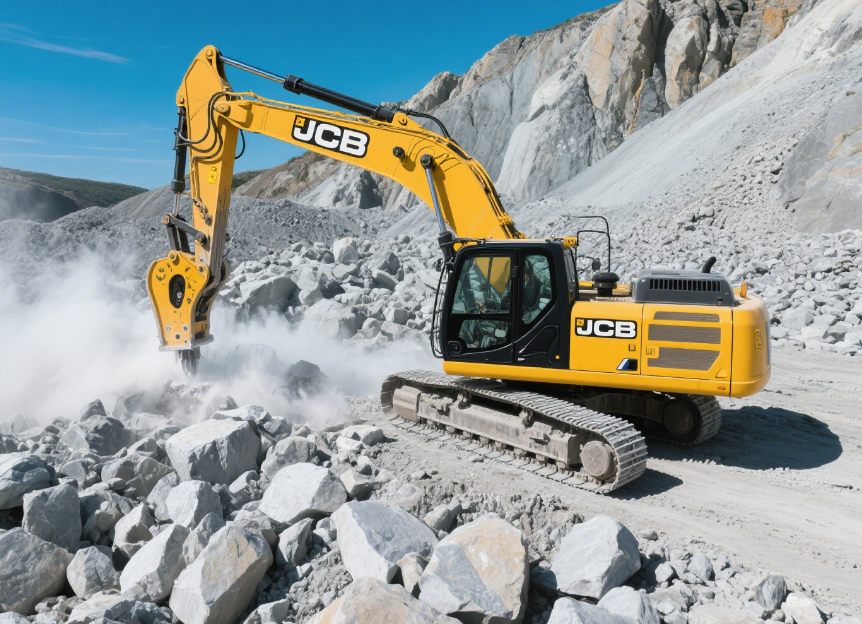
Quarrying and mining operations demand breakers with high impact energy and durability to break hard rock. Here, the ‘Working Tool Diameter’ and the overall robustness of the Breaker Box are paramount. Our larger models, such as the BLT-155 and BLT-165, are engineered for the most demanding rock-breaking applications, providing sustained power in harsh conditions.
Specialized Tasks
Some tasks require specialized tools. For instance, an ASPHALT CUTTER is specifically designed for cutting asphalt or frozen ground, offering a clean and efficient cut. Understanding these specialized needs helps us recommend the most appropriate tool and breaker combination for your project. The Tool Pin and Outer Bushing are critical components that ensure the working tool performs effectively.
From Our Field Engineers: Maximizing Breaker Lifespan
Proper maintenance is key to extending the life of your hydraulic breaker. We always emphasize daily lubrication of the working tool using Chisel Paste through the Grease Nipple. This prevents premature wear on the Inner Bushing and Outer Bushing. Furthermore, regularly checking the Seal Kit and replacing worn seals, especially the Dust Seal and O-ring, prevents contamination and maintains hydraulic integrity. Our field engineers have seen countless breakers fail due to neglecting these simple steps. A well-maintained breaker, like a well-oiled machine, performs consistently and reliably. Internal Link: 文章标题
贝力特 Hydraulic Breaker Models: A Comparison
We offer a range of hydraulic breakers designed to meet various operational needs. Here’s a comparison of some of our key models:
| Model | Breaker Operating Weight (kg) | Chisel Diameter (mm) | Working Oil Flow (l/min) | Operating Pressure (bar) | Impact Rate (bpm) | Suit Excavator (t) |
|---|---|---|---|---|---|---|
| BLT-40 | 86 | 40 | 15~30 | 90~120 | 800~1400 | 0.5–1.2 |
| BLT-70 | 362 | 70 | 40~70 | 110~140 | 500~900 | 4.5–6 |
| BLT-100 | 986 | 100 | 80~110 | 150~170 | 350~700 | 10–14 |
| BLT-135 | 1736 | 135 | 100~150 | 160~180 | 350~500 | 18~22 |
| BLT-155 | 2610 | 155 | 180~240 | 200~220 | 200~300 | 27~33 |
| BLT-165 | 3149 | 165 | 200~260 | 210~230 | 150~300 | 33~38 |
This table illustrates how specific parameters scale with the size and intended application of the breaker. For instance, as the ‘Suit Excavator (t)’ increases, so do the ‘Breaker Operating Weight’, ‘Chisel Diameter’, and required ‘Working Oil Flow’ and ‘Operating Pressure’.
Expert Insight: The Future of Hydraulic Breaker Performance
We observe a clear trend towards more efficient and powerful hydraulic breakers, driven by the need for higher productivity and reduced operational costs. Our BLT-155 model, with a ‘Chisel Diameter’ of 155mm and an ‘Impact Rate’ of 200~300bpm, exemplifies this direction. We focus on optimizing the interplay between ‘Operating Pressure’ (200~220bar for BLT-155) and impact frequency to deliver maximum breaking force with minimal energy consumption. This optimization not only enhances breaking power but also extends the lifespan of the breaker and its components, such as the Piston Control Valve and the Accumulator. We anticipate further advancements in material science and hydraulic control systems, leading to even lighter yet more powerful units. This will allow for greater versatility and adaptability across a broader range of carrier machines and applications.
About the Author
An old man with 18 years of experience
Need help choosing the right hydraulic breaker? Contact our experts for a personalized recommendation.
FAQs
What is the most critical factor when matching a hydraulic breaker to an excavator?
The most critical factor is ensuring the ‘Carrier Weight Class’ of your excavator matches the recommended range for the hydraulic breaker. This prevents damage to both the excavator and the breaker, ensuring stable and efficient operation.
How do I know if my excavator’s hydraulic system is compatible?
You need to check your excavator’s specifications for ‘Oil Flow (l/min)’ and ‘Operating Pressure’. These values must fall within the required ranges specified for the hydraulic breaker. Mismatched hydraulic parameters can lead to poor performance or equipment damage.
What are the different types of working tools and their uses?
Common working tools include the MOIL POINT for general breaking, the NARROW CHISEL for cutting and trenching, and the BLUNT TOOL for secondary breaking or compaction. Specialized tools like the ASPHALT CUTTER are used for specific materials. Choosing the right tool for the job significantly impacts efficiency and tool lifespan.
How often should I perform maintenance on my hydraulic breaker?
Regular maintenance, especially daily lubrication with Chisel Paste, is essential. We recommend checking the Seal Kit and Accumulator Gas Pressure periodically, as specified in your owner’s manual. Timely maintenance prevents premature wear and ensures consistent performance.
Can I use a hydraulic breaker for underwater demolition?
Some hydraulic breakers are designed for underwater applications with specific modifications and seals. You must consult the manufacturer’s guidelines to ensure the breaker is rated for underwater use, as standard models are not suitable and can suffer severe damage. Always check the specifications for any specialized applications.
Keywords: How to choose a hydraulic breaker, hydraulic breaker selection guide, matching hydraulic breaker to excavator, hydraulic hammer buying tips, best hydraulic breaker for demolition, breaker operating weight, oil flow l/min, operating pressure, impact rate bpm, working tool diameter, carrier weight class, accumulator gas pressure, chisel type, silent outer casing, maintenance tips, hydraulic system protection, attachment compatibility, excavator hydraulic breaker, demolition equipment, rock breaking


