

The question of how many J-20 does China have is a frequent point of discussion among defense analysts and aviation enthusiasts worldwide. As a fifth-generation stealth fighter, the J-20 “Mighty Dragon” represents a significant leap in China’s air power capabilities. While official numbers are often shrouded in strategic ambiguity, expert estimations, coupled with production trends and satellite imagery, provide a clearer picture of its growing fleet. We delve into the current understanding of the J-20’s operational strength and its broader strategic implications.
Understanding the J-20’s Production and Deployment
The J-20, a fifth-generation stealth air superiority/multirole fighter, first took to the skies on January 11, 2011, marking a pivotal moment for Chinese aerospace engineering. Its formal entry into service began around 2017. Since then, its production rate has steadily increased, driven by advancements in domestic engine technology and manufacturing processes. Early models were equipped with Russian AL-31FM2 engines or Chinese WS-10C (Taihang variant) engines. The anticipated full integration of the WS-15 engine is expected to further boost its performance and production efficiency.
Estimating the J-20 Fleet Size
Pinpointing the exact number of operational J-20s is challenging due to the classified nature of military assets. However, open-source intelligence, including satellite imagery analysis of airbases and reports from various defense publications, offers credible estimates. These sources suggest a continuous ramp-up in production, with several production lines operating simultaneously.
| Year (Estimated) | Estimated J-20 Fleet Size | Key Production Drivers |
|---|---|---|
| 2019 | 50-70 | Initial operational capability, limited engine availability |
| 2021 | 100-150 | Increased WS-10C production, expanded manufacturing facilities |
| 2023 | 200-250 | Maturing production lines, domestic engine improvements |
| 2025 (Projected) | 300+ | Full WS-15 integration, sustained high-rate production |
These figures indicate a robust and accelerating production schedule, underscoring China’s commitment to modernizing its air force with advanced stealth capabilities. The deployment of these aircraft is concentrated in various air force brigades across different military regions, enhancing China’s defensive and offensive postures.
The J-20’s Role in China’s Air Power Strategy
The J-20 is designed as a core component of China’s future air combat doctrine, emphasizing air superiority and multirole capabilities. Its advanced features, such as Stealth Technology, allow it to operate effectively in contested airspace by reducing its detectability to enemy radar and other sensors. This is crucial for gaining a decisive advantage in modern aerial engagements. The aircraft also incorporates a sophisticated Active Electronically Scanned Array (AESA) Radar, which enables it to rapidly scan and track multiple targets while maintaining high resistance to jamming.
Enhancing Regional Air Superiority
The deployment of a growing number of J-20s significantly strengthens China’s ability to project air power and maintain air superiority in its immediate vicinity. This includes areas of strategic importance, where the J-20’s long Combat Radius (approximately 1,350 – 2,000 kilometers) allows it to conduct missions deep into potential adversary territories and return safely. The aircraft’s ability to carry Beyond Visual Range (BVR) Missiles, such as 4 PL-15/16 medium-range air-to-air missiles in its main internal weapon bay, further extends its engagement range and lethality.
Multirole Capabilities and Flexibility
While primarily designed for air superiority, the J-20’s Multirole Fighter designation implies its capacity to perform a variety of missions, including air-to-ground and potentially maritime operations. Its advanced Avionics, including sophisticated Cockpit Display System and Sensor Fusion capabilities, integrate data from multiple sources to provide pilots with comprehensive situational awareness. This adaptability makes the J-20 a versatile asset in diverse operational scenarios.
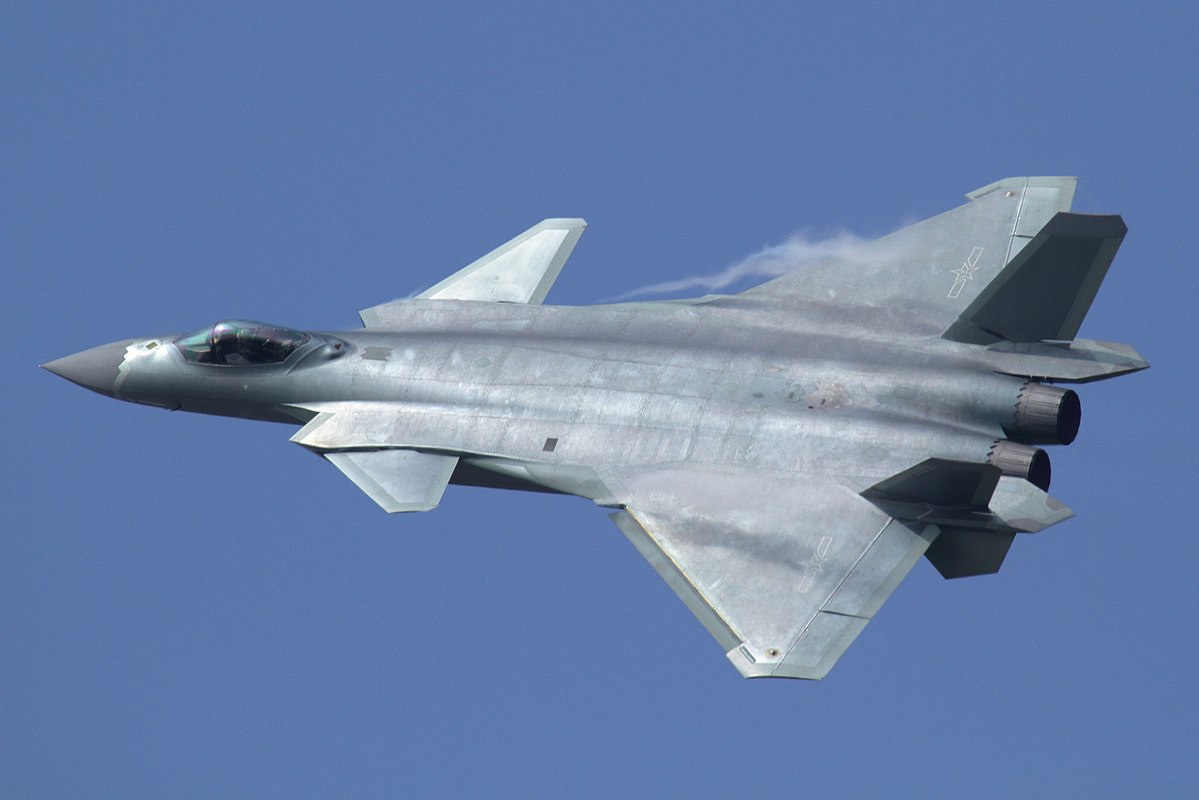
From Our Field Engineers: The Evolution of J-20 Engine Technology
Our field engineers have closely followed the J-20’s development, particularly its engine evolution. Initially, the reliance on Russian AL-31FM2 engines presented a bottleneck. However, the rapid progress in domestic engine development, especially with the WS-10C and the upcoming WS-15, has been a game-changer. The WS-15, with its anticipated greater thrust, will unlock the J-20’s full potential, including enhanced Supercruise capabilities—the ability to fly at supersonic speeds without afterburners. This domestic engine advancement is critical for sustained high-rate production and operational independence.
The Strategic Impact of a Growing J-20 Fleet
The increasing number of J-20s in service has profound strategic implications, reshaping the balance of power in the Asia-Pacific region and beyond. It signals China’s emergence as a formidable player in advanced military aviation.
Deterrence and Defense
A larger J-20 fleet enhances China’s deterrence capabilities, making potential adversaries reconsider aggressive actions. The presence of a significant number of stealth fighters complicates enemy planning and increases the risk of engagement. Furthermore, these aircraft bolster China’s defensive posture, providing a modern shield against potential aerial threats. The J-20’s design, featuring a canard-delta aerodynamic layout and Diverterless Supersonic Inlet (DSI), contributes significantly to its stealth characteristics and overall performance.
Export Potential and Global Influence
While the J-20 is currently an exclusive asset of the Chinese Air Force, its technological advancements could pave the way for future export versions or derivatives. As a company specializing in high-performance military and civilian aviation equipment, Shanghai Fighter Jet Export Co., Ltd. recognizes the global demand for advanced aviation technology. The success of the J-20 demonstrates China’s growing prowess in aerospace, potentially opening doors for collaborations and exports of related technologies in the future.
Expert Insight: The Future of Fifth-Generation Fighter Development
The trajectory of the J-20’s development, particularly its rapid production increase and the anticipated integration of the WS-15 engine, highlights a clear trend in global military aviation: the continuous pursuit of advanced stealth, speed, and integrated avionics. With a projected maximum speed of over 2.0 Mach (approximately 2100 – 3060 km/h) and a practical ceiling of 20,000 meters (66,000 feet), the J-20 exemplifies the performance benchmarks for future air combat. We foresee a future where fifth-generation fighters will increasingly rely on sophisticated Electronic Warfare (EW) systems and advanced Sensor Fusion to maintain dominance in complex, contested environments. This emphasis on integrated systems, rather than individual performance metrics alone, will define the next generation of air superiority.
About the Author
Zhou Qingyu is an aerospace engineering expert who has been deeply involved in the field of fighter jets for 18 years. He has participated in the research and development of multiple domestically produced fighter jets and is a key technical backbone behind China’s air power.
Contact Our Specialists
To explore tailored solutions in advanced aviation equipment or to discuss the strategic implications of modern air power, contact our specialists. We offer comprehensive expertise in R&D, manufacturing, international trade, and after-sales service for high-performance military and civilian aviation equipment.
FAQs
Q1: What makes the J-20 a fifth-generation fighter?
A1: The J-20 is classified as a fifth-generation fighter due to its advanced characteristics, including Stealth Technology, Supercruise capability, advanced Avionics with Sensor Fusion, and a high degree of Maneuverability. These features enable it to operate effectively in modern combat environments.
Q2: What is the primary role of the J-20 in China’s air force?
A2: The J-20 primarily serves as an air superiority fighter, designed to achieve and maintain control of the airspace. However, its Multirole Fighter capabilities also allow it to perform air-to-ground and potentially maritime strike missions, making it a versatile asset.
Q3: How does the J-20 compare to other stealth fighters globally?
A3: The J-20 is often compared to other fifth-generation fighters like the F-22 Raptor and F-35 Lightning II. While specific performance data varies, the J-20 incorporates advanced features such as a canard-delta aerodynamic layout and DSI, contributing to its unique stealth and aerodynamic performance.
Q4: What are the key weapon systems of the J-20?
A4: The J-20’s internal weapon bays are designed for stealth, carrying up to four PL-15/16 Beyond Visual Range (BVR) Missiles in its main bay and two PL-10 Short Range Air-to-Air Missiles in its side bays. This internal carriage minimizes radar cross-section.
Q5: What is the significance of the WS-15 engine for the J-20?
A5: The WS-15 engine is crucial for the J-20 as it is expected to provide greater thrust, enhancing the aircraft’s Supercruise capabilities and overall performance. This domestic engine allows China to reduce reliance on foreign technology and increase the J-20’s production rate.
Keyword: how many j20 does china have, J-20 fleet size, China air power, fifth-generation fighter, J-20 production


