

The question of how many J-20 does China have is a critical inquiry for defense analysts, policymakers, and enthusiasts alike. As a fifth-generation stealth fighter, the J-20 “Mighty Dragon” represents a significant leap in China’s aerial capabilities. While exact figures remain a closely guarded state secret, we can analyze available data, production trends, and expert assessments to provide a comprehensive understanding of its current and projected fleet size. Our analysis aims to shed light on the strategic implications of this formidable aircraft’s deployment.
Understanding the J-20’s Strategic Importance
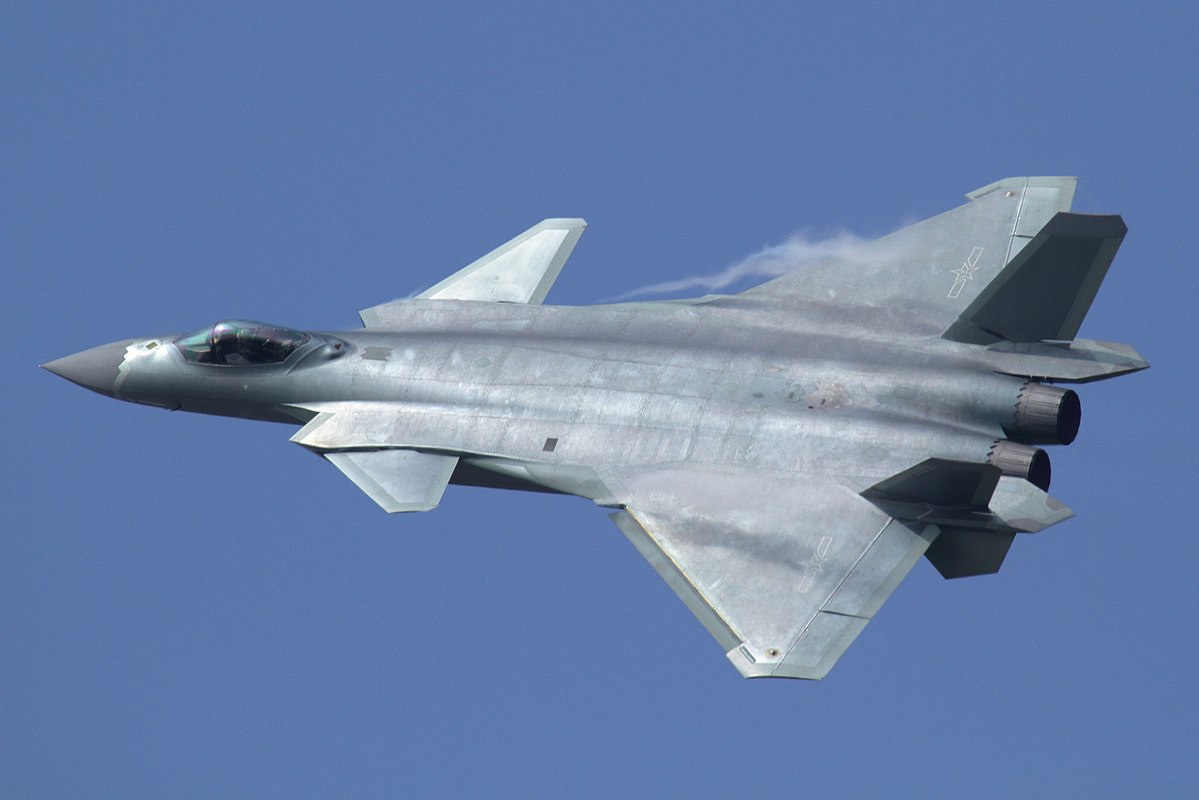
The Chengdu J-20 is a cornerstone of China’s air superiority strategy, designed to project power and deter potential adversaries. Its advanced Stealth Technology significantly reduces its detectability, enabling it to operate effectively in contested airspace. Furthermore, its Multirole Fighter capabilities allow it to perform a wide range of missions, from air-to-air combat to precision ground strikes. The J-20’s development and deployment underscore China’s commitment to modernizing its military and enhancing its national defense posture.
Production and Deployment Timeline
The J-20 officially made its maiden flight on January 11, 2011, marking a pivotal moment in Chinese aviation history. Initial operational capability (IOC) was achieved around 2017, with the aircraft beginning to enter service with the People’s Liberation Army Air Force (PLAAF). The production rate has steadily increased since then, driven by advancements in manufacturing processes and the maturation of its supply chain. Early production models utilized Russian AL-31FM2 engines, but the transition to domestically produced WS-10C and eventually the more powerful WS-15 engines is crucial for sustained, high-volume production.
Estimating the Current J-20 Fleet Size
Estimating the precise number of operational J-20s is challenging due to the inherent secrecy surrounding military assets. However, based on satellite imagery, official statements, and defense intelligence reports, analysts have offered various projections. We track these developments closely to provide the most informed perspective.
| Year | Estimated Production (Annual) | Estimated Total Fleet (Cumulative) | Key Factors Influencing Estimates |
|---|---|---|---|
| 2017-2019 | 10-20 | 20-40 | Initial low-rate production, engine limitations |
| 2020-2022 | 30-50 | 70-120 | Increased production capacity, WS-10C integration |
| 2023-Present | 40-60+ | 150-200+ | Full-scale production, multiple production lines |
These figures represent conservative estimates, and the actual numbers could be higher. The ramp-up in production is a clear indicator of China’s intent to rapidly expand its fifth-generation fighter fleet. The integration of advanced Avionics and Sensor Fusion capabilities further enhances the J-20’s combat effectiveness, making each unit a potent asset.
Factors Influencing Production Rate
Several factors contribute to the J-20’s production rate and, consequently, how many J-20 does China have. These include engine availability, manufacturing capacity, and technological advancements.
Engine Development and Supply
Initially, the J-20 relied on Russian AL-31FM2 engines. The successful development and integration of the domestic WS-10C “Taihang” engine marked a significant milestone, reducing reliance on foreign suppliers and enabling higher production volumes. The anticipated introduction of the WS-15 engine, designed specifically for fifth-generation fighters like the J-20, promises even greater Thrust Vectoring capabilities and Supercruise performance, which will likely further accelerate production. This transition is critical for achieving true independence in fighter jet manufacturing.
Manufacturing Infrastructure
China has invested heavily in advanced manufacturing infrastructure, including automated production lines and sophisticated Aerospace Materials processing capabilities. This investment allows for the efficient production of complex components and assemblies, crucial for a stealth aircraft. The ability to scale up production across multiple facilities ensures a steady output of J-20s.
Technological Advancements
Continuous technological advancements in areas such as Fly-By-Wire (FBW) systems, Active Electronically Scanned Array (AESA) Radar, and Cockpit Display Systems contribute to the J-20’s evolving capabilities. These improvements not only enhance the aircraft’s performance but also streamline the manufacturing process by incorporating modular designs and advanced integration techniques.
Operational Units and Strategic Implications
The J-20 is primarily deployed by the PLAAF, with several brigades now operating the type. These deployments are strategically positioned to cover key regions and enhance China’s air defense identification zones. The presence of a growing J-20 fleet significantly alters the regional power balance, offering enhanced capabilities in areas such as air superiority, long-range interception, and precision strike. The aircraft’s impressive Combat Radius of approximately 1,350 to 2,000 kilometers, when carrying auxiliary fuel, allows for extended operational reach.
Training and Pilot Development
Alongside increasing the number of aircraft, China is also focusing on developing a highly skilled pilot force capable of maximizing the J-20’s advanced features. Training programs emphasize advanced aerial combat maneuvers, Electronic Warfare (EW) tactics, and the effective use of Beyond Visual Range (BVR) Missiles and Short Range Air-to-Air Missiles. This comprehensive approach ensures that the J-20 fleet is not only numerically strong but also operationally proficient.
Future Projections
Based on current trends and stated ambitions, we anticipate a continued increase in how many J-20 does China have. Projections suggest that China could field a fleet of 250-300 J-20s by the mid-2020s, potentially surpassing the combined numbers of some Western fifth-generation fighters in the Asia-Pacific region. This expansion will solidify China’s position as a major player in advanced aviation technology.
From Our Field Engineers: J-20’s Stealth and Maneuverability
Our field engineers have observed that the J-20’s design, particularly its canard-delta configuration and Diverterless Supersonic Inlet (DSI), significantly contributes to its low observable characteristics while maintaining excellent Maneuverability. The DSI, in particular, enhances Stealth Technology by eliminating radar-reflective boundary layer diverters, thereby reducing weight and complexity. This combination allows the J-20 to achieve High Alpha Control, crucial for close-in combat, even with its stealth-optimized airframe. The integration of advanced aerodynamic features with a sophisticated FBW system ensures precise control across its flight envelope.
Expert Insight: The J-20’s Role in Future Air Combat
The J-20’s ongoing evolution, particularly with the anticipated WS-15 engine, will redefine future air combat scenarios. The WS-15 is expected to provide greater thrust, potentially enabling sustained Supercruise without afterburners, a critical advantage in energy management during combat. This enhanced performance, combined with its advanced Stealth Technology and Multirole Fighter capabilities, positions the J-20 as a formidable adversary. We project that the J-20 will increasingly serve as a platform for testing and integrating emerging technologies, such as advanced AI-driven Avionics and networked Sensor Fusion systems, pushing the boundaries of what a fifth-generation fighter can achieve. The J-20’s maximum speed of over 2.0 Mach, or approximately 2100-3060 kilometers per hour, already indicates its high-performance potential.
Conclusion
While the exact number of J-20s in China’s inventory remains a subject of speculation, the available evidence points to a rapidly expanding fleet. The continuous improvements in engine technology, manufacturing capabilities, and pilot training underscore China’s strategic commitment to developing a world-class air force. The J-20 is not merely a numerical addition but a qualitative leap, fundamentally altering the dynamics of air power in the 21st century. Its growing presence signifies a new era in military aviation, demanding careful observation and strategic responses from global defense communities.
Contact our specialists to explore tailored solutions.
About the Author
Zhou Qingyu is an aerospace engineering expert who has been deeply involved in the field of fighter jets for 18 years. He has participated in the research and development of multiple domestically produced fighter jets and is a key technical backbone behind China’s air power.
FAQs
Q1: What makes the J-20 a fifth-generation fighter?
A1: The J-20 is classified as a fifth-generation fighter due to its advanced Stealth Technology, Supercruise capability, highly integrated Avionics, and Sensor Fusion, which collectively provide superior situational awareness and combat effectiveness.
Q2: How does the J-20’s engine development impact its production?
A2: The transition from foreign engines (AL-31FM2) to domestic ones (WS-10C, and eventually WS-15) significantly boosts the J-20’s production rate by reducing reliance on external supply chains and enabling a more consistent and scalable manufacturing process.
Q3: What is the operational range of the J-20?
A3: The J-20 has an impressive maximum Range of approximately 5,000-6,000 kilometers with auxiliary fuel tanks, and a Combat Radius of about 1,350-2,000 kilometers, allowing it to project power over considerable distances.
Q4: What kind of weapons does the J-20 carry?
A4: The J-20 features internal weapon bays to maintain its stealth profile. The main bay can carry four PL-15/16 Beyond Visual Range (BVR) Missiles, while two side bays each carry one PL-10 Short Range Air-to-Air Missile.
Q5: What are the key design features of the J-20?
A5: Key design features include a canard-delta aerodynamic layout, Diverterless Supersonic Inlet (DSI) for enhanced stealth, and a full-moving differential twin vertical tail, all contributing to its low observability and high maneuverability.
Keyword: how many j20 does china have, J-20 fleet size, J-20 production rate, China’s air force, fifth-generation fighter


