

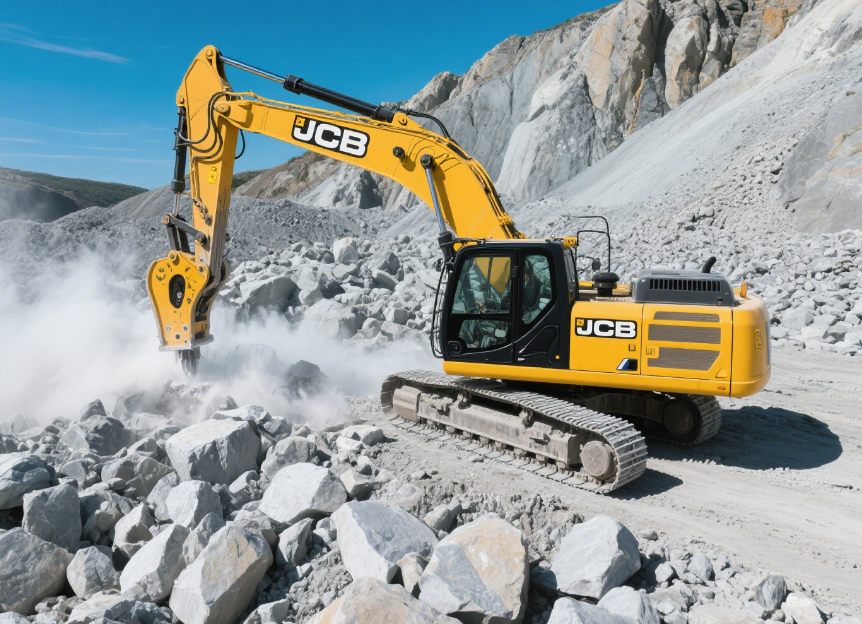
An excavator hydraulic breaker operates by converting the hydraulic power from an excavator into percussive force. This attachment, also known as a hydraulic hammer, attaches to a carrier machine and utilizes its hydraulic system to drive a piston. The piston then repeatedly strikes a working tool, such as a moil point or a chisel, generating high-frequency impacts. These impacts break down hard materials like rock, concrete, and asphalt. The process involves a precise sequence of hydraulic fluid flow, piston movement, and energy transfer, ensuring efficient material demolition in various construction and mining applications. Understanding this mechanism is crucial for proper operation and maintenance.
The Core Principle of Hydraulic Breaker Operation
The fundamental principle behind an excavator hydraulic breaker involves the conversion of hydraulic energy into mechanical impact energy. This conversion occurs within the breaker’s main body, the Cylinder Body Assembly. The excavator’s hydraulic pump supplies high-pressure oil to the breaker through hydraulic hoses. This oil enters the breaker and is directed by a sophisticated Valve Assembly. The valve system controls the flow of hydraulic fluid, causing a Piston to move rapidly up and down within the Middle Cylinder.
When the piston moves downwards, it gains momentum. At the bottom of its stroke, the piston strikes the top of the Working Tool, transferring its kinetic energy into the tool. This sudden energy transfer generates a powerful percussive force that is then applied directly to the material being broken. The process is cyclical, with the piston retracting after each strike, ready for the next impact. The efficiency of this energy transfer directly influences the breaker’s performance.
Key Components and Their Roles in the Impact Process
Several critical components work in unison to achieve the powerful breaking action of a hydraulic breaker. Each part plays a specific role in channeling hydraulic power and delivering the impact.
- Piston and Cylinder Body Assembly: The Piston is the heart of the breaker, responsible for generating the impact. It moves within the Middle Cylinder, driven by hydraulic pressure. The Cylinder Body Assembly houses the piston and guides its movement, ensuring precise and powerful strikes.
- Valve Assembly: This component acts as the brain of the hydraulic breaker. It precisely controls the direction and timing of hydraulic oil flow to the piston. By alternating pressure above and below the piston, the valve assembly orchestrates the rapid up-and-down motion required for continuous impact.
- Accumulator: The Accumulator is a pressure vessel containing compressed nitrogen gas. It performs two primary functions: absorbing pressure spikes within the hydraulic system, thereby protecting the excavator, and enhancing the impact energy by storing and releasing hydraulic pressure to assist the piston’s downward stroke. Breakers like the BLT-70 and BLT-75 feature an Accumulator Gas Pressure of 55-60 bar, indicating a robust energy storage system.
- Working Tool: This is the part that directly contacts the material. Common types include the MOIL POINT for general breaking, the NARROW CHISEL for cutting, and the BLUNT TOOL for secondary breaking. The choice of working tool depends on the specific application and material properties.
- Breaker Box / Outer Casing: This external steel frame protects the internal components from external damage and wear. Some models feature a Silent Outer Casing, which incorporates sound-dampening materials to reduce noise levels during operation, improving working conditions.
The Hydraulic Cycle: From Excavator to Impact
The operation of an excavator hydraulic breaker is a continuous hydraulic cycle. This cycle begins with the excavator’s hydraulic system and culminates in the working tool’s impact.
- Hydraulic Fluid Intake: The excavator’s hydraulic pump sends high-pressure hydraulic fluid through hoses to the breaker’s Hose Inlet. The required Oil Flow varies by breaker size; for instance, the BLT-100 requires 80-110 l/min, while the larger BLT-155 needs 180-240 l/min.
- Piston Upward Stroke: The Valve Assembly directs the high-pressure oil to the lower chamber of the Middle Cylinder, pushing the piston upwards. As the piston rises, it compresses nitrogen gas in the upper chamber or accumulator, storing potential energy.
- Piston Downward Stroke: At the top of its stroke, the valve assembly redirects the hydraulic fluid. Pressure is released from the lower chamber, and high-pressure oil is directed to the upper chamber. This, combined with the stored energy from the accumulator, rapidly drives the piston downwards.
- Impact: The descending piston strikes the Working Tool with immense force. This impact energy is then transmitted to the material, causing it to fracture.
- Cycle Repetition: After impact, the piston retracts, and the cycle repeats. The Impact Rate, measured in BPM (Beats Per Minute), indicates how frequently these impacts occur. For example, the BLT-40 has an Impact Rate of 800-1400bpm, while the BLT-155 operates at 200-300bpm, demonstrating different operational characteristics for varying tasks.
This cyclical process is synchronized to maximize efficiency and breaking power.
Matching Breakers to Excavators for Optimal Performance
Selecting the correct hydraulic breaker for an excavator is crucial for both operational efficiency and equipment longevity. Mis matching can lead to reduced performance, increased wear, and potential damage to both the breaker and the carrier machine.
| Breaker Model | Applicable Excavator (t) | Working Oil Flow (l/min) | Impact Rate (bpm) |
|---|---|---|---|
| BLT-40 | 0.5–1.2t | 15~30 | 800~1400 |
| BLT-70 | 4.5–6t | 40~70 | 500~900 |
| BLT-100 | 10–14t | 80~110 | 350~700 |
| BLT-135 | 18~22t | 100~150 | 350~500 |
| BLT-155 | 27~33t | 180~240 | 200~300 |
The table illustrates how different breaker models are designed for specific excavator weight classes and hydraulic flow requirements. For example, a BLT-40, suitable for 0.5-1.2t excavators, operates with a lower oil flow and higher impact rate, ideal for smaller demolition jobs. Conversely, a BLT-155, designed for 27-33t excavators, demands a significantly higher oil flow and delivers fewer, but more powerful, impacts, making it suitable for heavy-duty breaking. We ensure that our products are precisely engineered to integrate seamlessly with a wide range of excavators, maximizing their combined potential. More people are focusing on Hydraulic break to improve efficiency.
Maintenance and Longevity of Hydraulic Breakers
Proper maintenance is essential for extending the lifespan and ensuring the consistent performance of an excavator hydraulic breaker. Regular checks and adherence to service schedules prevent premature wear and costly downtime.
- Lubrication: The working tool and bushings require regular lubrication with Chisel Paste. Some breakers can be equipped with an Automatic Lubrication System, which continuously supplies grease to critical wear points, reducing friction and heat.
- Seal Kit Replacement: Over time, seals can degrade, leading to hydraulic fluid leaks and reduced efficiency. Regular inspection and replacement of the Seal Kit, including O-rings and U-cup Seals, maintain hydraulic integrity.
- Accumulator Pressure Checks: The Accumulator Gas Pressure is a critical parameter. It requires periodic checking and recharging with nitrogen gas using a Charging Regulator. Incorrect pressure affects impact energy and can damage the breaker. For instance, the BLT-135 has a Back Head Nitrogen Pressure of 6-8 bar, which must be maintained for optimal function.
- Working Tool Inspection: The Working Tool experiences direct impact and wear. Regular inspection for cracks, excessive wear, or deformation ensures effective breaking and prevents damage to the breaker’s internal components.
- Fastener Tightness: Shell Bolts and Linkage Bolts must be checked regularly for tightness. Loose fasteners can lead to excessive vibration and component damage.
Adhering to these maintenance practices significantly contributes to the longevity and reliability of the hydraulic breaker.
Real-World Application: Demolition Project
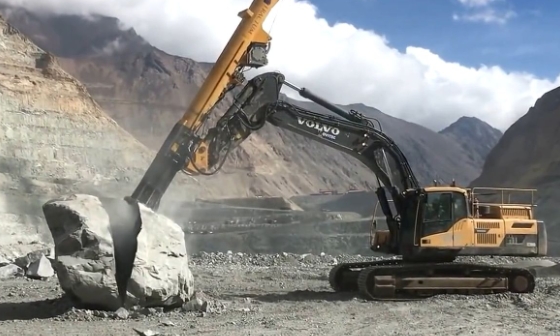
In a recent urban demolition project, our team utilized a BLT-135 hydraulic breaker mounted on a 20-ton excavator to dismantle a reinforced concrete structure. The project site was in a densely populated area, requiring precise and efficient breaking with minimal disruption. The BLT-135, with its 135mm chisel diameter and 100-150 l/min working oil flow, proved highly effective. The operator focused on maintaining a consistent impact angle and ensuring the working tool was always perpendicular to the breaking surface. This technique, combined with regular lubrication checks every four hours, allowed for continuous operation over two weeks without any significant downtime. The project was completed ahead of schedule, demonstrating the reliability and power of our equipment when operated correctly.
The Future of Hydraulic Breaker Technology
The hydraulic breaker industry is continuously evolving, driven by demands for increased efficiency, reduced environmental impact, and enhanced operator comfort. We foresee several key trends shaping the future of hydraulic breaker technology. One significant area of development is the integration of smart sensors and IoT capabilities. These advancements will allow for real-time monitoring of breaker performance, including impact rate, oil flow, and internal pressures. This data can then be used for predictive maintenance, optimizing operational parameters, and even adjusting impact force automatically based on material hardness. For example, by analyzing the performance data from a BLT-155, which has a working pressure of 200-220 bar, operators could receive alerts for potential issues before they escalate, significantly reducing downtime and maintenance costs. Such systems would also provide valuable insights into tool wear and overall equipment health.
Furthermore, we anticipate continued advancements in material science, leading to even more durable and wear-resistant working tools and internal components. This will translate into longer service intervals and reduced operational expenses for our customers. The focus will also be on developing more energy-efficient hydraulic systems that minimize fuel consumption for the carrier excavator, aligning with global sustainability goals. These innovations will not only improve the performance and reliability of hydraulic breakers but also contribute to a more sustainable and productive construction industry.
About the Author
Li Mingxuan is a senior expert with 18 years of experience in the hydraulic breaker industry. He is proficient in equipment research and development, application, and construction in extreme environments, and is a recognized technical authority in the industry.
Contact Our Specialists
We offer a comprehensive range of hydraulic breakers designed for various applications and excavator sizes. Contact our specialists to explore tailored solutions that enhance your operational efficiency and project success. We can assist you in selecting the optimal breaker for your specific needs.
Frequently Asked Questions
Q1: What is the primary function of an accumulator in a hydraulic breaker?
A1: The accumulator stores hydraulic energy, typically using compressed nitrogen, to absorb pressure pulses. This action protects the excavator’s hydraulic system and enhances the breaker’s impact energy, contributing to more powerful and consistent strikes.
Q2: How does the working tool’s shape affect breaking performance?
A2: The shape of the working tool dictates its application. A moil point offers good penetration for general breaking, a narrow chisel is effective for cutting, and a blunt tool distributes impact force for secondary breaking or compaction. Choosing the right tool optimizes breaking efficiency for specific materials.
Q3: What is the recommended maintenance for a hydraulic breaker?
A3: Regular maintenance includes lubricating the working tool and bushings with chisel paste, checking and replacing seal kits, verifying accumulator gas pressure, inspecting the working tool for wear, and tightening fasteners. These steps ensure longevity and consistent performance.
Q4: Why is matching the hydraulic breaker to the excavator important?
A4: Proper matching ensures the breaker receives the correct oil flow and operating pressure from the excavator, preventing damage to both machines. It also optimizes breaking power and efficiency, leading to better project outcomes and reduced operational costs.
Q5: What are the signs of a hydraulic breaker needing service?
A5: Signs a hydraulic breaker needs service include decreased impact power, excessive oil leakage, unusual noises during operation, increased vibration, or frequent overheating. Addressing these issues promptly prevents further damage and costly repairs. If you’re interested in this topic, check out our article 《How to choose a hydraulic breaker》.
Keyword: How does an excavator hydraulic breaker work, hydraulic hammer operation, breaker maintenance, hydraulic breaker components


