

An excavator hydraulic breaker operates as a powerful attachment, converting hydraulic energy from the carrier into percussive force. This mechanical marvel enables excavators to demolish concrete, break rock, and perform other heavy-duty tasks with precision. Understanding the internal mechanisms of these tools is essential for optimizing their performance and ensuring longevity. We delve into the core principles and components that allow these breakers to deliver consistent, high-impact power on demanding job sites.
The Fundamental Principle of Hydraulic Breaker Operation
The operation of an excavator hydraulic breaker relies on the principles of hydraulics, specifically the conversion of fluid pressure into mechanical motion and impact energy. Hydraulic oil, supplied by the excavator’s pump, drives a piston within the breaker’s cylinder body assembly. This piston reciprocates, striking a working tool with significant force. The rapid succession of these impacts, known as the impact rate, allows the breaker to fracture hard materials effectively. The entire process is a closed-loop system, ensuring efficient energy transfer and minimal waste.

Key Components and Their Functions
Each part of a hydraulic breaker plays a crucial role in its overall function. The interplay between these components dictates the breaker’s power, efficiency, and durability. We design our breakers with robust materials and precise engineering to maximize each component’s contribution to performance.
The Cylinder Body Assembly
The cylinder body assembly forms the central core of the hydraulic breaker. It houses the piston, which is the primary moving part responsible for generating impact. The assembly includes the rear cylinder, middle cylinder, and front cylinder. The rear cylinder often contains the control valve, which directs hydraulic oil flow. The middle cylinder guides the piston’s movement, while the front cylinder supports the working tool. Proper alignment and sealing within this assembly are critical for maintaining hydraulic pressure and preventing energy loss.
The Piston and Valve Assembly
The piston is the heart of the hydraulic breaker, driven by alternating hydraulic pressures. As oil enters the cylinder, it pushes the piston upwards, compressing nitrogen gas in the accumulator. When the pressure shifts, the piston accelerates downwards, striking the working tool. The valve assembly precisely controls the flow of hydraulic oil, dictating the piston’s stroke length and impact rate. Our BLT series breakers, for example, are engineered with optimized valve designs to achieve high impact rates, such as the BLT-40 with 800-1400 bpm, ensuring rapid material breakdown.
The Accumulator: Energy Storage and System Protection
The accumulator is a pressurized vessel containing nitrogen gas, separated from the hydraulic oil by a diaphragm. It serves multiple functions: storing energy for the piston’s downward stroke, absorbing pressure spikes to protect the excavator’s hydraulic system, and enhancing impact energy. The accumulator gas pressure is a critical parameter for breaker performance. For instance, our BLT-70 model maintains an accumulator nitrogen pressure of 55-60 bar, contributing to its consistent power output. Regular checks of the accumulator’s charge are vital for optimal operation.
The Working Tool and Its Varieties
The working tool, or chisel, is the part that directly contacts the material being broken. It is typically made from high-strength forged steel to withstand repeated, high-force impacts. Different types of working tools are available for various applications. A moil point is ideal for general breaking of rock and concrete, offering excellent penetration. A narrow chisel is suitable for cutting or trenching, while a blunt tool is used for secondary breaking or compaction, distributing force over a wider area. Selecting the correct working tool for the task significantly improves efficiency and reduces wear.
The Hydraulic Circuit: Powering the Breaker
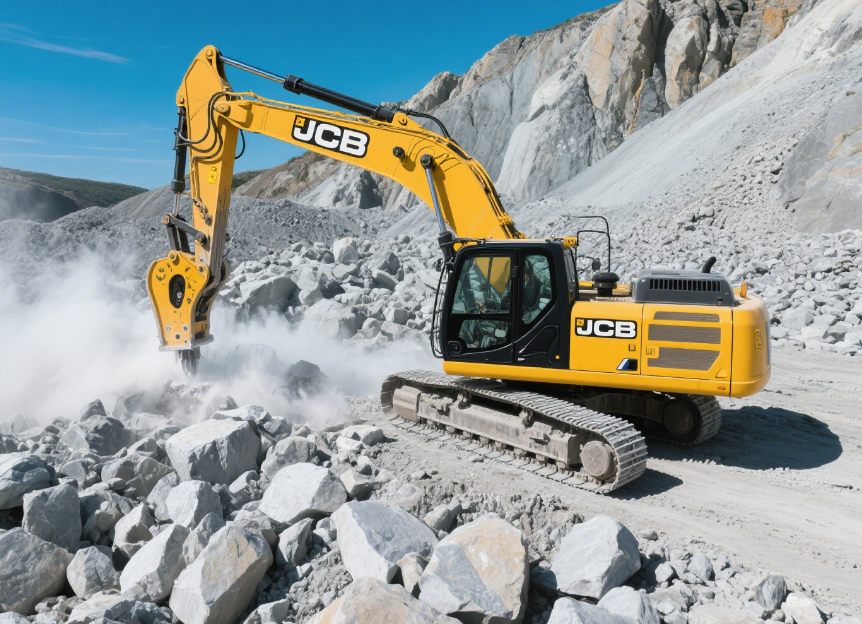
The hydraulic circuit connects the excavator’s hydraulic system to the breaker. High-pressure hydraulic oil flows from the excavator’s pump through hoses to the breaker’s inlet port. Inside the breaker, the oil is directed by the valve assembly to drive the piston. After completing its work, the oil returns to the excavator’s tank through the return hose. A pressure relief valve within the system protects both the breaker and the excavator by opening if the hydraulic pressure exceeds a safe limit. Maintaining clean hydraulic fluid and properly sized hoses is crucial for efficient power transfer.
Impact Generation and Energy Transfer
The core function of the hydraulic breaker is to generate a powerful impact. This process begins when hydraulic pressure drives the piston upwards, compressing the nitrogen gas in the accumulator. As the valve shifts, the high-pressure oil is redirected, forcing the piston downwards at high velocity. The piston strikes the working tool, transferring its kinetic energy directly to the material. This energy transfer, combined with the rapid impact rate, causes the material to fracture. The efficiency of this energy transfer directly correlates with the breaker’s effectiveness.
Matching Breaker to Excavator
Proper matching of the hydraulic breaker to the excavator is paramount for both performance and safety. Key parameters include the excavator’s operating weight, hydraulic oil flow, and operating pressure. An undersized breaker will be inefficient, while an oversized breaker can damage the excavator’s hydraulic system or structure. For example, our BLT-100 breaker, with a working oil flow of 80-110 l/min and an operating pressure of 150-170 bar, is designed for 10-14t excavators like the Komatsu PC120-7 or Caterpillar 312D. This precise matching ensures optimal power delivery and minimizes operational risks.
| Breaker Model | Applicable Excavator (t) | Working Oil Flow (l/min) | Operating Pressure (bar) | Impact Rate (bpm) |
|---|---|---|---|---|
| BLT-40 | 0.5–1.2 | 15~30 | 90~120 | 800~1400 |
| BLT-70 | 4.5–6 | 40~70 | 110~140 | 500~900 |
| BLT-100 | 10–14 | 80~110 | 150~170 | 350~700 |
| BLT-135 | 18~22 | 100~150 | 160~180 | 350~500 |
| BLT-155 | 27~33 | 180~240 | 200~220 | 200~300 |
Maintenance and Longevity
Regular maintenance is crucial for the longevity and efficient operation of an excavator hydraulic breaker. This includes daily lubrication of the working tool and bushings using specialized chisel paste, checking hydraulic hose connections, and monitoring accumulator gas pressure. We recommend using an automatic lubrication system to ensure consistent greasing, especially in demanding applications. Inspecting wear parts, such as the outer bushing and inner bushing, and replacing them as needed prevents premature failure and costly downtime. Adhering to manufacturer guidelines for service intervals extends the breaker’s lifespan significantly.
Real-World Application and Efficiency
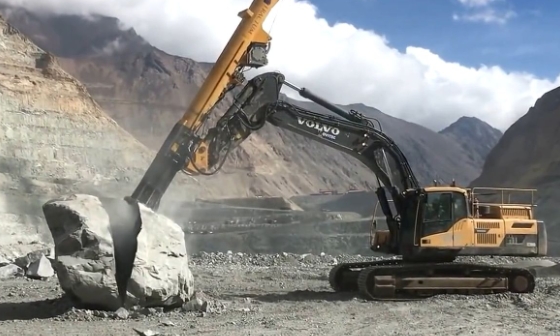
In a recent demolition project involving a reinforced concrete structure, a BLT-135 hydraulic breaker was deployed on a 20-ton excavator. The structure, originally estimated to take five days to dismantle, was completed in three days. This efficiency gain was attributed to the breaker’s consistent 350-500 bpm impact rate and the operator’s adherence to proper breaking techniques. The project manager noted that the breaker’s robust design and minimal downtime contributed significantly to the accelerated timeline, demonstrating the practical benefits of a well-maintained and correctly matched hydraulic breaker.
Expert Insight
The future of excavator hydraulic breakers lies in enhanced integration with carrier intelligence and advanced material science. We anticipate a shift towards breakers that dynamically adjust their impact frequency and force based on real-time material density feedback, potentially increasing efficiency by 15-20%. Furthermore, the development of self-diagnosing systems will predict maintenance needs, reducing unscheduled downtime. For instance, integrating sensors to monitor accumulator gas pressure and working tool wear, similar to the precise specifications we see in models like the BLT-155 with its 55-60 bar accumulator pressure, will become standard. This evolution will lead to more autonomous and sustainable demolition and excavation processes.
About the Author
Li Mingxuan is a senior expert with 18 years of experience in the hydraulic breaker industry. He is proficient in equipment research and development, application, and construction in extreme environments, and is a recognized technical authority in the industry.
FAQs
Q1: What is the primary function of an excavator hydraulic breaker?
A1: An excavator hydraulic breaker primarily converts the excavator’s hydraulic power into high-frequency impact force to break hard materials like rock, concrete, and asphalt, facilitating demolition, quarrying, and excavation tasks.
Q2: How does the accumulator contribute to the hydraulic breaker’s performance?
A2: The accumulator stores hydraulic energy, absorbs pressure spikes, and enhances the piston’s downward impact force. It protects the excavator’s hydraulic system from shock loads and ensures consistent power delivery for the hydraulic breaker.
Q3: What are the different types of working tools for hydraulic breakers?
A3: Common working tools include the moil point for general breaking, the narrow chisel for cutting and trenching, and the blunt tool for secondary breaking or compaction. Each tool is designed for specific material and application requirements.
Q4: Why is proper matching of a hydraulic breaker to an excavator important?
A4: Proper matching ensures optimal performance, efficiency, and safety. An improperly matched hydraulic breaker can lead to reduced breaking power, increased wear on both the breaker and excavator, and potential damage to the carrier’s hydraulic system.
Q5: How often should the working tool of a hydraulic breaker be lubricated?
A5: The working tool and bushings should be lubricated daily, or even more frequently in demanding applications, using specialized chisel paste. Consistent lubrication minimizes friction, reduces wear, and prevents premature failure of critical components.
Keyword: How does an excavator hydraulic breaker work, hydraulic breaker operation, excavator attachments, hydraulic hammer mechanism, breaker maintenance


