

The effectiveness of a motor grader on any construction or maintenance project hinges significantly on its attachments. We understand that a grader is not merely a machine for leveling surfaces; it is a versatile tool whose capabilities are profoundly shaped by the accessories it employs. From the initial site preparation to the final grading of a road, the choice of grader attachments directly dictates the machine’s ability to adapt to diverse terrains and achieve optimal operational efficiency. Our experience in heavy equipment underscores this truth: the right attachment can transform a standard grader into a specialized powerhouse, capable of tackling tasks that would otherwise require multiple machines or significantly more time. This is not just about adding functionality; it’s about unlocking the full potential of your investment and ensuring every project is executed with precision and speed.
Understanding Different Grader Attachments and Their Functions
To effectively leverage a grader, one must first grasp the distinct roles each attachment plays. These components are engineered for specific tasks, and their design directly impacts performance.
Grader Blades and Cutting Edges
The most fundamental of all grader attachments are the blades and their associated cutting edges. These are the primary tools for moving and shaping material. We offer a variety of blade types, including standard carbon steel, heat-treated alloy steel, and tungsten carbide-impregnated options, each designed for different levels of abrasion resistance and impact strength. For instance, in soft soil conditions, a standard carbon steel blade might suffice. However, for highly abrasive materials like gravel or asphalt, our heat-treated alloy steel cutting edges significantly extend lifespan, reducing downtime and replacement costs. The profile of the cutting edge—whether flat, curved, or serrated—also dictates how efficiently material is cut and rolled, directly affecting fuel consumption and grading accuracy. Proper selection of these wear parts is crucial for maintaining consistent grading performance and reducing operational overhead.
Scarifiers and Rippers
When faced with compacted soil, frozen ground, or light asphalt, scarifiers become indispensable. These attachments, typically mounted at the front or mid-section of the grader, feature multiple teeth that penetrate and break up hard surfaces. For more demanding tasks, such as breaking through solid rock layers or heavily compacted materials, rippers are employed. Our ripper designs, often hydraulically controlled, provide deeper penetration and greater breakout force. This allows a single grader to perform tasks that would otherwise require a dedicated ripper attachment on a bulldozer, thereby expanding the grader’s application range. The robust construction and strategic placement of ripper shanks are critical for transmitting maximum force from the grader’s hydraulic systems to the ground, ensuring effective material fracture without excessive strain on the machine.
Moldboards and Extensions
The moldboard is the main blade of the grader, responsible for cutting, lifting, and rolling material. Its curvature and length are engineered to optimize material flow, which directly impacts the quality of the finished grade. We provide moldboards with various curvatures and materials to suit different soil types and grading requirements. Furthermore, moldboard extensions can be added to increase the width of the blade, allowing for wider passes and reducing the number of passes required to cover a given area. This directly translates to improved operational efficiency, especially in large-scale road construction or site preparation projects. The ability to adjust the moldboard’s angle and pitch, often through precise hydraulic controls, is paramount for achieving complex grading profiles and ensuring uniform material distribution.
Specialized Attachments for Unique Applications
Beyond the core attachments, a range of specialized tools further broadens the grader’s utility. Snow plows and wings transform a grader into an effective snow removal machine, clearing roads and runways with speed. Compaction wheels can be fitted for light compaction tasks, integrating grading and compaction into a single pass. These specialized heavy equipment accessories allow contractors to maximize their equipment utilization across different seasons and project types. The versatility offered by these attachments means a single grader can serve multiple functions, significantly reducing the need for additional specialized machinery and optimizing equipment investment.
How Attachments Influence Grader Application Range
The selection of attachments fundamentally redefines what a grader can do. A grader equipped with precision laser-guided systems and fine-grading blades can achieve tolerances suitable for airport runways or sports fields. Conversely, a grader fitted with heavy-duty rippers and robust cutting edges is prepared for challenging tasks like breaking up old asphalt or preparing rocky terrain for new construction. This adaptability is key to maximizing equipment utilization and project profitability. For instance, in road construction, a grader might start with scarifiers to break up existing surfaces, then switch to a standard blade for rough grading, and finally use a fine-grading attachment for the sub-base and finish layers. This seamless transition between tasks, facilitated by easily interchangeable attachments, highlights how they expand the grader’s capabilities beyond simple leveling.
Optimizing Grader Efficiency Through Attachment Selection
Efficiency in grading operations is a direct consequence of intelligent attachment selection and maintenance. We focus on providing solutions that not only perform but also contribute to the overall economic viability of your projects.
Matching Attachments to Job Requirements
Choosing the correct attachment for the specific job at hand is paramount. Using an oversized or undersized blade, or an inappropriate cutting edge, can lead to excessive wear, increased fuel consumption, and suboptimal results. For example, a narrow chisel on a hydraulic break is ideal for precise rock breaking, just as a specific grader blade profile is ideal for a particular type of soil. Our technical team assists clients in making these critical choices, ensuring that the attachment’s specifications, such as material hardness and design, align perfectly with the demands of the project. This careful matching is a cornerstone of achieving high productivity and reducing operating costs.
Material Quality and Durability
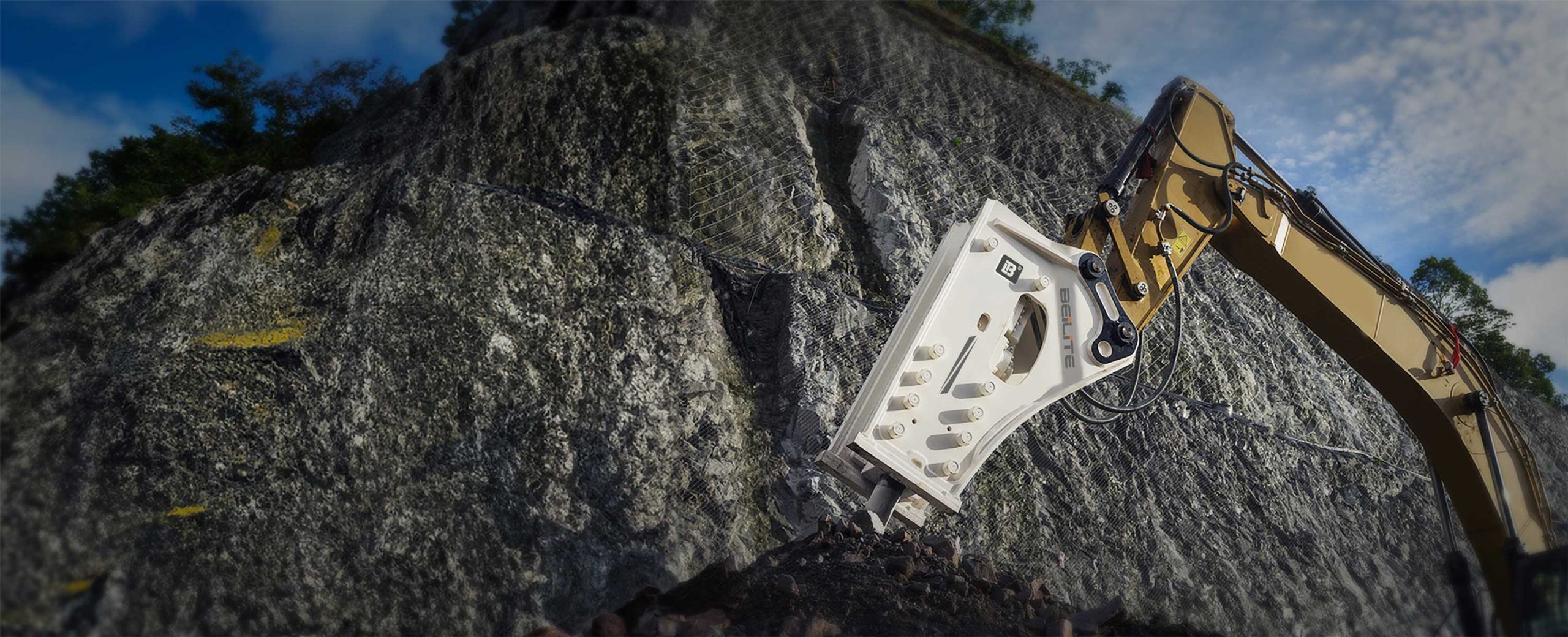
The durability of an attachment is a major factor in its long-term efficiency. High-quality materials, such as those used in our BLT-155 hydraulic breaker with its 155mm chisel diameter, are designed to withstand extreme forces and abrasive conditions. Similarly, our grader attachments are manufactured from wear-resistant alloys that extend their service life, minimizing the frequency of replacements and associated downtime. This focus on material integrity ensures that the attachments maintain their cutting edge and structural integrity even under continuous heavy use, contributing to consistent performance and lower maintenance expenses. If you’re interested in this topic, check out our article 《How to choose a hydraulic breaker
Hydraulic System Compatibility
Modern grader attachments, especially those with active controls like rippers or specialized moldboards, rely heavily on the grader’s hydraulic system. Ensuring seamless compatibility between the attachment and the grader’s hydraulic flow and pressure is essential for optimal power delivery and responsive control. Our engineers design attachments to integrate flawlessly with a wide range of grader hydraulic specifications, preventing issues such as overheating, reduced power, or premature wear of hydraulic components. This compatibility guarantees that the attachment operates at its peak performance, translating directly into enhanced grading efficiency.
From Our Field Engineers: Real-World Impact
Our field engineers consistently observe how the right attachments can dramatically alter project timelines and budgets. We recently worked with a client on a large-scale road construction project in a region with highly variable soil conditions. Initially, they struggled with a standard blade, experiencing slow progress and rapid wear in compacted sections. After our consultation, they integrated our heavy-duty scarifiers for initial breakup and switched to our specialized curved moldboard for efficient material rolling. The result was a 30% increase in daily grading output and a 20% reduction in blade replacement frequency. This direct experience reinforces our belief that investing in the correct grader parts is an investment in project success.
Expert Insight: The Beilite Advantage in Grader Attachment Engineering
At Beilite, our expertise in heavy-duty equipment, particularly in hydraulic breakers, provides us with a unique perspective on the engineering requirements for grader attachments. We understand that components like the Piston Control Valve and Accumulator Assembly in our BLT-155 hydraulic breaker, which operates at a Working Pressure of 200~220bar and an Impact Rate of 200~300bpm, are designed for extreme reliability and power delivery. This same philosophy of precision engineering and robust construction is applied to our grader attachments. We focus on:
| Feature | Beilite Grader Attachments | Standard Attachments |
|---|---|---|
| Material Composition | High-strength, abrasion-resistant alloy steels | Standard carbon steel |
| Manufacturing Precision | CNC machining for exact fit and balance | General fabrication methods |
| Hydraulic Integration | Optimized for seamless flow and pressure matching | Variable compatibility |
| Wear Life | Extended, reducing replacement frequency | Shorter, higher replacement costs |
| Performance in Harsh Conditions | Engineered for extreme durability and efficiency | Limited by material and design |
We ensure that our attachments not only fit perfectly but also enhance the overall performance and longevity of your grader. Our commitment to quality means that every cutting edge, every scarifier tooth, and every moldboard extension is built to the highest standards, ensuring maximum uptime and superior results on your job site. More people are focusing on key words: Hydraulic break to improve efficiency.
Choosing the Right Attachments for Your Grader
Selecting the optimal grader accessories involves several considerations. First, evaluate your primary applications: are you primarily involved in fine grading, heavy material moving, or breaking up compacted surfaces? Second, consider the type of material you will be working with most frequently. This will guide your choice of blade material and cutting edge profile. Third, assess the compatibility with your existing grader’s hydraulic system and mounting points. Finally, factor in the long-term cost of ownership, weighing initial investment against durability, maintenance costs, and potential gains in efficiency. Our team is ready to provide detailed consultations to help you make informed decisions that align with your operational goals. If you’re interested in this topic, check out our article 《Hydraulic break
About the Author
Li Mingxuan is a senior expert with 18 years of experience in the hydraulic breaker industry. He is proficient in equipment research and development, application, and construction in extreme environments, and is a recognized technical authority in the industry.
FAQs about Grader Attachments
What are the most important factors when choosing a grader blade?
The most important factors are the type of material being graded (e.g., soil, gravel, asphalt), the desired finish quality, and the blade’s material composition (e.g., carbon steel, alloy steel, tungsten carbide) for durability.How do scarifiers and rippers differ in their application?
Scarifiers are generally used for breaking up moderately compacted materials or light asphalt, with shallower penetration. Rippers are designed for heavier duty tasks, such as fracturing solid rock or deeply compacted ground, offering greater penetration and force.Can I use any attachment on any grader?
No, compatibility is crucial. Attachments must match the grader’s size, hydraulic capacity, and mounting system. Using incompatible attachments can damage the grader or lead to inefficient operation.How often should grader cutting edges be replaced?
Replacement frequency depends heavily on the material being worked on, the intensity of use, and the quality of the cutting edge material. Regular inspection for wear is essential; replacement should occur before excessive wear impacts grading quality or damages the moldboard.How do Beilite grader attachments improve efficiency?
Beilite attachments improve efficiency through superior material quality for extended wear life, precision engineering for optimal material flow and grading accuracy, and seamless hydraulic compatibility for maximum power delivery and control. This reduces downtime, fuel consumption, and overall operating costs.
Keywords: Grader Attachments Determine Application Range and Efficiency, optimizing grader performance with attachments, selecting the right grader accessories, impact of grader parts on operational efficiency, extending grader lifespan through proper attachments


