

As parents, we constantly seek enjoyable and effective methods to support our children’s growth. Observing a baby reach developmental milestones like crawling and mastering hand-eye coordination fills us with immense pride and joy. We understand the significance of these early achievements for overall development. This guide offers practical, fun activities and insights to help your little one thrive.
Understanding the Importance of Crawling and Hand-Eye Coordination for Babies
Early childhood development involves a series of interconnected milestones. Crawling and hand-eye coordination are foundational skills that significantly impact a baby’s physical, cognitive, and sensory growth. We recognize their critical role in preparing children for future learning.
1. Why crawling is a crucial developmental milestone
Crawling is more than just a way for babies to move; it is a complex developmental process. It strengthens core muscles, improves balance, and refines bilateral coordination, which involves using both sides of the body together. This cross-lateral movement is vital for brain development, fostering communication between the brain’s hemispheres. Crawling also introduces spatial awareness, helping babies understand their position relative to objects and their environment. This skill lays the groundwork for walking, running, and other complex motor activities.
2. The role of hand-eye coordination in early learning
Hand-eye coordination is the ability to process visual information and use it to guide hand movements. For infants, this skill begins with tracking objects and progresses to reaching, grasping, and manipulating toys. It is fundamental for fine motor development, which supports tasks like feeding oneself, drawing, and eventually writing. Strong hand-eye coordination also enhances cognitive skills, including problem-solving and spatial reasoning, as babies learn to interact with their world purposefully.
Engaging Activities to Encourage Crawling in Your Little One
Encouraging crawling should be a playful and positive experience for both parents and babies. We focus on creating environments that naturally motivate movement and exploration. These activities are designed to be fun while building essential strength and coordination.
1. Tummy time adventures and its benefits for crawling
Tummy time is indispensable for developing the neck, shoulder, and back muscles necessary for crawling.
1. Place your baby on their stomach on a soft, flat surface for short periods.
2. Position engaging toys slightly out of reach to encourage head lifting and reaching.
3. Lie down with your baby at eye level to make it a social and comforting experience.
4. Gradually increase the duration as your baby becomes more comfortable and stronger.
We find that consistent, supervised tummy time significantly strengthens the muscles needed for crawling.
2. Creating an enticing environment for movement and exploration
A stimulating environment encourages babies to move and explore independently.
1. Clear a safe, open space on the floor free from hazards.
2. Place appealing toys and objects just beyond your baby’s reach to motivate forward movement.
3. Use different textures, such as blankets or playmats, to add sensory interest.
4. Vary the location of toys to encourage different directions of movement.
An engaging space transforms crawling into an exciting adventure, fostering curiosity and determination. If you’re interested, check 18 Best Educational Gifts for Kids This Thanksgiving 2025.
3. Playful games that motivate babies to crawl forward
Games make learning fun and encourage active participation.
1. Play “chase” by crawling a short distance away and encouraging your baby to follow.
2. Create a “tunnel” with blankets or pillows for your baby to crawl through.
3. Roll a soft ball just out of reach, prompting your baby to move towards it.
4. Use a favorite toy as a motivator, placing it a few feet away and cheering them on.
These interactive games build confidence and make the crawling process enjoyable.
Boosting Hand-Eye Coordination Through Interactive Play
Developing hand-eye coordination is a continuous process that benefits from consistent, engaging interaction. We advocate for activities that allow babies to practice tracking, grasping, and manipulating objects.
1. Simple games that enhance visual tracking and grasping skills
Visual tracking and grasping are fundamental components of hand-eye coordination.
1. Move a colorful toy slowly across your baby’s field of vision, encouraging their eyes to follow.
2. Offer objects of different sizes and textures for your baby to reach for and hold.
3. Play “peek-a-boo” with a cloth, which helps with object permanence and visual anticipation.
4. Encourage your baby to bat at hanging toys, improving their aim and control.
These simple games provide crucial practice for developing precise movements.
2. Everyday objects and toys that support fine motor development
Many common items and specialized toys can aid fine motor skill development.
1. Provide soft blocks for stacking and knocking down.
2. Offer safe, graspable objects like large rings or textured balls.
3. Introduce shape sorters as your baby grows, requiring more precise hand movements.
4. Use activity centers with buttons, levers, and spinners to engage their hands and fingers.
These items help babies refine their pincer grasp and manipulate objects with greater dexterity.
3. How parent-child interaction strengthens coordination abilities
Active parent-child interaction is paramount for developmental progress.
1. Engage in reciprocal play, where you take turns with a toy, like rolling a ball back and forth.
2. Narrate your actions as you play, describing what you are doing and what your baby is seeing.
3. Offer gentle physical guidance when your baby tries to grasp or manipulate an object.
4. Celebrate their successes with praise and encouragement, building their confidence.
Your involvement provides motivation and a supportive learning environment.
Joycat’s Top Toy Picks for Developmental Milestones
At Joycat, we design toys that are not only fun but also purposefully support key developmental milestones. Our products are crafted to engage babies and encourage natural learning through play. We believe in toys that grow with your child.
1. Sensory toys that stimulate exploration and movement
Sensory toys are excellent for engaging multiple senses and encouraging physical interaction.
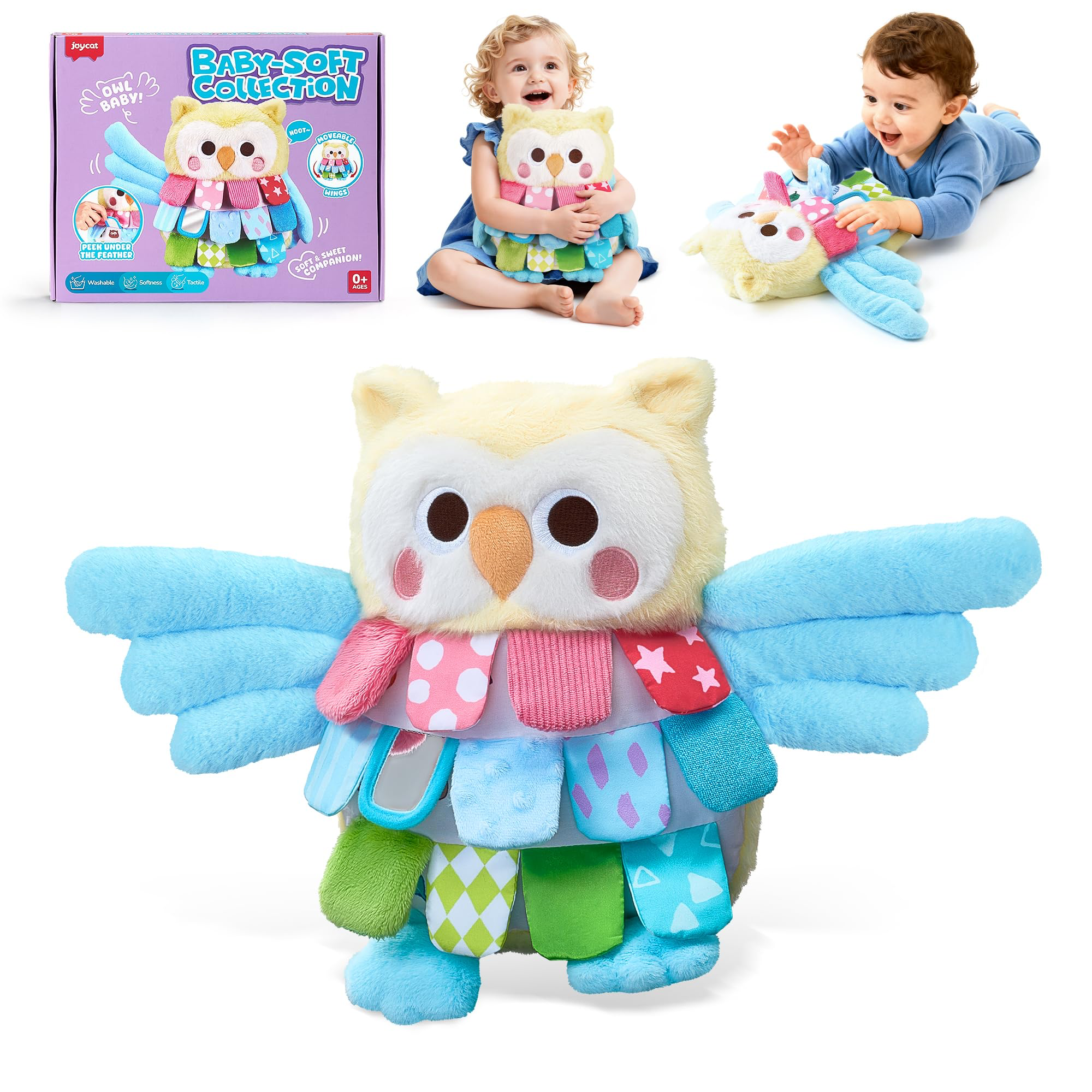
* Baby Owl Tummy Time Sensory Toy: This toy features crinkled, multi-textured feathers and hidden patterns. It encourages grasping, fine motor development, and head-lifting during tummy time. The engaging sounds and textures stimulate curiosity and visual tracking.
* Baby Crinkle Cloth Book: With crinkly sounds, a squeaker, and detachable elements, this book is perfect for tactile exploration. It promotes hand-eye coordination as babies reach for the pull-out carrot or detachable duck.
These toys provide rich sensory input, motivating babies to move, reach, and explore their environment.
2. Interactive playsets designed for fine motor skill development
Interactive playsets encourage precise hand movements and imaginative play.
* Baby Unicorn Makeup Bag Playset: This playset includes five cute sensory toys with mixed textures and sounds. It encourages early role-play and fine motor development as babies grasp, shake, and manipulate the items.
These playsets help refine fine motor skills through engaging, imaginative scenarios.
3. How Joycat toys support both crawling and hand-eye coordination
Joycat toys are thoughtfully designed to support integrated development.
* Our sensory toys, like the Baby Owl Tummy Time Sensory Toy, make tummy time more enjoyable, directly strengthening the muscles needed for crawling.
* The interactive elements in toys such as the Baby Crinkle Cloth Book encourage reaching, grasping, and manipulating, which are crucial for hand-eye coordination.
* The varied textures and sounds in our playsets stimulate curiosity, motivating babies to move towards and interact with the toys, thereby promoting both crawling and coordination.
We ensure our products offer a holistic approach to early childhood development, making learning a joyful adventure. If you’re interested, check Best Christmas Gift Ideas for Kids and Parents 2025.
Creating a Safe and Stimulating Play Environment at Home
A safe and stimulating play environment is fundamental for a baby’s development. We prioritize creating spaces where children can explore freely without unnecessary risks. This allows them to focus on learning and growth.
1. Ensuring safety for active exploration and play
Safety is our top concern when setting up a play area.
1. Childproof your home by covering electrical outlets and securing furniture.
2. Remove small objects that could pose a choking hazard.
3. Ensure flooring is soft and clean for comfortable crawling and tummy time.
4. Supervise your baby continuously during playtime to prevent accidents.
A secure environment allows babies to explore confidently and parents to relax.
2. Tips for setting up a developmentally rich play space
A well-designed play space encourages engagement and learning.
1. Designate a specific area for play, free from distractions.
2. Rotate toys regularly to keep the environment fresh and engaging.
3. Incorporate a variety of textures, colors, and sounds through different toys and materials.
4. Ensure adequate lighting and ventilation for a comfortable play experience.
A thoughtfully arranged space maximizes opportunities for developmental growth.
| Developmental Milestone | Recommended Activities | Joycat Toy Examples | Benefits |
|---|---|---|---|
| Crawling | Tummy time, obstacle courses, chasing toys | Baby Owl Tummy Time Sensory Toy | Strengthens core, improves balance, enhances spatial awareness |
| Hand-Eye Coordination | Reaching for objects, stacking blocks, interactive play | Baby Crinkle Cloth Book, Baby Unicorn Makeup Bag Playset | Refines fine motor skills, boosts visual tracking, aids grasping |
| Sensory Exploration | Textured toys, crinkly books, sound-making objects | All Joycat sensory toys | Stimulates senses, encourages curiosity, supports cognitive development |
Discover Joycat’s Developmental Toys
We invite you to explore Joycat’s range of award-winning educational toys, designed to nurture your child’s intellectual growth and natural development from 0-12 years. Our products spark curiosity, ignite imagination, and make learning through play a joyful adventure. For more information or to find the perfect developmental toy for your little one, please visit our website or contact us directly. We are a caring companion, a fun playmate, and a guiding partner throughout childhood. Reach out to us at service@joycat.com.
FAQs
1. At what age should my baby start crawling?
Most babies begin crawling between 6 and 10 months of age. However, this can vary widely, as some babies may crawl earlier or later. Some might even skip traditional crawling and move directly to walking. Focus on providing opportunities for movement rather than strict age adherence.
2. How can I make tummy time more enjoyable for my baby?
To make tummy time more enjoyable, start with short periods and gradually increase the duration. Use engaging toys, place a mirror in front of them, or lie down at their eye level to interact. Vary the location and use different textures to keep it interesting.
3. What are the best toys for improving hand-eye coordination?
Toys that encourage reaching, grasping, and manipulating are ideal for hand-eye coordination. Examples include soft blocks for stacking, rattles, activity centers with buttons and levers, and simple puzzles. Sensory toys with different textures and sounds also work well.
4. Is it normal for babies to skip crawling?
Yes, it is normal for some babies to skip traditional crawling. Some may “scoot” on their bottoms, roll, or move directly to pulling themselves up and walking. If your baby is developing other motor skills and shows interest in moving, it is generally not a concern. Consult your pediatrician if you have any worries.
5. How much playtime is recommended daily for infants?
Infants benefit from frequent, short periods of active playtime throughout the day. Aim for several sessions of supervised tummy time and floor play, totaling at least 30 minutes to an hour. The key is consistent interaction and opportunities for movement and exploration.


