

As parents, we constantly seek effective ways to support our baby’s development. We observe that interactive books offer a unique avenue for sensory exploration. These specialized books, featuring elements like flips, pulls, and strings, do more than just entertain; they actively engage a baby’s tactile senses. We recognize their crucial role in fostering essential skills from a very young age.
Understanding the Importance of Tactile Skills in Baby Development
1. What tactile skills are and why they matter for infants
Tactile skills involve a baby’s ability to interpret information through touch. These skills are fundamental for understanding the world around them. Infants use their hands and mouths to explore textures, shapes, and temperatures. This sensory input helps them differentiate between objects and develop a sense of their own body in space. Early development of these skills supports cognitive growth and motor coordination.
2. How sensory exploration shapes a baby’s brain and body
Sensory exploration directly impacts brain development. When babies touch, grasp, and manipulate objects, their brains create neural connections. These connections are vital for learning, problem-solving, and developing fine motor skills. Consistent exposure to varied textures strengthens these pathways, enhancing a baby’s ability to process sensory information efficiently. This process lays the groundwork for more complex learning later on.
3. Developmental milestones related to touch and texture for babies 0-12 months
Babies achieve several tactile milestones within their first year.
1. Newborns exhibit a grasp reflex, holding onto anything placed in their palm.
2. By 3-4 months, they intentionally reach for and bat at objects.
3. Around 6 months, babies bring objects to their mouths to explore textures.
4. From 9-12 months, they develop a pincer grasp, picking up small items with their thumb and forefinger.
5. They also show preferences for certain textures and can discriminate between soft and hard surfaces.
Exploring Different Types of Interactive Books for Babies
Interactive books are specifically designed to engage a baby’s senses and encourage exploration. These books move beyond simple pictures, offering tangible experiences that stimulate touch and interaction. They transform reading into a multi-sensensory adventure, fostering early learning and development.
1. What are flip books and how they engage tiny hands
Flip books feature pages or flaps that babies can lift, revealing hidden images or textures underneath. This action encourages curiosity and develops hand-eye coordination. The repetitive motion of flipping helps strengthen finger muscles and improves dexterity. Babies learn cause and effect as they discover what lies beneath each flap.
2. Discovering the benefits of pull books for fine motor development
Pull books incorporate tabs or elements that babies can pull to change a scene or reveal a character. This activity refines fine motor skills and strengthens hand muscles. The act of pulling requires precision and control, which aids in developing finger strength and coordination. These books also introduce concepts of movement and transformation.
3. How string books encourage grasping and hand-eye coordination
String books include elements attached by strings that babies can grasp, pull, or move around the page. These features are excellent for developing grasping skills and improving hand-eye coordination. Babies practice manipulating objects, which enhances their spatial awareness and problem-solving abilities. The strings also add a tactile dimension, inviting further exploration.
4. Introducing other sensory books like crinkle and soft cloth books
Beyond flip, pull, and string books, other sensory books offer unique benefits.
Baby Crinkle Cloth Book provide auditory stimulation with their distinct sound, encouraging babies to explore. Soft cloth books offer varied textures, promoting tactile exploration and comfort. These books are often durable and washable, making them ideal for young infants. They also introduce different materials, enriching a baby’s sensory experience.
How Interactive Books Develop Baby’s Tactile Skills
Interactive books are powerful tools for sensory development. They provide a safe and engaging environment for babies to explore different textures, sounds, and visual stimuli. We believe these books are essential for fostering early learning and cognitive growth.
1. The role of varied textures in stimulating sensory receptors
Interactive books often feature a range of textures, such as smooth, bumpy, soft, or crinkly. These diverse textures stimulate sensory receptors in a baby’s skin. This stimulation helps the brain process and understand different tactile sensations. Exposure to varied textures enhances a baby’s sensory discrimination and awareness.
2. Engaging multiple senses through sounds, colors, and interactive elements
Many interactive books incorporate sounds, bright colors, and moving parts. Crinkly pages, squeakers, and rattles provide auditory input, while vibrant illustrations offer visual stimulation. These multi-sensory elements work together to capture a baby’s attention and engage multiple senses simultaneously. This comprehensive sensory input supports holistic brain development.
3. Encouraging exploration and independent play with durable designs
Interactive books are typically made from durable materials like cloth or sturdy board. This robust construction allows babies to explore them independently without fear of damage. Their resilience encourages hands-on interaction, fostering a sense of autonomy and curiosity. Babies can safely chew, pull, and manipulate these books, promoting self-directed play.
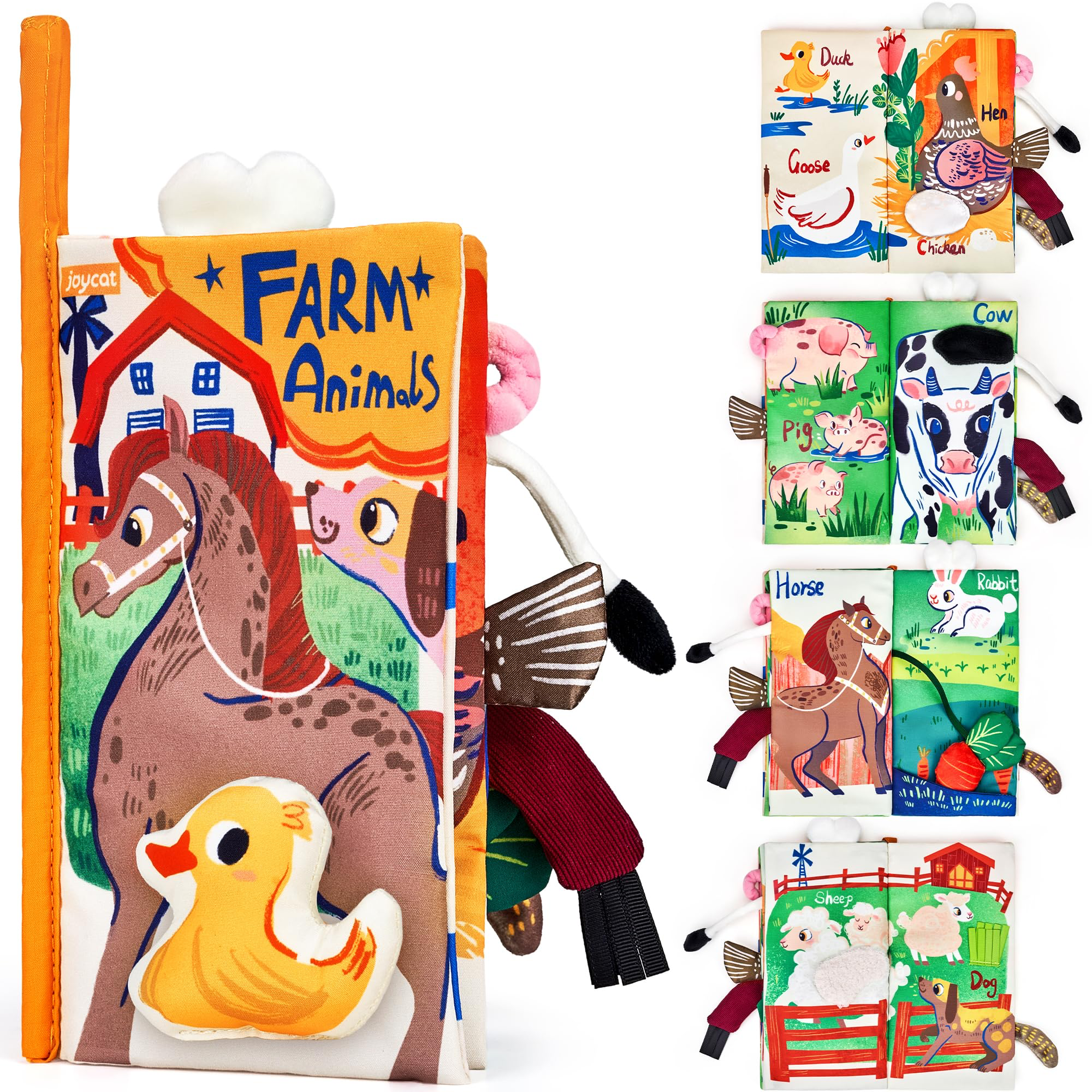
4. Joycat’s “Baby Crinkle Cloth Book” as an example of multi-sensory learning
The Baby Crinkle Cloth Book exemplifies multi-sensory learning. It features crinkly sounds, a squeaker, a pull-out carrot, and a detachable duck. These elements engage a baby’s tactile, auditory, and visual senses. The book’s farm theme introduces new animals and words, stimulating early vocabulary and cognitive development. It also serves as a teether, providing comfort during teething phases.
If you’re interested, check 《18 Best Educational Gifts for Kids This Thanksgiving 2025》.
Choosing the Best Tactile Books for Your Baby’s Age and Stage
Selecting the right tactile books ensures they are both engaging and developmentally appropriate. We recommend considering a baby’s age, developmental stage, and individual preferences. Safety and durability are also paramount in our selection process.
1. Selecting age-appropriate books for newborns and infants (0-6 months)
For newborns and infants (0-6 months), choose books with high-contrast colors and simple, large illustrations. Soft cloth books with crinkly pages and varied textures are ideal. These books should be lightweight and easy for tiny hands to grasp. Focus on sensory stimulation rather than complex narratives.
2. Finding stimulating books for older babies and toddlers (6-12 months)
Older babies (6-12 months) benefit from books with more interactive elements. Look for flip books, pull books, and string books that encourage fine motor skill development. Books with mirrors, different fabrics, and simple stories are also engaging. These books support their growing curiosity and desire for exploration.
3. Key features to look for: safety, durability, and washability
When choosing tactile books, prioritize safety. Ensure materials are non-toxic and free from small, detachable parts that could pose a choking hazard. Durability is crucial, as babies often chew and pull on books. Opt for machine-washable options for easy cleaning and hygiene. These features ensure a safe and lasting play experience.
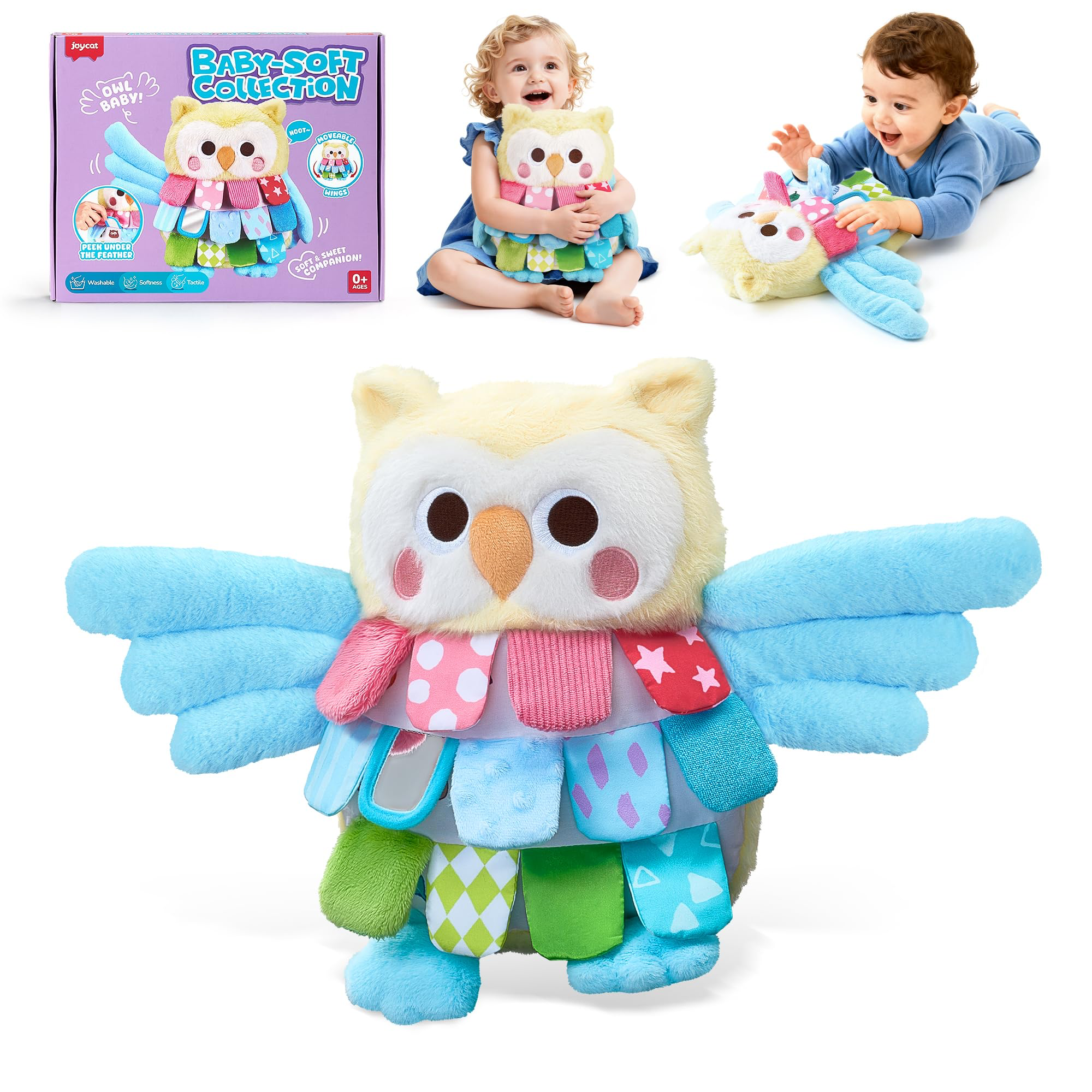
4. Integrating books with other sensory toys for holistic development, like Joycat’s “Baby Owl Tummy Time Sensory Toy”
Combine tactile books with other sensory toys to create a rich developmental environment. For instance, the Baby Owl Tummy Time Sensory Toy offers crinkled, multi-textured feathers and a baby-safe mirror. Integrating this toy with interactive books enhances a baby’s sensory experience during tummy time. This holistic approach supports various developmental areas simultaneously.
| Book Type | Key Features | Developmental Benefits | Ideal Age Range |
|---|---|---|---|
| Flip Books | Flaps, hidden images | Hand-eye coordination, curiosity, cause & effect | 3-12 months |
| Pull Books | Tabs, movable elements | Fine motor skills, hand strength, problem-solving | 6-18 months |
| String Books | Attached elements, strings | Grasping skills, spatial awareness, dexterity | 6-18 months |
| Crinkle Books | Crinkly pages, sounds | Auditory stimulation, tactile exploration | 0-12 months |
| Soft Cloth Books | Varied textures, fabric | Tactile stimulation, comfort, durability | 0-12 months |
Maximizing Learning and Bonding Through Interactive Reading
Interactive reading with tactile books strengthens the parent-child bond while stimulating a baby’s development. We encourage parents to actively participate and make reading a joyful, shared experience. This engagement fosters a love for books and learning from an early age.
1. Tips for engaging your baby during storytime with tactile books
- Use expressive voices for different characters.
- Point to illustrations and name objects.
- Encourage your baby to touch and manipulate the interactive elements.
- Describe the textures and sounds they encounter.
- Follow your baby’s cues and allow them to lead the exploration.
- Make eye contact and smile to reinforce positive interaction.
2. Creating a sensory-rich environment for optimal development
Designate a comfortable, safe space for reading and play. Include a variety of textures, colors, and sounds in this area. Rotate books and toys regularly to maintain interest and introduce new stimuli. A sensory-rich environment encourages exploration and provides diverse learning opportunities for your baby.
3. The long-term benefits of early tactile stimulation on cognitive and motor skills
Early tactile stimulation has lasting benefits. It enhances cognitive development by building stronger neural pathways in the brain. It also refines fine and gross motor skills, which are crucial for tasks like writing and self-care. Furthermore, it contributes to better sensory processing, helping children adapt to various environments.
If you’re interested, check 《Best Christmas Gift Ideas for Kids and Parents 2025》.
Discover Joycat’s Interactive Collection
Explore Joycat’s range of educational toys designed to spark curiosity and ignite imagination. Our products, including interactive books and sensory toys, support your child’s natural development from 0-12 years. We are a caring companion, a fun playmate, and a guiding partner in your child’s growth. For more information, contact us at service@joycat.com.
FAQs
1. What are tactile skills and why are they important for babies?
Tactile skills refer to a baby’s ability to process and interpret information through touch. These skills are crucial because they help infants understand their physical environment, differentiate between objects, and develop body awareness. Early development of tactile skills supports cognitive growth, fine motor development, and overall sensory integration.
2. What is the difference between flip, pull, and string books?
Flip books feature flaps or pages that babies lift to reveal hidden content, promoting curiosity and hand-eye coordination. Pull books include tabs or elements that babies pull to change scenes, enhancing fine motor skills and hand strength. String books have attached components that babies can grasp and move, encouraging grasping and dexterity.
3. At what age should I introduce interactive books to my baby?
You can introduce interactive books as early as newborn stage (0-3 months) with soft cloth books featuring high-contrast colors. For flip, pull, and string books, the ideal age is typically around 6 months, when babies start intentionally reaching, grasping, and exploring objects with their hands and mouths.
4. How do I choose a safe and effective tactile book for my child?
Prioritize books made from non-toxic, baby-friendly materials without small, detachable parts that could pose a choking hazard. Look for durable designs that can withstand chewing and pulling. Washability is also a key feature for hygiene. Ensure the book’s interactive elements are age-appropriate and engage multiple senses.
5. Can interactive books help with my baby’s fine motor skills?
Yes, interactive books are highly effective in developing a baby’s fine motor skills. Actions like flipping pages, pulling tabs, and manipulating strings strengthen finger muscles, improve hand-eye coordination, and enhance dexterity. These activities require precision and control, which are fundamental for developing refined motor skills.


