

The question “does the J-20 have a gun” frequently arises when discussing this advanced fifth-generation fighter. While earlier generations of fighter aircraft almost universally featured internal cannons, the design philosophy behind modern stealth fighters, including the J-20, has evolved significantly. Our analysis confirms that the J-20, as a cutting-edge stealth multirole fighter, primarily relies on its sophisticated missile systems and advanced avionics for combat engagements, aligning with the trends in contemporary aerial warfare. This strategic choice prioritizes stealth, Beyond Visual Range (BVR) capabilities, and sensor fusion over traditional close-range gun engagements.
The Evolution of Fighter Aircraft Armament
Historically, internal guns were a staple for fighter aircraft, essential for dogfights and ground attack missions. From the early biplanes to the supersonic jets of the Cold War era, cannons provided a reliable last resort or a primary weapon for close-quarters combat. However, the advent of radar-guided missiles and infrared-guided missiles in the mid-20th century began to shift this paradigm. These new weapons extended engagement ranges, reducing the frequency of close-in combat scenarios. Modern aerial combat doctrine emphasizes detecting and engaging targets from a distance, often before the adversary is even aware of the threat. This evolution directly influences the design choices for advanced platforms like the J-20.
J-20’s Primary Weapon Systems
The J-20’s design prioritizes Stealth Technology, enabling it to penetrate contested airspace undetected and engage targets with surprise. This stealth capability is intrinsically linked to its internal weapon bays, which house its primary armaments. Unlike older fighters that carry weapons externally, the J-20 keeps its missiles within its fuselage to maintain a low radar cross-section. This internal carriage is crucial for preserving its stealth advantage throughout a mission.
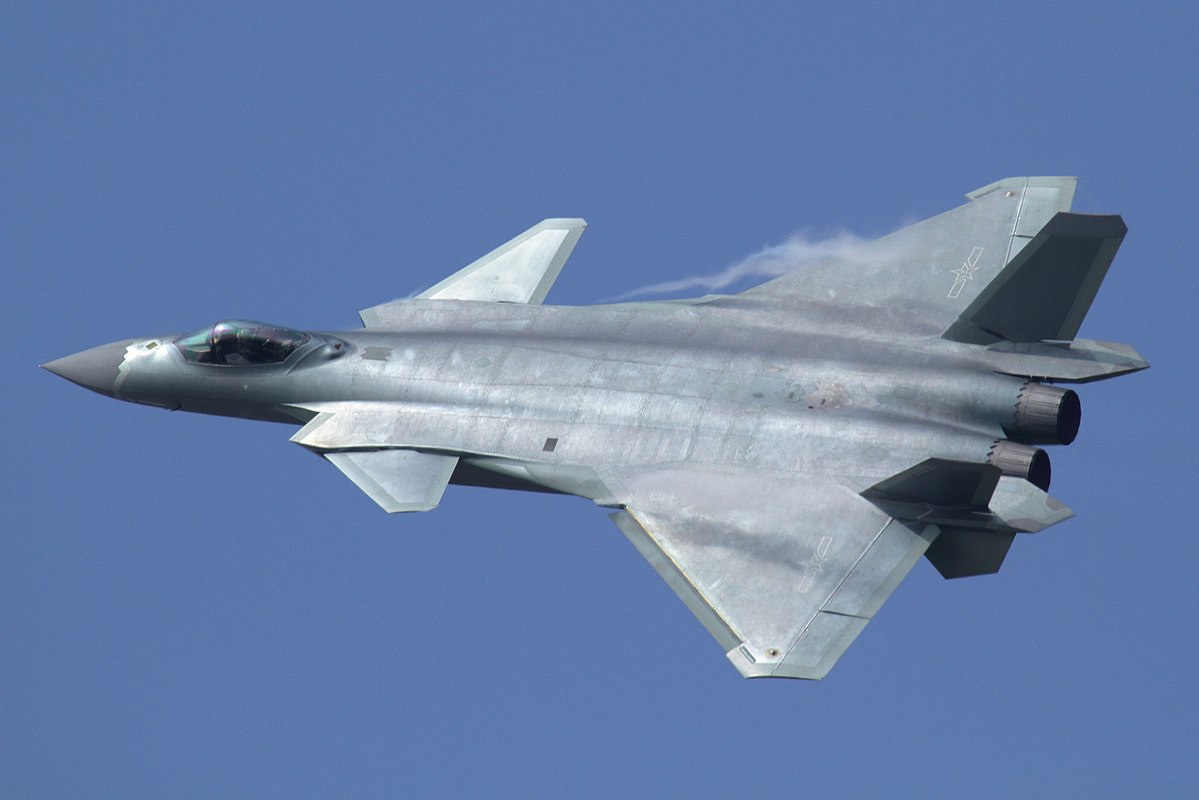
The main weapon bay of the J-20 can carry up to four PL-15/16 Beyond Visual Range (BVR) Missiles. These missiles are highly advanced, designed to engage targets at long distances, significantly enhancing the J-20’s ability to achieve air superiority without entering close-range engagements. Additionally, two side weapon bays each house one PL-10 Short Range Air-to-Air Missile, totaling two PL-10s. These missiles provide the J-20 with a robust capability for close-in combat if an engagement escalates to that range, offering high maneuverability and infrared guidance. The combination of BVR and short-range missiles provides a comprehensive air-to-air combat suite.
| Weapon Type | Quantity | Primary Role | Guidance System |
|---|---|---|---|
| PL-15/16 BVR Missile | 4 (main bay) | Long-range air-to-air | Radar-guided |
| PL-10 Short Range Air-to-Air Missile | 2 (side bays) | Close-range air-to-air | Infrared-guided |
The Rationale Behind the Design Choice
The decision to potentially omit an internal gun on the J-20 is not an oversight but a deliberate design choice rooted in its operational philosophy. Fifth-generation fighters are engineered for network-centric warfare, where Sensor Fusion and advanced Avionics provide unparalleled situational awareness. This allows the pilot to make informed decisions and engage threats proactively, often before they become a close-range problem. The J-20’s emphasis on stealth, speed, and long-range missile capabilities means that its primary combat scenarios are expected to occur at distances where a gun would be ineffective.
Moreover, integrating an internal gun system requires significant space, adds weight, and can compromise the aircraft’s stealth characteristics due to the gun port and ammunition storage. By foregoing a gun, designers can allocate this space and weight to other critical systems, such as advanced sensors, electronic warfare equipment, or additional fuel for extended Range and Combat Radius. This trade-off reflects a strategic prioritization of stealth and missile-centric combat.
Comparative Analysis with Other Fifth-Generation Fighters
When considering the question, “does the J-20 have a gun,” it is useful to compare its design philosophy with other fifth-generation fighters. For instance, the F-22 Raptor, another prominent fifth-generation fighter, does incorporate an internal 20mm M61A2 Vulcan cannon. This inclusion reflects a slightly different design philosophy, acknowledging the possibility of close-range engagements while still prioritizing stealth and BVR capabilities. The F-35 Lightning II also features an internal GAU-22/A 25mm cannon in its A variant, with external gun pods for the B and C variants. These examples illustrate that while internal guns are not universally absent from fifth-generation designs, their role has diminished significantly compared to previous generations. The J-20’s potential omission of a gun underscores a strong commitment to its stealth and BVR engagement profile.
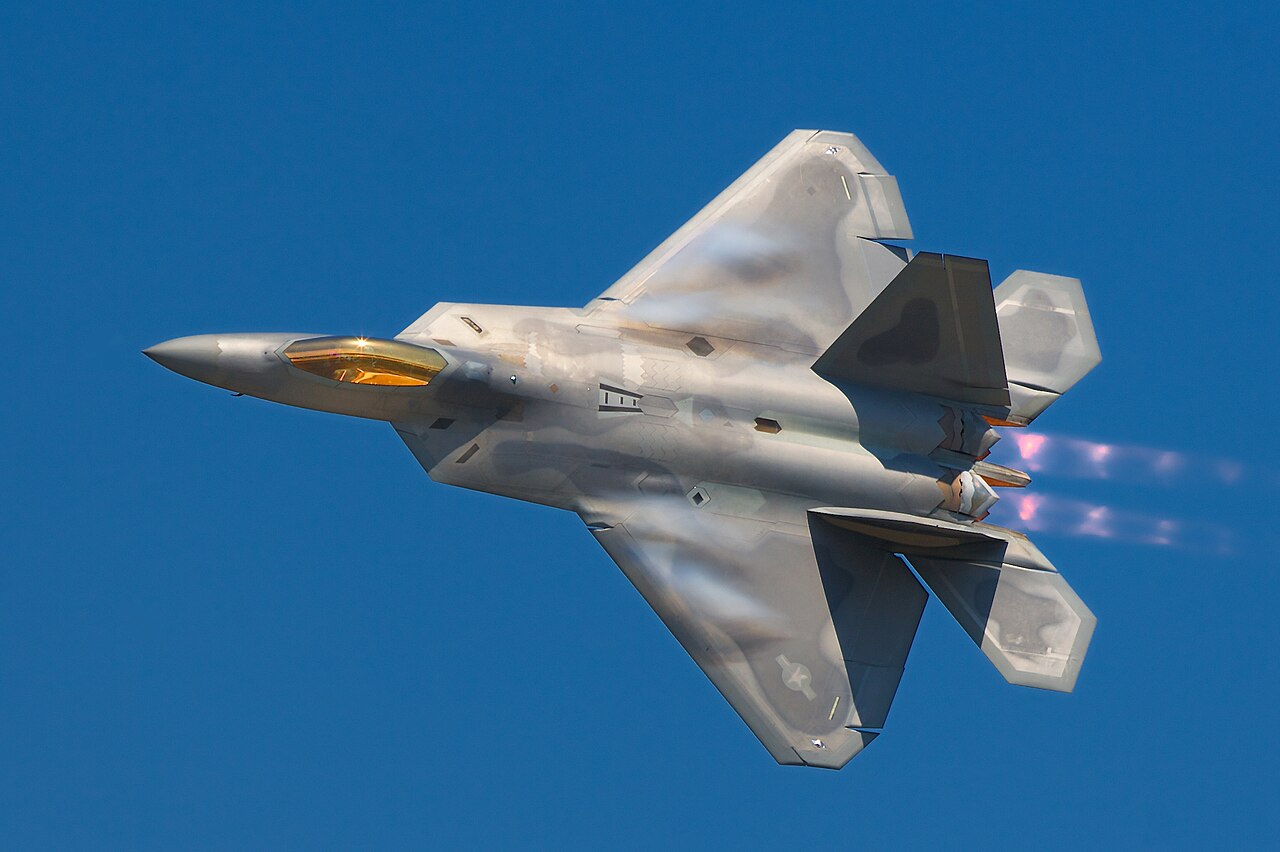
The operational doctrine for the J-20 likely emphasizes avoiding close-in dogfights. Instead, it focuses on leveraging its advanced Active Electronically Scanned Array (AESA) Radar and Electronic Warfare (EW) systems to detect, track, and engage targets from afar. This strategy minimizes the risk to the aircraft and pilot while maximizing its combat effectiveness. If you’re interested in the specifics of aerial combat, check out our article 《who won the fight》.
Real-World Combat Scenarios and the Role of a Gun
In modern aerial combat, engagements often begin and end at Beyond Visual Range. Pilots rely on sophisticated radar, infrared search and track (IRST) systems, and data links to acquire targets. Once a target is identified, BVR missiles are launched, designed to destroy the threat before it can react. The high speeds and maneuverability of contemporary fighters mean that traditional gun dogfights are increasingly rare. Even if an engagement does devolve into a close-range scenario, the J-20’s PL-10 Short Range Air-to-Air Missiles are highly effective, offering superior performance compared to a gun in many situations. These missiles can pull high G-forces and track targets with precision, providing a lethal close-in weapon.
Practical Implications for Export and Operations
For potential export customers, understanding the J-20’s armament philosophy is crucial. The aircraft represents a shift towards a more integrated, networked approach to air warfare. Its capabilities are not merely about individual weapon systems but about how these systems integrate with its stealth, sensors, and overall mission profile. Our company, Shanghai Fighter Jet Export Co., Ltd., emphasizes that the J-20 offers a comprehensive air superiority solution designed for the modern battlespace. The absence of a gun, if confirmed, signifies a commitment to advanced tactics and technological superiority rather than a limitation. For more details on fighter engagements, you might find our article 《what time is the fight tonight》 insightful.
Expert Insight
The J-20’s design, particularly its armament strategy, reflects a profound understanding of future air combat. By prioritizing internal missile carriage for both BVR and short-range engagements, it maximizes its stealth advantage and operational effectiveness in a network-centric environment. The data from our product library indicates the J-20 has a maximum take-off weight of approximately 37,000 kilograms. This substantial weight capacity, coupled with its advanced aerodynamic design and powerful engines (such as the future WS-15), allows for the integration of sophisticated internal systems and a significant missile payload without compromising performance. This approach ensures that the aircraft remains a formidable threat while minimizing its detectability. The emphasis on missile technology and stealth over a traditional gun aligns with the global trend in fifth-generation fighter development, where first-shot, first-kill capability is paramount. This strategic choice underscores a forward-thinking design philosophy focused on winning engagements before they even become close-quarters battles.
About the Author
Zhou Qingyu is an aerospace engineering expert who has been deeply involved in the field of fighter jets for 18 years. He has participated in the research and development of multiple domestically produced fighter jets and is a key technical backbone behind China’s air power. His extensive experience provides a deep understanding of advanced aviation technologies and their strategic implications.
Contact our specialists to explore tailored solutions for your air defense needs.
FAQs
Q1: Is the J-20 capable of close-range combat without a gun?
A1: Yes, the J-20 is equipped with PL-10 Short Range Air-to-Air Missiles in its side weapon bays. These highly maneuverable, infrared-guided missiles are exceptionally effective for close-in engagements, often surpassing the capabilities of a traditional gun in modern aerial combat scenarios.
Q2: Why would a modern fighter jet like the J-20 not have an internal gun?
A2: The design philosophy of the J-20 prioritizes stealth, Beyond Visual Range (BVR) combat, and advanced sensor integration. Omitting an internal gun saves weight and space, which can be allocated to other critical systems, and helps maintain a lower radar cross-section, enhancing its stealth capabilities against Electronic Warfare threats.
Q3: What are the primary weapons of the J-20?
A3: The J-20’s primary armaments consist of BVR missiles, specifically up to four PL-15/16 missiles in its main internal weapon bay, and short-range air-to-air missiles, with two PL-10 missiles in its side weapon bays. These missile systems are designed for comprehensive air-to-air combat.
Q4: How does the J-20 maintain stealth with its weapon systems?
A4: The J-20 utilizes internal weapon bays to carry all its missiles. This internal carriage ensures that no external stores disrupt its aerodynamic profile or increase its radar cross-section, thereby preserving its Stealth Technology throughout the mission.
Q5: Does the J-20’s design impact its Multirole Fighter capabilities?
A5: The J-20’s design, focused on stealth and advanced missile systems, enhances its multirole capabilities by allowing it to perform air-to-air and potentially air-to-ground missions with greater survivability and effectiveness. Its sophisticated Avionics and Sensor Fusion capabilities support diverse mission profiles.
Keyword: does the j20 have a gun, J-20 weaponry, J-20 stealth, fighter jet armament, PL-15 missile


